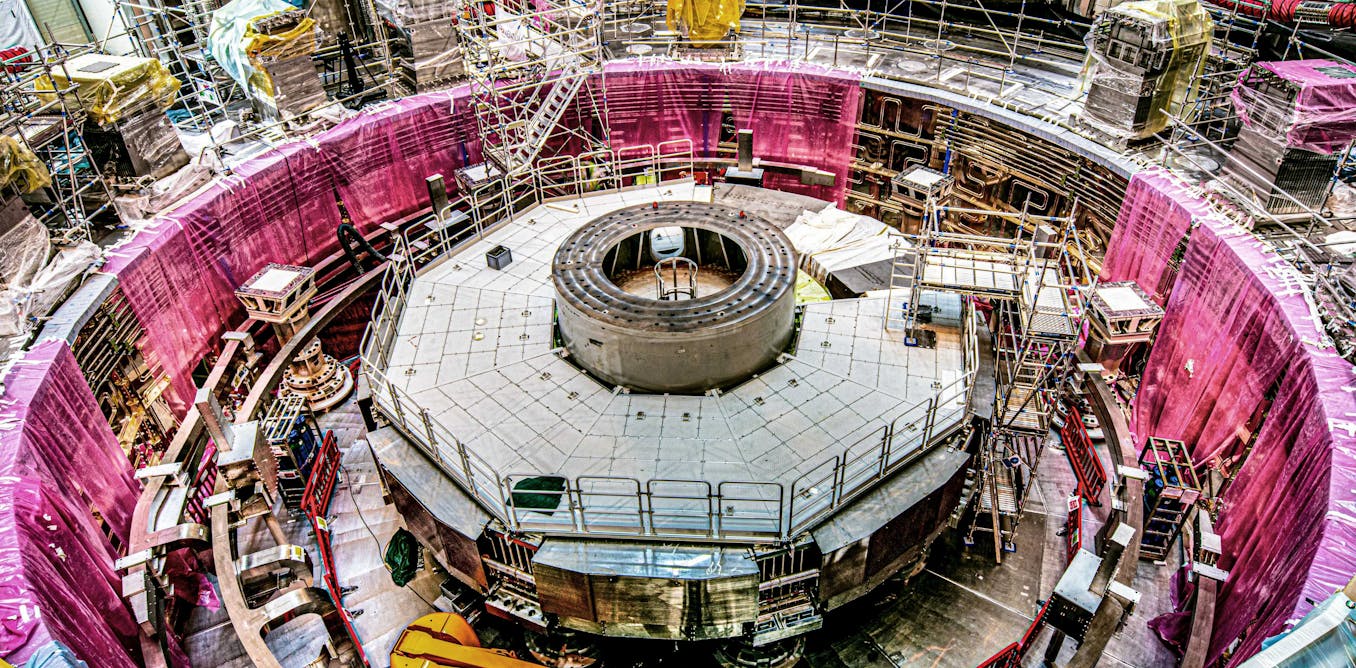
Private-sector investment in fusion energy is approaching US$10 billion, fueled by the urgent need for carbon-free power, technological advancements including AI, and significant capital from venture funds and tech billionaires, predominantly in the US but also in China and Europe. Key players like Commonwealth Fusion System, which has secured $3 billion, and Type I Energy are targeting commercial power delivery by the mid-2030s, while the international ITER project anticipates operation by 2039. This surge in funding highlights high-return, high-risk opportunities, as commercialization faces ambitious timelines and significant technical hurdles, comparable to or exceeding the development of conventional gigawatt-scale power plants.
Private-sector funding for fusion energy has surged to nearly US$10 billion over the past five years, primarily from venture capital, deep-tech investors, and energy corporations, with the majority of activity concentrated in the US. This significant capital influx is driven by the urgent global demand for carbon-free power, advancements in technology including AI for control and simulations, and a burgeoning private ecosystem, signaling a high-return, high-risk investment landscape. The overall sentiment is mildly positive but speculative, reflecting the long-term potential against near-term uncertainties.
Major players like Commonwealth Fusion System (CFS) have attracted US$3 billion in investment, targeting commercial power delivery by the mid-2030s with its SPARC tokamak, leveraging high-temperature superconductors and AI. Similarly, Type I Energy aims for commercialization within the same timeframe using a stellarator design. Concurrently, the international ITER project, a public initiative, anticipates research operations by 2034 and deuterium-tritium fusion by 2039, aiming for a 500MW output from 50MW input as a scientific demonstration.
Despite aggressive claims and substantial investment, the commercialization of fusion energy faces significant technical hurdles and ambitious timelines, comparable to or exceeding the development of conventional gigawatt-scale power plants. While many private companies are expected to fail due to the high-risk nature of this frontier technology, the collective effort is accelerating overall fusion development. The moderate market impact score suggests that while the sector is gaining attention, widespread commercial viability remains a distant prospect.
AI-powered research, real-time alerts, and portfolio analytics for institutional investors.
Request DemoOverall Sentiment
mildly positive
Sentiment Score
0.35
Ticker Sentiment
