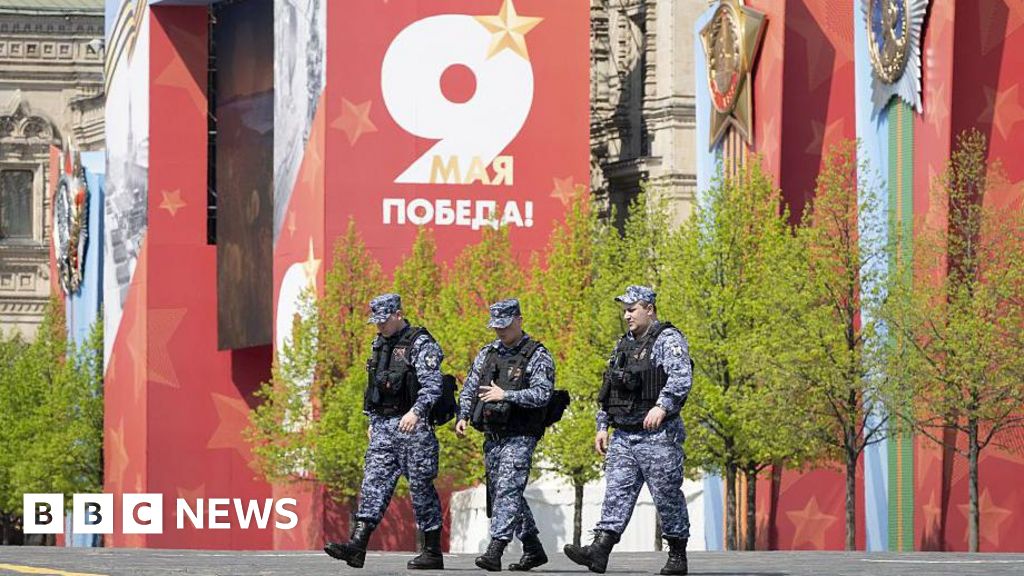
Russia is scaling back its Victory Day parade for the first time in nearly two decades, with no tanks, ballistic missiles, or other military hardware on Red Square, underscoring the strain of the Ukraine war. The article cites drone and missile attacks inside Russia, falling domestic approval for Vladimir Putin, and growing public fatigue alongside internet shutdowns and security restrictions. The piece frames the reduced parade as a symbol that Russia has failed to achieve victory more than four years into the war.
The important market signal is not ceremonial symbolism; it is that Russia is reallocating scarce military hardware from domestic display to the front, which implies attrition is now constraining even propaganda choices. That usually shows up first in defense procurement bottlenecks: tighter inventory for armor, optics, air defense, and EW systems, plus longer replacement cycles for anything moved to the battlefield. The second-order effect is a bigger fiscal drag, because a war that must be sustained without a rapid victory tends to shift from capex-like spending to recurring maintenance and loss replacement, pressuring the sovereign balance sheet over 6-18 months.
The cyber/infrastructure angle matters as much as the battlefield one. Expanded mobile internet shutdowns and air-defense alerts are a sign the state is sacrificing connectivity for internal security, which can create localized hits to logistics, retail throughput, payments, and consumer services. Over time, repeated shutdowns also degrade trust in digital rails and force firms to carry more operational redundancy, a hidden tax that is typically borne by domestically exposed telecom, e-commerce, and banking names rather than by the state itself.
The market is still underpricing regime fatigue risk: if public sentiment and elite confidence continue to erode, the main catalyst is not a neat policy reversal but a messy escalation pattern—more domestic restrictions, more missile/drone exchanges, and eventually heavier mobilization or fiscal repression. The near-term tail risk is that Moscow overreacts to any symbolic attack on 9 May with a disproportionate strike, which would raise headline risk but also accelerate sanction intensity and further isolate Russia’s payment and logistics stack. The contrarian takeaway is that the visible weakness may actually shorten the path to negotiation only if battlefield losses become materially larger; absent that, the most likely path is prolonged stagnation with worsening economic leakage rather than a quick political break.
AI-powered research, real-time alerts, and portfolio analytics for institutional investors.
Request DemoOverall Sentiment
moderately negative
Sentiment Score
-0.45
