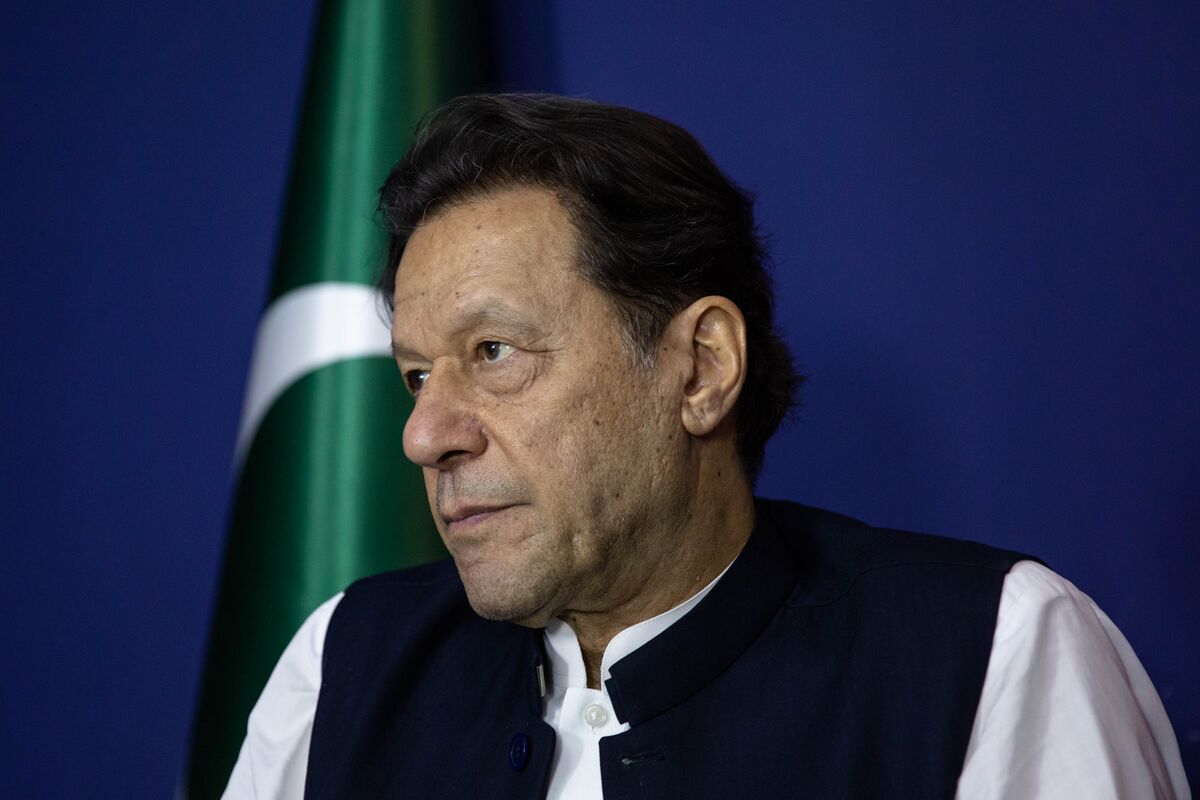
Pakistan's jailed former prime minister Imran Khan, 73, was reported by his sister Uzma Khan to be in good health after concerns mounted when he had no visitors for more than three weeks; Uzma said he and his wife were being confined to small rooms and mentally tortured, in a video posted on X by the Pakistan Tehreek-e-Insaf party. While this health update reduces immediate uncertainty about his condition, the allegations of mistreatment and continued detention reinforce political instability and human-rights risks that could weigh on investor sentiment toward Pakistan without directly altering near-term economic fundamentals.
Market structure: Political distress around Imran Khan raises near-term risk premia for Pakistan-specific assets — expect PKR to weaken 1–5% in days and Pakistan USD sovereign yields/CDS to reprice wider by ~100–250bps over weeks if protests or legal escalations continue. Direct losers are Pakistan equities and local-currency debt; beneficiaries are USD liquidity providers, short-protection sellers, and regional safe-haven allocations. Cross-asset: EM FX and frontier debt indices will see outflows, pushing short-term demand for USD up and local bond prices down; oil/commodity impact is negligible unless instability spreads regionally.
Risk assessment: Tail risks include large-scale unrest, IMF program suspension, or a de‑facto military transition that could trigger sovereign default — low probability but high impact (sovereign spreads >300bps). Immediate horizon (days) volatility in FX and equities; short-term (weeks–months) pressure on external financing and reserves; long-term (quarters) depends on IMF/China support and election timing. Hidden dependencies: remittances, Chinese project financing, and upcoming IMF tranche decisions are critical liquidity backstops.
Trade implications: Direct short Pakistan exposure via VanEck Pakistan ETF (PAK) or Pakistan USD bonds is the highest-conviction trade for 1–3 month downside; buy USD/PKR forwards or FX calls to hedge currency risk. Use protective put spreads on PAK or buy 3-month USD/PKR call options to limit premium; consider buying 5y Pakistan sovereign CDS for asymmetric downside protection. Rotate away from frontier EM debt into larger EMs (e.g., India via INDA) for relative safety.
Contrarian angle: Consensus may overshoot downside — if PKR moves >5% or CDS >300bps, price could offer an opportunistic entry because IMF/China historically step in to limit full default risk. Set objective re-entry triggers: PKR recovery within 6–12% of pre-crisis levels or confirmed IMF tranche within 30–90 days; avoid catching the knife before these thresholds.
AI-powered research, real-time alerts, and portfolio analytics for institutional investors.
Request DemoOverall Sentiment
mildly negative
Sentiment Score
-0.25
