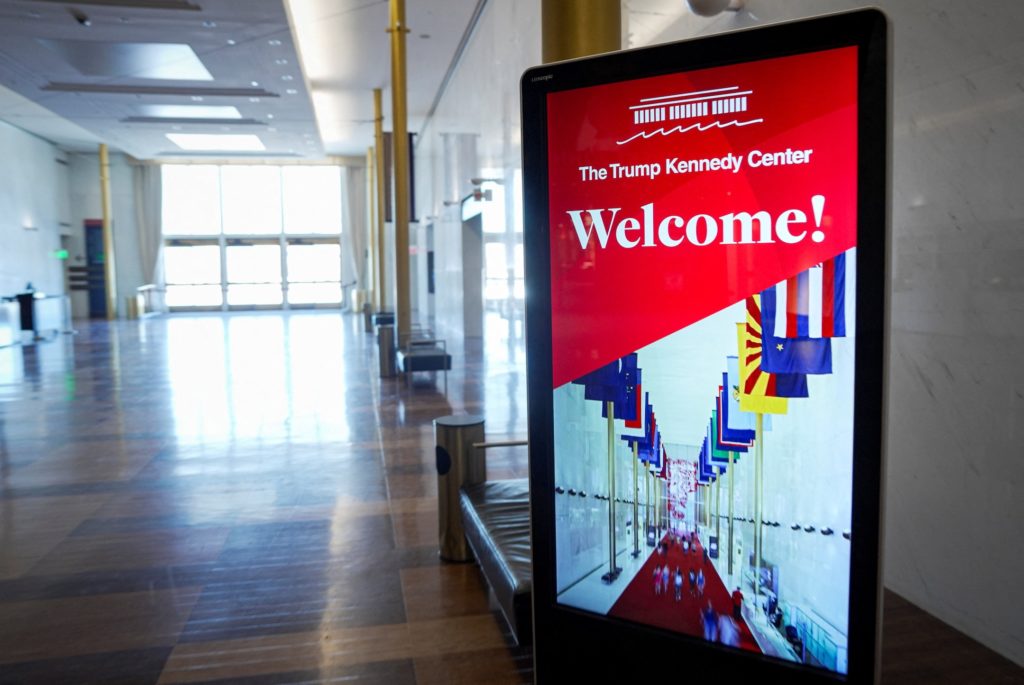
President Trump announced via social media that the John F. Kennedy Center for the Performing Arts—recently rebranded the "Trump Kennedy Center"—will likely close for two years beginning July 4 pending board approval, a move staff reportedly learned about on TRUTH Social. Interim Kennedy Center president Ric Grenell has signaled programming changes to broaden appeal while critics and former board members warn of partisan takeover, potential legal challenges over the renaming and board moves, calls for congressional oversight of funding, and concerns about fundraising and possible gutting of the interior that could disrupt operations and donor support for the institution.
Market structure: A two‑year partial shutdown/renovation of the Kennedy Center shifts a small but concentrated pool of high‑grossing performances into the broader touring and commercial-venue market. Winners: large promoters/ticketing platforms (Live Nation, MSGE) who can absorb displaced shows and capture higher yield; Losers: DC‑centric hospitality/venue operators and nonprofits that depend on prestige programming (local hotels/restaurant revenues could dip 1–3% if prime season bookings migrate). Cross‑asset: limited national bond/FX impact, small negative pressure on DC‑weighted muni credit and local hotel REITs; short‑term uplift to secondary ticketing spreads and event‑venue equities.
Risk assessment: Key binary catalysts are the board vote (likely within 30–60 days) and potential Congressional/NGO legal actions (60–180 days) that could cancel, extend, or politicize the closure. Tail risks: >2 year closure or asset impairment from vandalism/legal injunctions (low prob) that could depress local tourism revenue by >5% for 12–24 months. Hidden dependencies include donor withdrawal patterns and corporate sponsorships — a 10–30% drop in pledged philanthropy materially changes renovation funding and timing.
Trade implications: Tactical relative‑value: long large promoters/ticketing (LYV, MSGE) and underweight DC‑exposed hotel REITs (HST) and select regional hotels (MAR/HLT exposures in DC submarket). Options: favor 3–6 month call spreads on LYV/MSGE 10–20% OTM to capture rebooking demand with defined risk; short small DC‑tilted hotel/REIT exposure size 0.5–1.5% of portfolio. Timing: establish after board acknowledgement (0–30 days) or scale in on definitive 30–60 day signals; take profits at +15% and cut losses at −8% per position.
Contrarian angles: Consensus treats this as political noise; operational reallocation of hundreds of premium dates to commercial tours is underappreciated and could boost promoter EBITDA by mid‑single digits over 12 months. Historical parallel: venue disruptions (temporary closures post‑9/11/local crises) boosted centralized promoters that could reallocate inventory; unintended consequence: donor backlash may re‑channel philanthropy to other major cultural hubs (beneficiaries include NY/Chicago institutions), presenting secondary long opportunities.
AI-powered research, real-time alerts, and portfolio analytics for institutional investors.
Request DemoOverall Sentiment
moderately negative
Sentiment Score
-0.40
