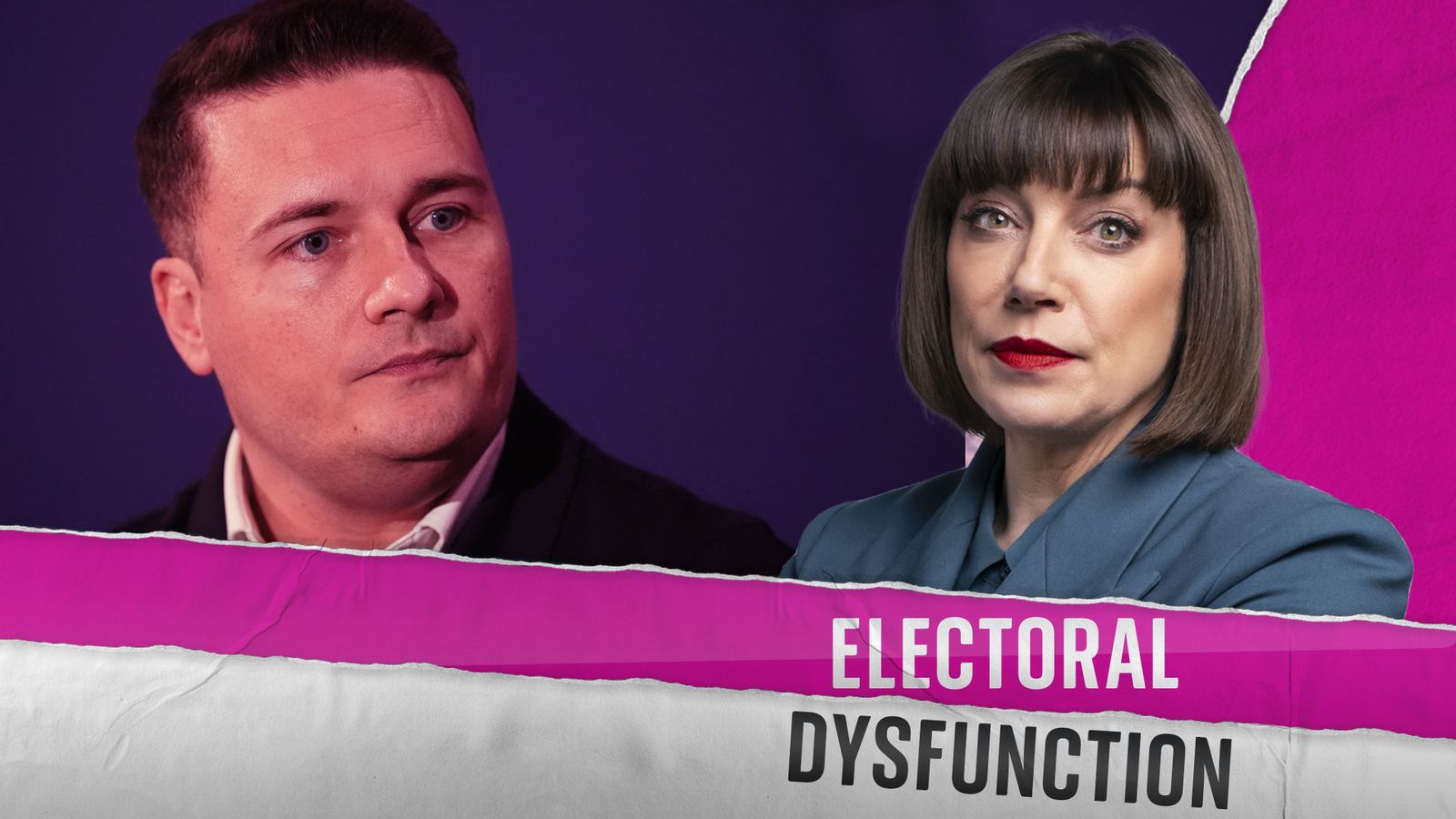
Health Secretary Wes Streeting released private text messages with Lord Mandelson showing he feared being 'toast' at the next election, described the government as having 'no growth strategy', and accused Israel of 'committing war crimes', while publicly backing Keir Starmer. The disclosures come amid a wider crisis over Mandelson's ties to Jeffrey Epstein and a criminal probe into the peer, increasing UK political and policy uncertainty; the episode raises headline political risk for the government but is unlikely to produce immediate large market moves absent further escalations that could affect sterling, gilts or UK-focused equities.
Market structure: This is a UK political-risk shock concentrated in domestic-sensitive assets — sterling, gilts, mid/ small-cap UK equities and consumer-facing names — with limited direct corporate winners. Large multinationals and exporters (FTSE 100 heavyweights) are relatively insulated because earnings are largely offshore; expect 24–72h sterling weakness of 0.5–2% on headline deterioration and a 5–25bp knee-jerk move in 10y gilts. Commodity impact is conditional: only if Middle East escalation follows the foreign-policy rhetoric will Brent move >3–5%.
Risk assessment: Tail scenarios include a leadership change/early election within 3–6 months (baseline prob 10–25%) and a geopolitical escalation that lifts oil/defense vols (prob <10%). Immediate triggers are new leaks, police actions, and two national polls (next 2–6 weeks); hidden dependencies include UK gilt liquidity and bank funding sensitivity to gilt repricing, which could amplify moves if 10y yield moves >30bp. Catalysts that could reverse the move: Starmer public recovery plan within 7–14 days or Labour polling resilience.
Trade implications: Tactical hedge the portfolio against sterling/gilt moves: think 1–2% portfolio hedges with 1–3m tenor. Relative-value: prefer FTSE 100 exporters (currency beneficiaries) over FTSE 250 domestic plays; consider short-dated GBP puts or FX ETF shorts and a 1–2% allocation to UK gilts ETF as a risk-off hedge. If Middle East risk rises, rotate into defense names and oil for a 3–6m tactical window.
Contrarian angles: Market consensus treats this as headline noise; that underprices the chance of sustained domestic policy drift and a September Commons vote on Palestine that could fracture the party and markets. If Starmer holds and stabilizes within 2–3 weeks, sterling/gilts will snap back — creating mean-reversion trades. Historical parallel: short-lived political crises (2018–2020) caused 1–3 week dislocations followed by recoveries; trade size accordingly and avoid levering beyond 2–3x on political idiosyncrasy.
AI-powered research, real-time alerts, and portfolio analytics for institutional investors.
Request DemoOverall Sentiment
moderately negative
Sentiment Score
-0.35
