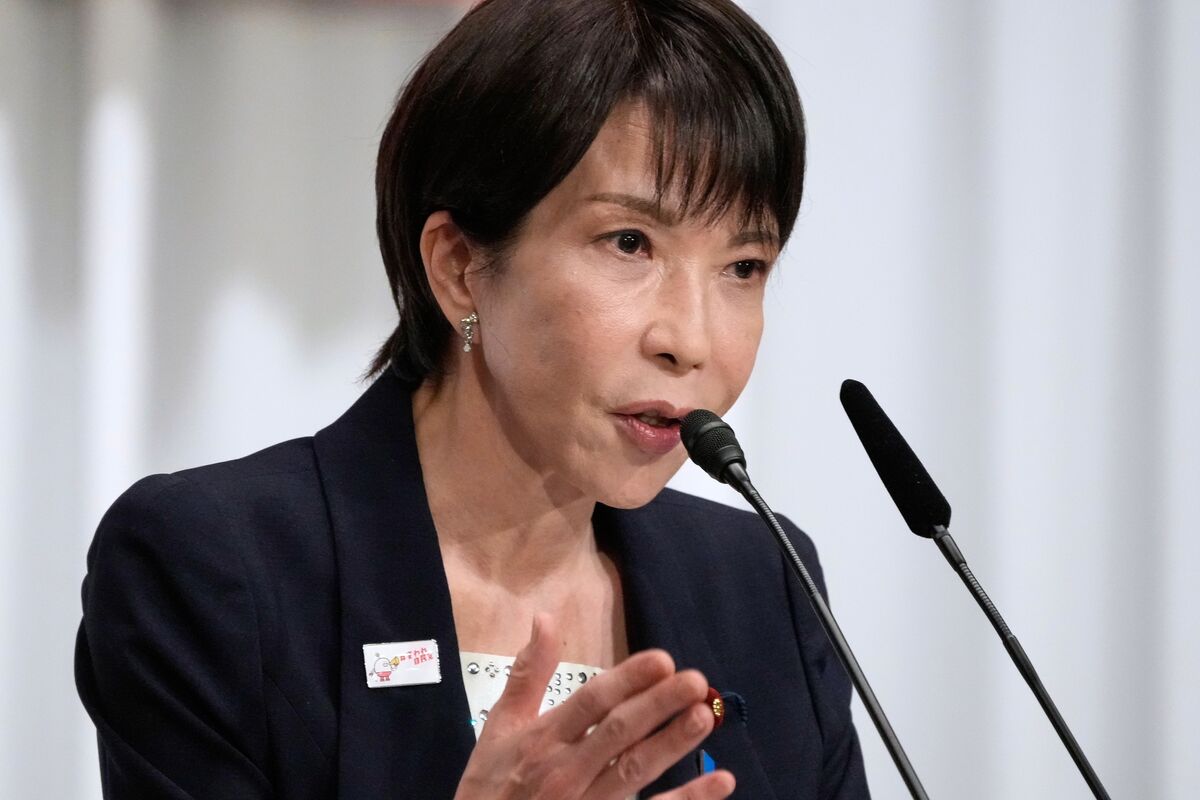
Leading LDP leadership contender Sanae Takaichi clarified her position on monetary policy, stating that while the government determines the overall direction, the Bank of Japan (BOJ) should decide the specific means of implementation. This statement, seen as a softening of previous dovish remarks, underscores a potential future government's respect for the BOJ's operational independence, which is crucial for market participants monitoring Japan's monetary policy trajectory.
Sanae Takaichi, a leading contender for Japan's ruling Liberal Democratic Party leadership, has refined her stance on monetary policy, signaling a move toward a more orthodox position. She clarified that while the government is responsible for setting the overall "direction" of policy, the Bank of Japan (BOJ) should independently determine the specific "means" of implementation. This statement is framed as a softening of more dovish remarks made a year prior and is significant for its affirmation of the BOJ's operational independence. For market participants, this reduces a key political uncertainty, suggesting that a potential Takaichi-led government may be less likely to directly pressure the central bank for specific unconventional measures. The moderately positive sentiment signal (0.5) reflects that markets favor this deference to central bank autonomy, which could add a layer of predictability to Japan's long-term monetary policy framework, even as near-term actions remain data-dependent.
AI-powered research, real-time alerts, and portfolio analytics for institutional investors.
Request DemoOverall Sentiment
moderately positive
Sentiment Score
0.50
