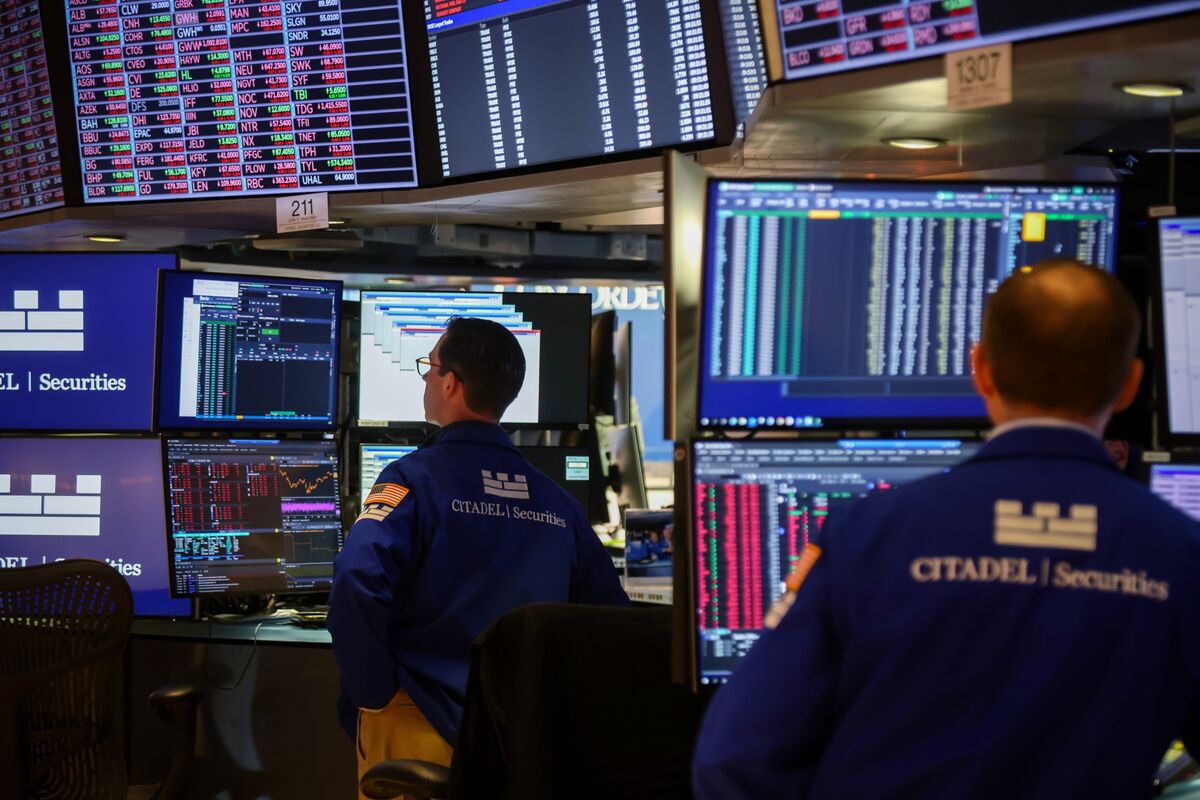
Investors are increasingly desensitized to President Trump's trade war announcements, with stock prices showing minimal reaction to recent tariff threats and revised trade proposals from the European Union. This suggests a potential shift in market sentiment, where trade-related news may no longer be the dominant driver of equity valuations after a volatile April influenced by tariff negotiations.
The stock market is exhibiting a notable desensitization to President Trump's trade war announcements, a significant departure from the heightened volatility experienced in April where each development in tariff negotiations prompted sharp price movements. Recent events, such as Trump's statement on potentially imposing new tariffs broadly and the European Union's submission of a revised trade proposal aiming for zero tariffs on many products, have elicited minimal market reaction. This muted response suggests investors may be recalibrating their assessment of trade risks, potentially factoring in a prolonged period of negotiations or discounting the immediate impact of such announcements. The general sentiment score of 0.0 ("mixed") and neutral tone, coupled with a market impact score of 0.55, underscore this shift: while the specific news items are not causing alarm, the change in market behavior itself is a moderately significant development, indicating a potential adjustment in investor sentiment and positioning regarding trade policy and tariffs.
AI-powered research, real-time alerts, and portfolio analytics for institutional investors.
Request DemoOverall Sentiment
mixed
Sentiment Score
0.00
