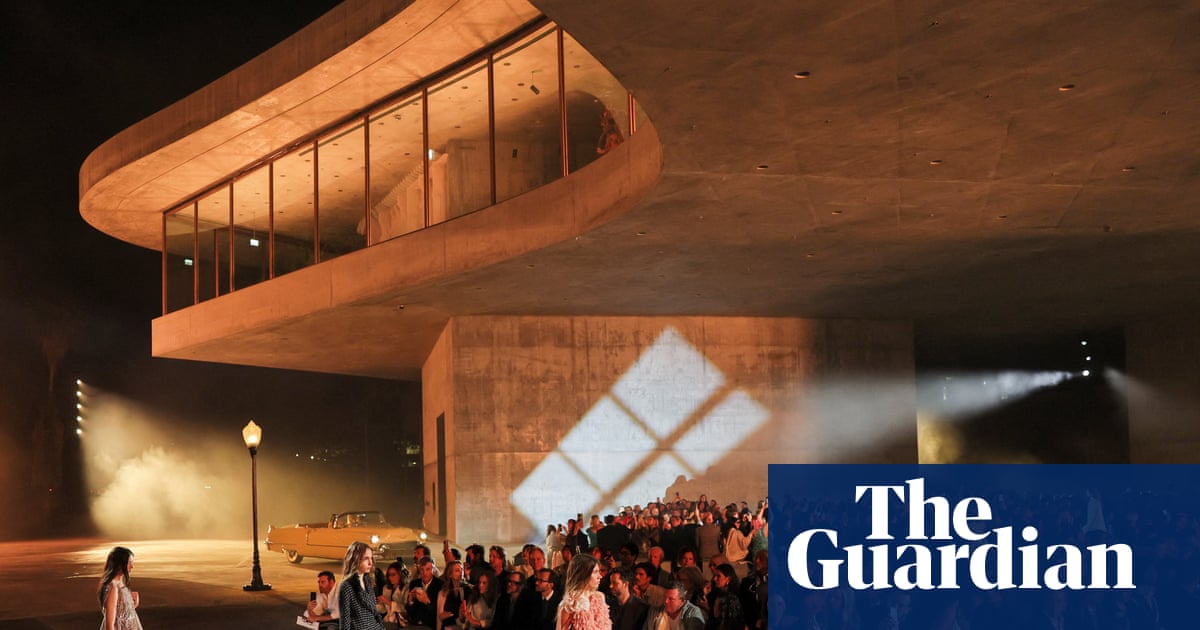
Dior used a high-profile Los Angeles Cruise show to strengthen its film-industry positioning, with Jonathan Anderson signaling a broader strategy to deepen the brand’s relationship with cinema through costumes and future projects. The event also highlighted Dior’s $724m LACMA setting, celebrity front row, and collaboration with artist Ed Ruscha, reinforcing brand visibility and cultural relevance. The piece suggests Cruise shows are increasingly about experiential marketing and maintaining top-of-mind status in the US luxury market.
The signal here is less about a single fashion show and more about a reallocation of luxury marketing dollars toward US cultural infrastructure. Brands are effectively buying scarcity: in an attention economy where live events are harder to replicate digitally, a high-profile US activation can compress brand heat creation into a few weeks and support pricing power for quarters. That favors the largest maisons with the deepest event budgets and the widest wholesale/direct-to-consumer flywheel, while smaller luxury players risk being outspent and algorithmically drowned out. Second-order, the film tie-in is a margin-accretive way to extend marketing spend beyond a one-night runway. If executed well, costume design and entertainment partnerships create recurring content assets that outlive the show and feed social, editorial, and celebrity channels at low incremental cost. The beneficiaries are companies with strong IP ownership and adjacency to celebrities/production houses; the losers are pure-play retailers that rely on traditional seasonal cadence and paid media. The contrarian risk is that experiential theater is becoming table stakes. If every major house stages US spectacles, the incremental ROI could decay quickly, especially if consumer demand softens in China/Europe or if US HNW demand proves more invitation-driven than order-driven. In that case, the market may overestimate the elasticity of brand heat to revenue conversion over the next 2-3 quarters. The cleaner trade is not on the event itself, but on which management teams can convert cultural relevance into mix shift and full-price sell-through. Near term, watch for commentary on retail traffic, leather goods, and menswear uptake; those are the categories most likely to monetize celebrity halo. The upside case is a sustained US luxury spend reacceleration into holiday 2026; the downside is a costly marketing arms race with flat conversion.
AI-powered research, real-time alerts, and portfolio analytics for institutional investors.
Request DemoOverall Sentiment
mildly positive
Sentiment Score
0.25
