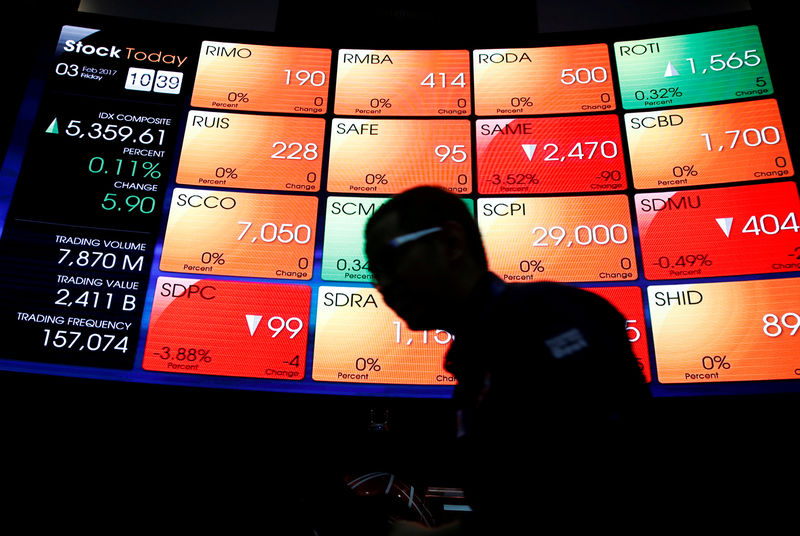
Indonesia's IDX Composite fell 2.88% to a new 52-week low, with decliners overwhelming advancers 713 to 88. Heavy losses in infrastructure, financials and agriculture drove the move, while DPR-heavy names such as DSSA and TPIA dropped 14.98% and 14.88%, respectively. Commodities were mixed-to-firmer, with Brent up 0.92% to $110.27 and crude up 1.03% to $102.06, while USD/IDR rose 1.26% to 17,661.90.
The dominant signal is not “Indonesia weak” so much as a forced de-risking event where FX and rate pressures are overpowering idiosyncratic equity stories. A sharp move higher in USD/IDR alongside weaker local assets typically feeds a tighter domestic financial condition loop: banks face mark-to-market pressure on foreign liabilities, import-sensitive corporates get hit twice through cost inflation and weaker demand, and domestic leveraged names become the first marginal sellers. In that setup, the initial equity underperformance often extends beyond the obvious exporters/importers into the higher-beta credit proxies that trade as liquidity expression vehicles.
The more interesting second-order effect is on commodity-linked industrials and power-intensive names. If the currency break persists for several sessions, Indonesia’s domestic inflation impulse will likely show up first in fuel, fertilizer, and utility inputs rather than headline CPI, which can squeeze downstream margins before policymakers react. That makes the current selloff more than a growth scare; it is a margin-compression trade that can bleed into banks, consumer discretionary, and infrastructure contractors over the next 2-6 weeks if funding costs reprice higher.
The bond-market angle is important: risk-off in emerging markets usually starts with local equities, but the real stress becomes visible when sovereign and quasi-sovereign spreads stop absorbing the FX move. If global rates remain volatile, capital outflows can become self-reinforcing, with foreign ownership in liquid large caps creating forced selling into weakness. A stabilization in USD/IDR would be the cleanest reversal catalyst; absent that, rebounds are likely to be sold as passive and levered domestic accounts continue de-grossing.
AI-powered research, real-time alerts, and portfolio analytics for institutional investors.
Overall Sentiment
moderately negative
Sentiment Score
-0.45
