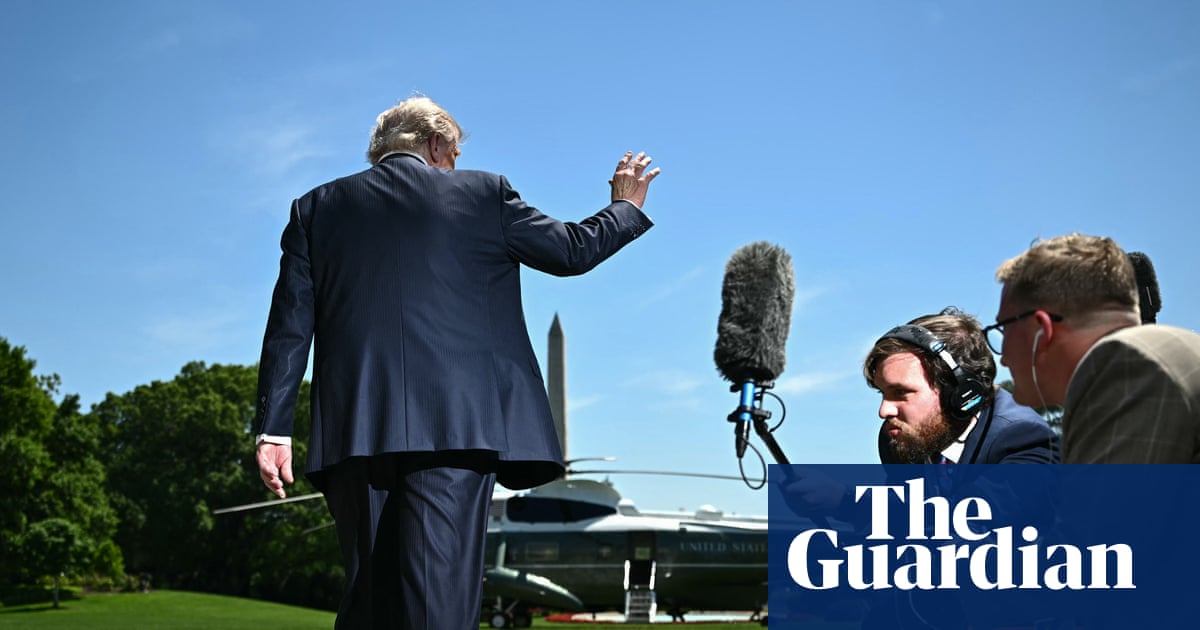
Trump arrives in Beijing for a high-stakes summit amid the Iran war, with US-China tensions centered on Taiwan, tariffs, export controls, and sanctions. The trip could produce a 500 Boeing 737 Max jet order and talks on a new trade board, but the bigger market issue is whether the meeting eases or escalates strategic friction between the two powers. AI cooperation and semiconductor restrictions are also on the agenda, alongside potential implications for US support for Taiwan.
The immediate market read is not “thaw” but optionality: Beijing gets a low-cost chance to extract concessions without altering its strategic posture, while Washington is incentivized to stage a visible win that does not require structural follow-through. That asymmetry usually favors Chinese cyclicals tied to policy relief only if the summit produces a tangible tariff/export-control pause; absent that, the move is more likely to compress volatility than re-rate risk assets. For US equities, the key second-order effect is that headline diplomacy can temporarily suppress tail risk premia in semis and industrials even if the underlying restriction regime stays intact.
BA is the cleanest near-term beneficiary because large aircraft orders create both earnings optics and political cover, but the bigger signal is whether China is willing to use procurement as a bargaining chip. If this becomes a one-off concession rather than a broader re-opening of commercial channels, the market should fade any multiple expansion in aerospace suppliers after the first pop. The risk is execution: any fresh escalation on Taiwan, or a failed attempt to link Iran leverage to trade relief, would quickly turn a deal headline into a risk-off catalyst and likely reverse gains within days.
TSLA and AAPL are more exposed to narrative than fundamentals here. For TSLA, any hint of relaxed China sentiment helps the stock through delivery and regulatory-overhang compression, but this is brittle because EV competition and local policy remain the dominant drivers over a multi-quarter horizon. For AAPL, the upside is lower headline friction around supply-chain dependence, but the market is already conditioned to treat China exposure as a managed risk; a better trade is to buy calm, not conviction. The contrarian miss is that both sides may prefer a symbolic summit precisely because they cannot afford concessions on the most sensitive issues, making the probability of an underwhelming but market-stabilizing outcome higher than a true policy pivot.
AI-powered research, real-time alerts, and portfolio analytics for institutional investors.
Request DemoOverall Sentiment
neutral
Sentiment Score
-0.05
Ticker Sentiment
