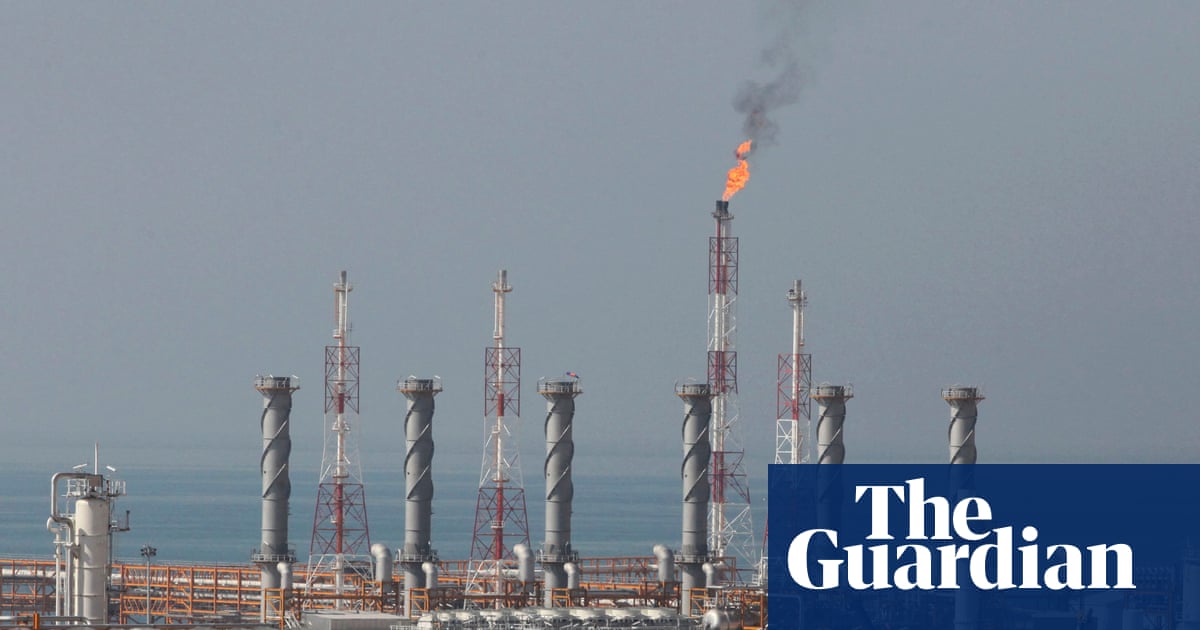
1.28bn standard cubic feet/day production at the Shah gasfield (≈20% of UAE gas supply) was suspended after an Iranian drone strike, and a facility on the South Pars field (the world’s largest gas field and Iran’s main domestic energy source) was also hit. Oil prices jumped on the South Pars attack and US diesel has risen above $5/gal, reflecting immediate supply disruption and higher near-term energy costs. Analysts warn damage to upstream or LNG infrastructure could take years to repair, implying multi-year supply risk and elevated volatility for energy markets. The escalation raises geopolitical risk in the Gulf and increases political stakes ahead of the US midterms.
Targeting upstream production changes the injury profile from transient shipping disruption to capital destruction: damage to complex gas/LNG processing and sulfur-handling plants typically requires specialized spares and contractors that are concentrated in a handful of global suppliers, implying repair timelines measured in quarters-to-years (we model 6–36 months for full capacity restoration for major LNG trains). This raises the marginal value of existing export capacity and shipping capacity: even a small permanent loss (low millions of barrels or a few mtpa of LNG equivalent) amplifies spot volatility because inventories and spare processing capacity are thin relative to daily flows. Second-order supply-chain losers will be firms exposed to feedstock and logistics chokepoints rather than raw hydrocarbons — fertilizer integrators, chemical converters of elemental sulfur, and industrial gas processors face outsized margin variance as input scarcity propagates through multi-month contracts. Conversely, owners of mobile liquefaction, FSRUs, and LNG carriers gain structural optionality to capture displaced cargoes and command higher charters; same for reinsurers and war-risk insurers who will reprice for multi-year elevated premia and restrict capacity for Gulf-linked risks. Time horizons matter: expect heavy price and geopolitical noise over days–weeks (risk-premium shocks around specific retaliatory acts), fundamental repricing across months (re-contracting cargoes, charter rates, fertilizer price pass-through), and potential multi-year real-economy effects if key processing capacity is physically lost. De‑escalation or rapid diplomatic assurances (back‑channel guarantees for energy infrastructure) are the clearest reversers of the trade — their absence steepens the tail-risk to persistent higher energy and commodity inflation, which in turn feeds into politics and fiscal cushions in the region.
AI-powered research, real-time alerts, and portfolio analytics for institutional investors.
Request DemoOverall Sentiment
strongly negative
Sentiment Score
-0.65
