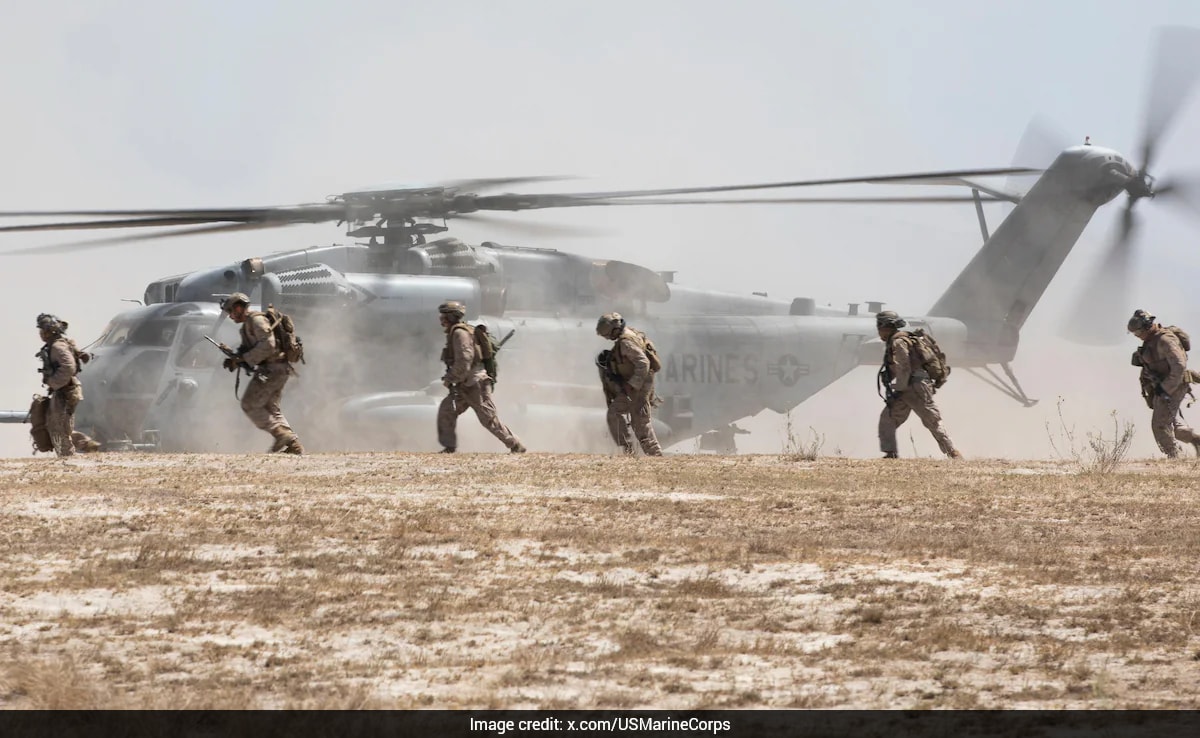
Pentagon reportedly preparing ground raids on Kharg Island and coastal sites near the Strait of Hormuz; Kharg handles roughly 90% of Iran's crude exports and seizure operations are planned to take 'weeks' to 'a couple of months' but would stop short of a full-scale invasion. The US has deployed ~3,500 Marines and sailors aboard USS Tripoli—the largest US buildup in the Middle East in over 20 years—raising the risk of escalation while final approval by President Trump remains uncertain. Portfolio implication: elevated geopolitical risk could materially disrupt Gulf oil flows and shipping, prompting oil-price upside and risk-off moves in equities and energy-sensitive assets.
Military escalation near major export corridors will amplify energy market risk premia and shipping frictions; the immediate market response will be a volatility spike rather than a sustained supply shock unless physical export infrastructure is put out of service for months. Expect crude forward curves to steepen and implied vols to rise most in the front two months as traders price transitory route risk and insurance/charter-cost uncertainty.
Shipping economics will drive large second-order margin transfers: longer voyage distances and higher war-risk premiums increase bunker and TC costs, shifting margin from refiners and commodity consumers to owners of mid/long‑haul tanker capacity and brokers/reinsurers who can reset pricing quickly. Tactical dislocations in product spreads are likely — gasoline and diesel cracks can diverge materially depending on which routes and refineries are bypassed.
Defense procurement and naval-capable shipbuilding become the durable winners on a multi-quarter horizon as governments prioritize expeditionary and escort assets; however, lead times keep revenue recognition slow, so public equities will price in this over 6–24 months with chunky idiosyncratic execution risk. Conversely, energy-intensive logistics and regional trade-exposed corporates face margin pressure and currency risk if premiums persist.
Key catalysts to watch: credible de‑escalation talks, targeted releases from strategic stocks, or rapid restoration of secure shipping corridors will compress spreads and reset vols (likely within 4–12 weeks). The tail risk is broader regional conflagration — low probability but high impact — which would crystalize sustained disruption and force a regime shift in energy and defense allocations.
AI-powered research, real-time alerts, and portfolio analytics for institutional investors.
Request DemoOverall Sentiment
strongly negative
Sentiment Score
-0.70
