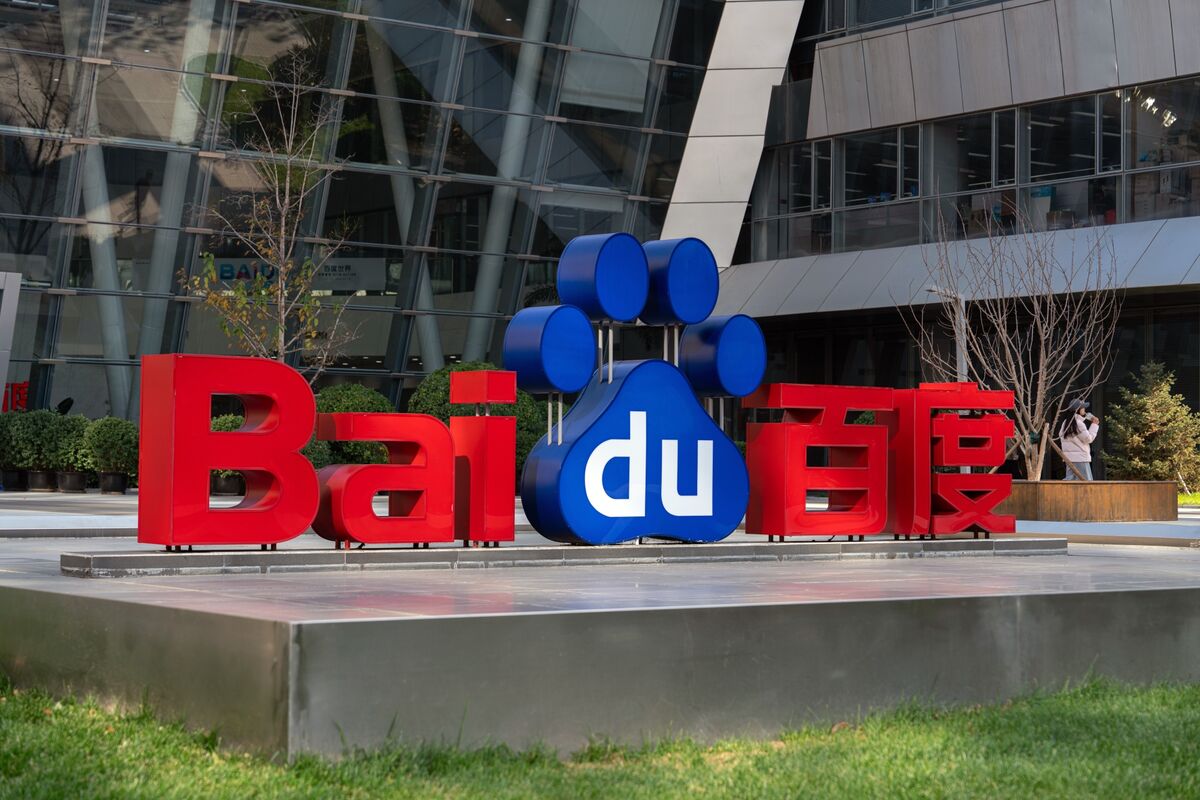
Baidu reported its largest quarterly revenue decline on record as sales fell 7% to 31.2 billion yuan for the quarter ended September—slightly above consensus of 30.9 billion yuan—while swinging to a net loss of about 11.2 billion yuan driven by asset writedowns. The results spotlight pressure on its traditional advertising business even as the company is pouring resources into artificial-intelligence initiatives, raising near-term profitability concerns and underscoring the trade-off between maintaining ad revenue and investing to compete in the AI race.
Baidu reported its largest quarterly revenue decline on record with sales falling 7% year-over-year to 31.2 billion yuan for the quarter ended September, narrowly ahead of the 30.9 billion yuan consensus. The company swung to a net loss of about 11.2 billion yuan, which the release attributes to asset writedowns, and the results underscore near-term profitability pressure despite meeting top-line expectations.
The report highlights a stressed advertising business as management reallocates capital into artificial-intelligence initiatives; the article explicitly notes major AI spending as the trade-off driving the weaker results. Market signals reflect a strongly negative sentiment (sentiment score -0.7) and a moderate market-impact signal (0.45), indicating investors are likely to react adversely to continued revenue weakness and large, one‑time writedowns.
Key implications for the outlook are heightened execution and monetization risk for AI investments, continued sensitivity of earnings to advertising demand, and potential for further impairments if ad performance does not stabilize. Near-term volatility is probable until the company shows either a rebound in ad revenue or a clearer path to monetize its AI investments and reverse losses.
AI-powered research, real-time alerts, and portfolio analytics for institutional investors.
Overall Sentiment
strongly negative
Sentiment Score
-0.70
Ticker Sentiment
