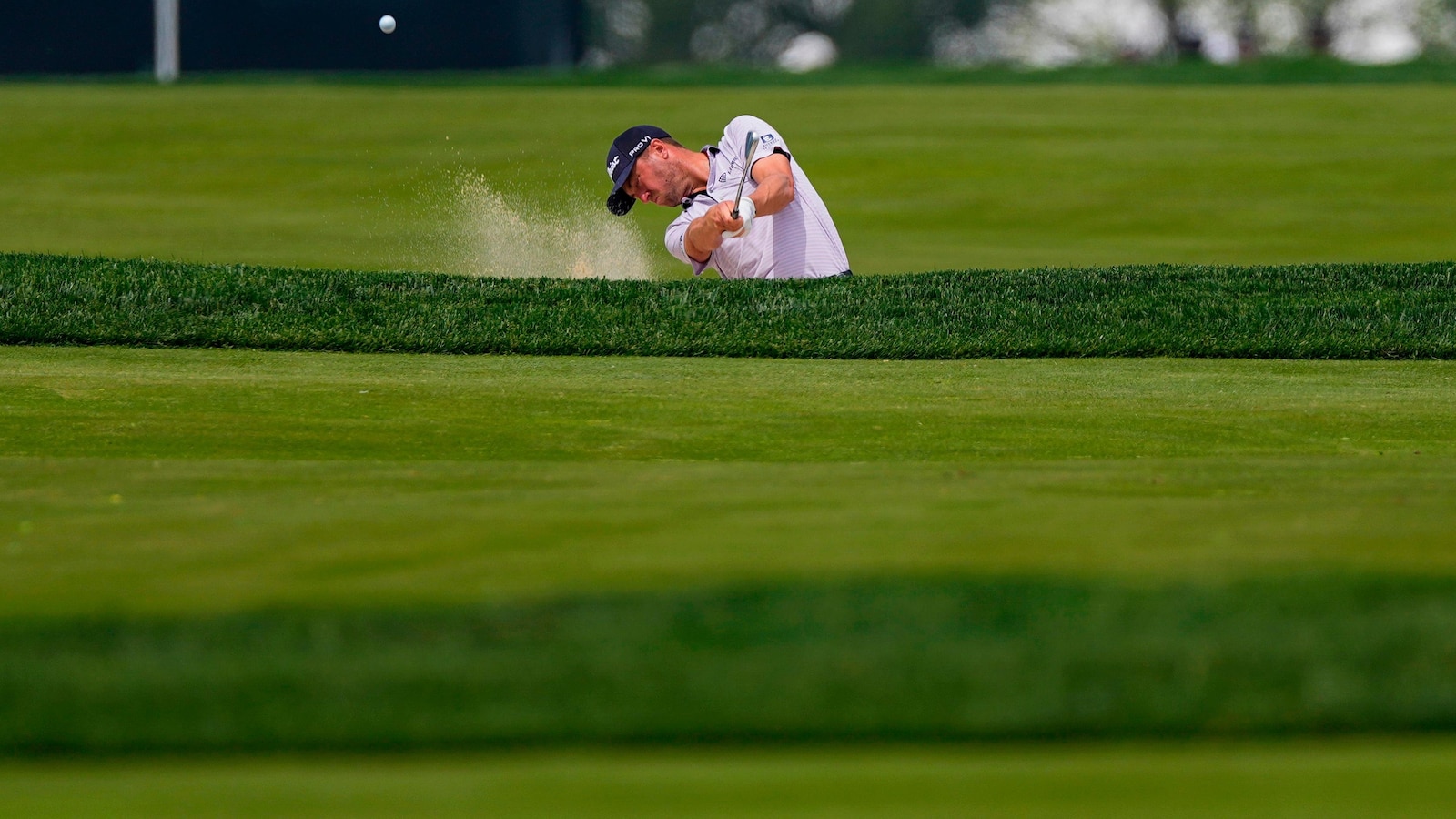
The PGA Championship began at Aronimink with Braden Shattuck hitting the opening shot, followed by a provisional and a one-shot penalty that led to double bogey. Overnight rain and forecast wind could affect course conditions for Rory McIlroy, Jordan Spieth, and Scottie Scheffler as the tournament unfolds. The article is primarily a sports update with minimal direct market relevance.
This is not a direct market event, but it is a clean read-through for travel-and-leisure volatility around live-event demand. A major golf championship with uncertain weather tends to pull spending forward into the venue ecosystem for a few days, then normalize quickly; the real economic impact is on premium hospitality, local transport, and short-dated booking behavior rather than broad consumer demand. If wind and rain show up, the event shifts from a clean broadcast-friendly scoring environment to a more distribution-heavy outcome, which usually helps TV engagement and second-screen betting interest more than it helps on-site discretionary spend. The second-order effect is that weather uncertainty benefits asset-light platforms more than fixed-capacity operators. Dynamic pricing for nearby hotels, rideshare, and last-minute food/beverage spend can improve as attendees hedge plans, while any weakness is mostly a timing issue, not a cancellation story. For publicly traded names, the cleaner expression is through companies with exposure to event-driven urban leisure demand rather than pure golf or local venue names, which are too idiosyncratic to trade directly. The contrarian take is that mild weather disruption is often positive for the broader media monetization stack: harder conditions create wider leaderboards, more narrative volatility, and stronger wagering interest, all of which can extend viewer attention. If conditions stay soft and benign, the setup becomes less about the tournament and more about weather-driven operational drag for local travel spend, but that effect should fade within days. In other words, this is a short-duration event with a small absolute impact and a better shot at increasing engagement than suppressing spending. The only meaningful tail risk is if the forecast turns materially worse and forces crowd attrition; that would show up first in same-day transportation and hospitality data, not equity prices, and would likely reverse once conditions clear. Absent a multi-day washout, this is more of a micro-rotation signal than a standalone thesis.
AI-powered research, real-time alerts, and portfolio analytics for institutional investors.
Request DemoOverall Sentiment
neutral
Sentiment Score
0.00
