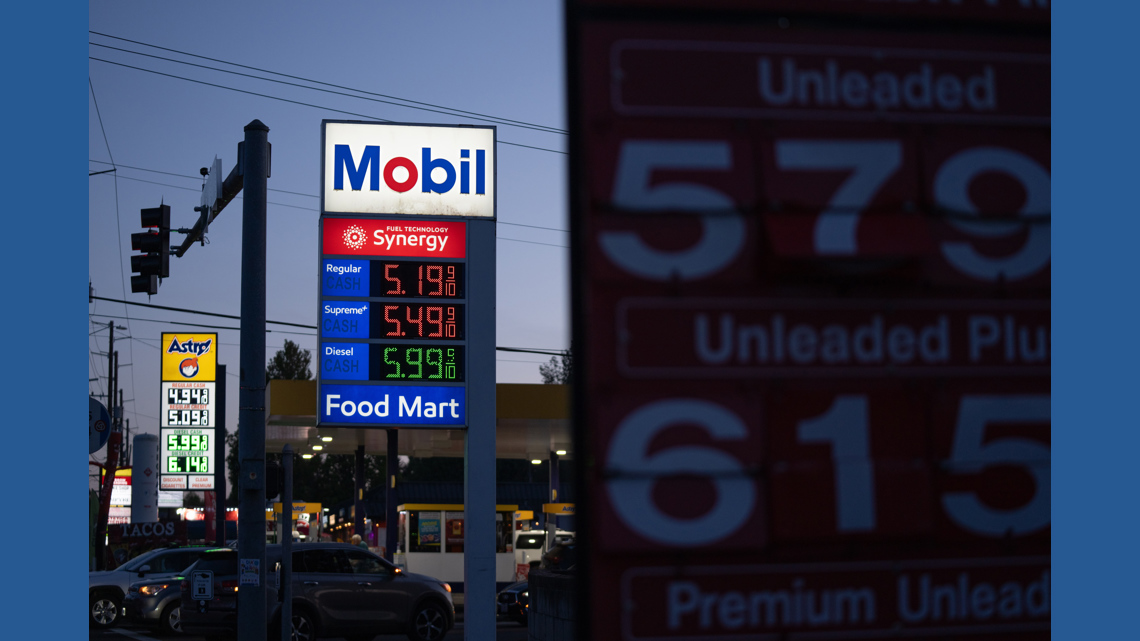
U.S. PCE inflation rose 0.7% in March and 3.5% year over year, the fastest annual pace since May 2023, as gasoline prices jumped 21% from February amid the Iran-related oil shock. GDP grew at a 2.0% annual rate in Q1, but economists expect growth to slow as higher fuel costs squeeze consumer spending despite support from tax refunds and AI-driven business investment. The Fed and other central banks are holding rates steady for now while assessing the inflation-growth tradeoff.
The immediate market takeaway is not “higher inflation,” but a delayed demand shock. Energy is acting as a tax on discretionary consumption with a lag: households can absorb one or two months via refunds and balance-sheet slack, but once those buffers fade, the hit to unit volumes should show up first in lower-end retail, travel, restaurants, and small-ticket ecommerce. That argues for weaker breadth in consumer cyclicals even if headline GDP stays superficially resilient for another quarter. The second-order winner is capital-intensive AI infrastructure, but only if financing conditions remain benign. Strong equipment/software spend can keep GDP elevated while masking fragility in the real economy; if the inflation impulse keeps nominal yields sticky, the market may start discounting a higher weighted average cost of capital for the very names that have been treated as duration beneficiaries. That creates a subtle cross-asset tension: AI capex is pro-growth, but the oil shock is anti-multiple. Policy is now trapped between two asymmetric risks: easing into a supply shock looks inflationary, while holding rates higher for longer risks turning a temporary energy hit into a broader earnings slowdown. The labor market data suggests firms are still protecting margins via no-hire rather than no-fire, which usually precedes a sharper slowdown in consumer-sensitive sectors before it shows up in headline unemployment. The market is likely underpricing the speed at which this transitions from an inflation story to a margin-compression story. The contrarian angle is that the current shock may be more disinflationary for demand than inflationary for earnings over a 3-6 month horizon. If gasoline remains elevated, the most vulnerable companies are not just oil importers or discretionary retailers, but any business with exposure to low-income customers, thin baskets, and weak pricing power. That makes relative performance across sectors more important than directionally betting on the index.
AI-powered research, real-time alerts, and portfolio analytics for institutional investors.
Request DemoOverall Sentiment
mildly negative
Sentiment Score
-0.15
