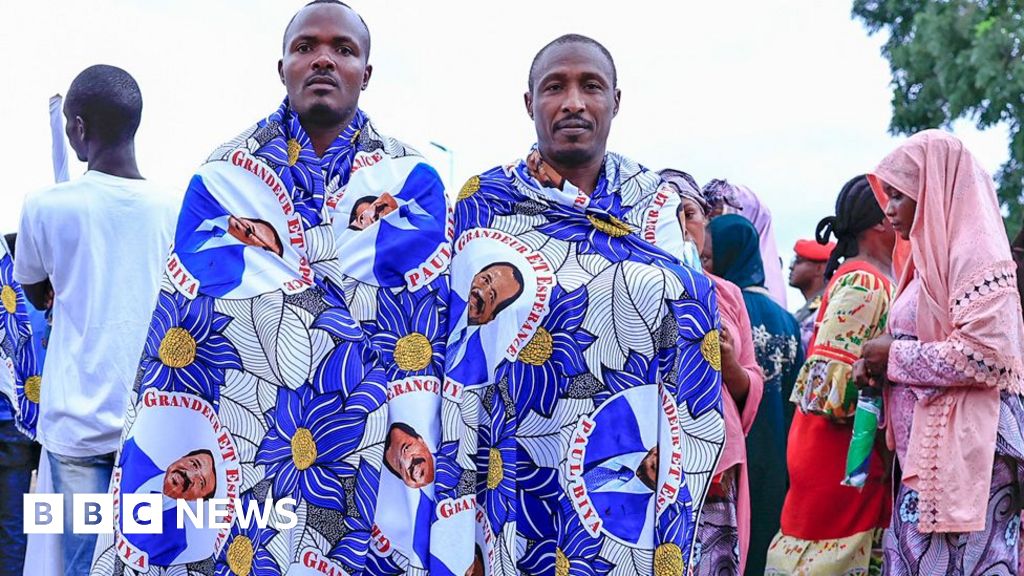
Cameroon's 92-year-old President Paul Biya is seeking an eighth term amidst significant domestic challenges, including high youth unemployment (nearly 40% for ages 15-35), persistent inflation, and a separatist conflict paralyzing business activities in Anglophone regions. Despite widespread calls for new leadership and the controversial exclusion of a key opposition figure, analysts anticipate Biya's victory, which could perpetuate existing economic grievances and political instability, thereby impacting the country's long-term investment climate and risk profile.
Cameroon's upcoming presidential election is dominated by 92-year-old incumbent Paul Biya, seeking an eighth consecutive term, potentially extending his rule to 50 years. This long tenure, marked by limited public engagement and reliance on AI campaign tactics, has drawn criticism, with analysts like Immanuel Wanah and Dr. Tilarius Atia suggesting his primary focus is power retention over citizen welfare. The controversial exclusion of key opposition figure Maurice Kamto, who placed second in 2018, further undermines electoral legitimacy and is perceived as a tactic to prevent a strong challenge.
The election unfolds against a backdrop of severe socio-economic challenges, including nearly 40% youth unemployment for those aged 15-35 and 23% for young graduates, alongside persistent inflation, poor social services, and corruption. This economic stagnation fuels widespread youth discontent, with many considering emigration due to perceived lack of opportunity and older generations occupying key positions. Biya's promises to prioritize youth and women's plight in his next mandate face skepticism given his long track record.
A long-running separatist conflict in the Anglophone North-West and South-West regions has led to an election boycott, paralyzing business and threatening voters, with UN figures indicating 6,000 deaths and 500,000 displaced since 2017. This conflict, coupled with the opposition's failure to unite behind a single candidate and Kamto's exclusion, significantly compromises the election's legitimacy and fairness. Despite these profound challenges, analysts anticipate Biya's victory, reinforcing a pessimistic outlook on political and economic reform.
AI-powered research, real-time alerts, and portfolio analytics for institutional investors.
Request DemoOverall Sentiment
strongly negative
Sentiment Score
-0.80
