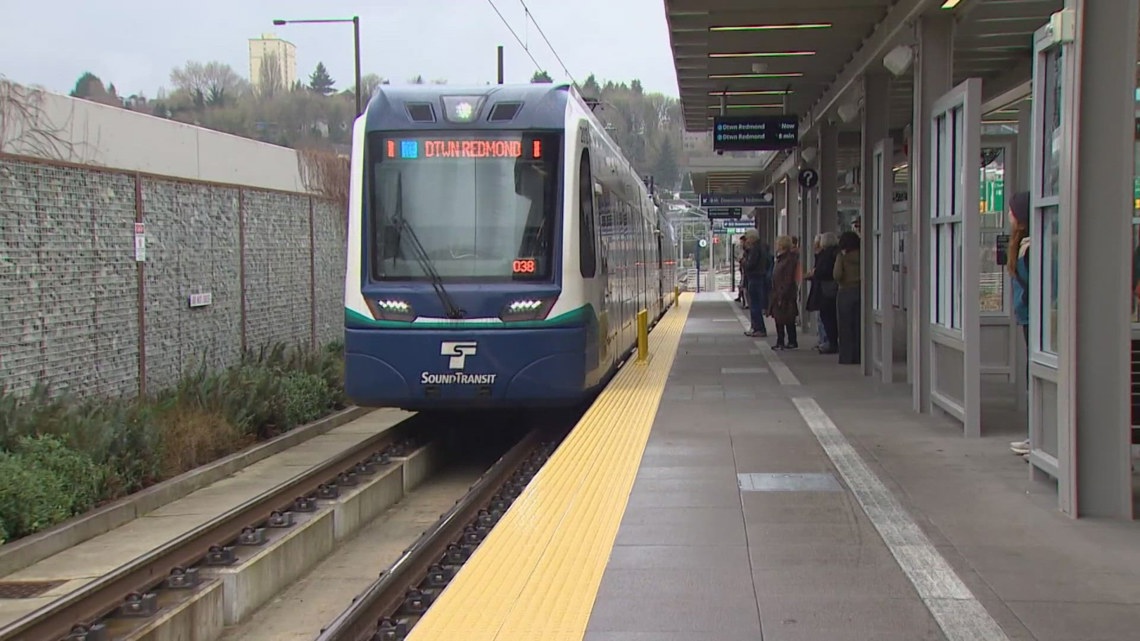
The East Link light rail extension opened Saturday — the world's first light rail to cross a floating bridge — connecting Seattle to Bellevue and Redmond; the project was funded by a $17.9B voter-approved sales tax package in 2008. Transit officials reported heavy, steady crowds (opening ceremony drew ~4,000–5,000 people), will monitor ridership and can operate up to three-car Line 2 trains, adding cars if demand warrants. Riders praised the engineering feat and used the new line for both novelty trips and routine errands, with some unintentionally traveling beyond their destinations.
Immediate second-order economics are dominated by capacity and operating-scale effects rather than headline ridership. Rapidly realized demand creates near-term needs for additional rolling stock, overtime crews, and accelerated maintenance cycles; procurement lead times for LRVs and signaling upgrades typically run 12–36 months, which forces agencies to either pay premiums for short-term leased capacity or accept crowding that depresses repeat ridership. That timing mismatch converts a one-off capital event into a multi-year revenue stream for engineering/maintenance firms and a predictable series of service-level decisions (more trains, frequency, or fare tweaks) that will show up in budgets over the next 2–3 fiscal years.
Property and modal-shift dynamics will be asymmetric: land and retail with direct station adjacency reprice faster than broader office markets, with sensible scenarios showing localized price/rent uplifts of 5–15% inside a 0.5-mile radius over 1–3 years while parking revenues and short-ride car-for-hire demand decline in percentage terms that are meaningful to marginal operators (5–10%). This creates cross-sector winners — engineering, rolling-stock suppliers, and transit-oriented retail — and losers — surface parking, short-haul ride revenue and some last-mile delivery margins.
Tail risks center on service reliability and political finance. If reliability falters or operating subsidies tighten, adoption can reverse within months rather than years; conversely, a steady reliability record plus visible development approvals accelerates private investment and lifts vendors’ multi-year backlog. Watch procurement announcements, O&M contract awards, and county-level budget votes as 30–180 day catalysts that will re-rate adjacent equities and muni spreads.
AI-powered research, real-time alerts, and portfolio analytics for institutional investors.
Request DemoOverall Sentiment
mildly positive
Sentiment Score
0.30
