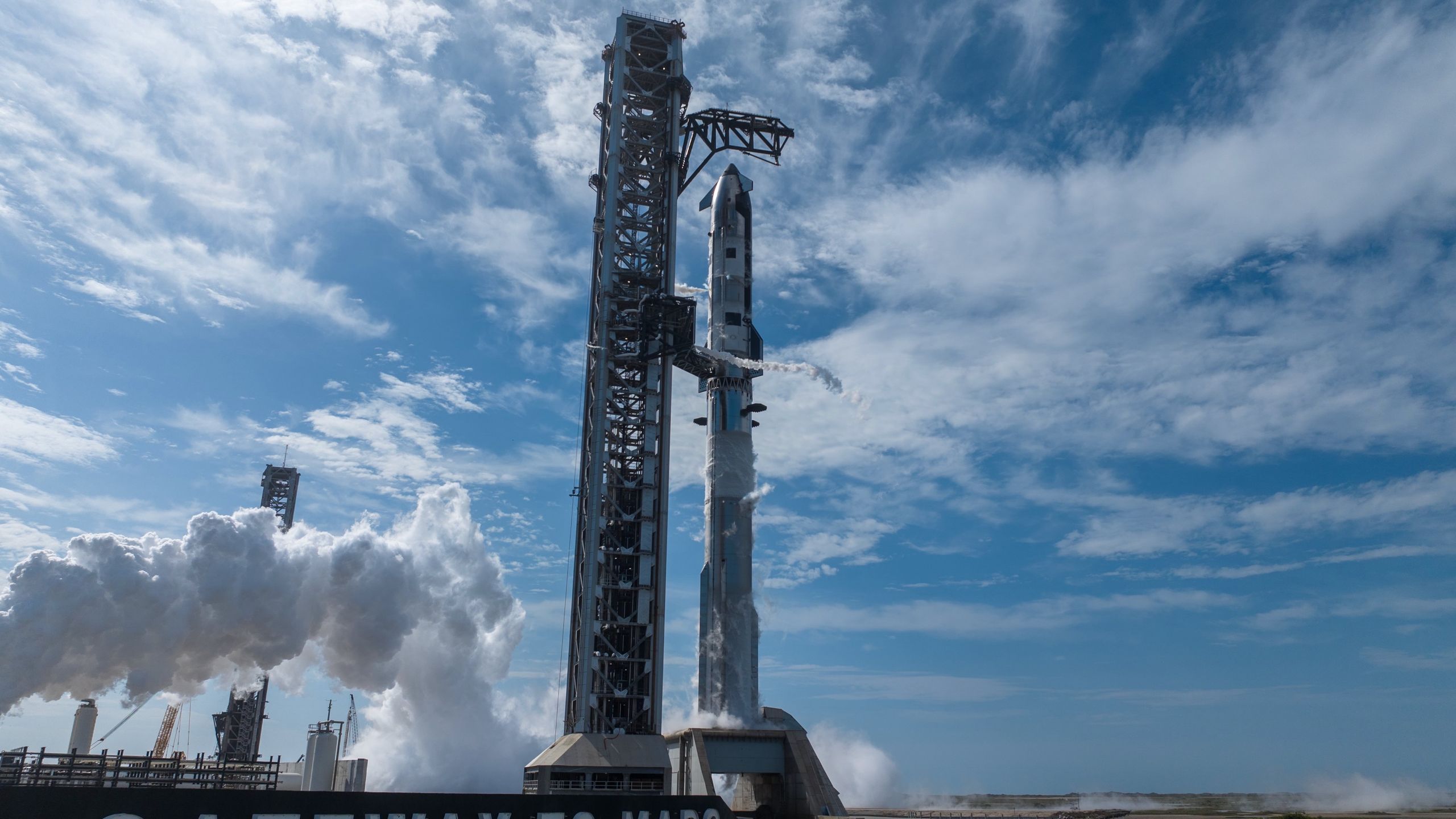
SpaceX is targeting May 19 for the first flight of Starship V3, marking the 12th overall Starship launch and the debut of several major upgrades, including redesigned propulsion systems, larger grid fins, and Starbase Pad 2. The mission is intended to deploy 22 dummy Starlink V2 satellites, test in-space engine relight, and validate key capabilities such as propellant transfer and eventual rapid reuse. The article is primarily a technical milestone update, with limited near-term market impact but positive implications for SpaceX's long-term launch and deep-space roadmap.
This is less a one-off launch headline than a validation event for a multiyear manufacturing stack-up: if the new architecture works, SpaceX gets leverage across launch cadence, in-space refueling, and payload class expansion. The second-order winner is the company’s own internal cost curve — not just from reusable hardware, but from learning-rate compression if the redesigned booster/ship interfaces reduce pad turnaround and engine-start reliability issues. For public-market reads, the closest beneficiaries are not obvious “space” names so much as enabling industrials tied to cryogenic systems, high-spec materials, sensors, and launch infrastructure, where a successful V3 debut can justify higher-order demand assumptions.
The key risk is that the market tends to extrapolate a clean debut into an operational step-change too quickly. A single successful flight would de-risk the headline, but the true economic payoff depends on repeatability over the next 2-6 flights: engine relight consistency, thermal margins, and recovery/catch performance. Any anomaly here would not just delay cadence; it would push out confidence in off-Earth propellant transfer, which is the real monetization bridge to lunar cargo, Starlink scale-up, and anything resembling high-frequency launch economics.
For sentiment, this is mildly positive but likely under-allocated by the market because the near-term event is binary while the strategic upside is path-dependent. The contrarian view is that the first-order move may already be priced in; the better opportunity is either to buy dips after a clean-but-not-perfect launch or fade enthusiasm if the flight is flawless but the hardware still needs several iterative cycles before revenue-bearing missions. The bigger miss is that launch success is not the catalyst — credible cadence is, and that should be judged over months, not days.
AI-powered research, real-time alerts, and portfolio analytics for institutional investors.
Request DemoOverall Sentiment
mildly positive
Sentiment Score
0.35
Ticker Sentiment
