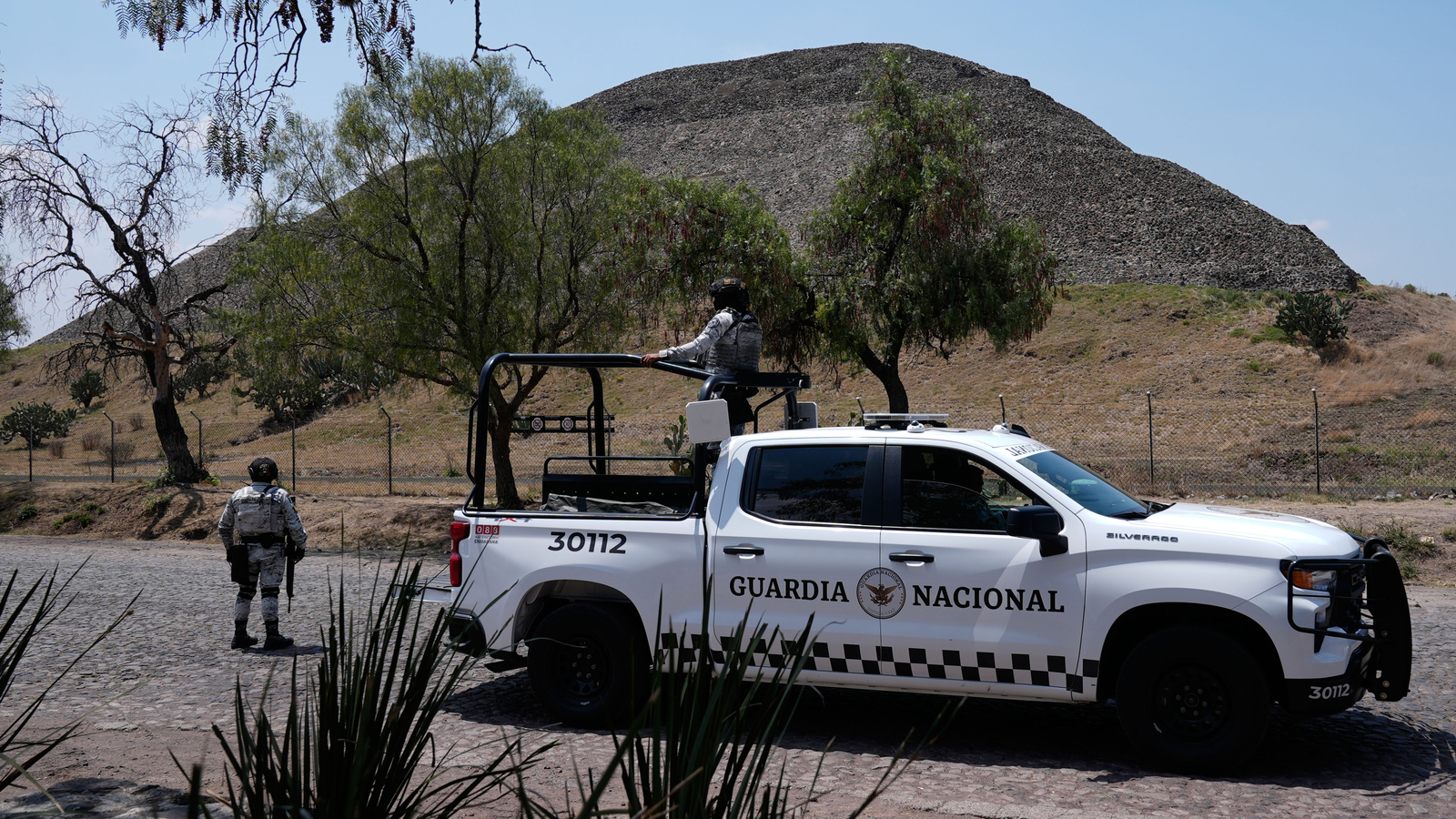
Mexico is tightening security at tourist sites after a lone gunman killed 1 Canadian tourist and injured a dozen others at Teotihuacan, a key World Cup visitor site near Mexico City. Authorities said they will add National Guard presence, increase security checks, and expand surveillance ahead of the FIFA tournament, with 100,000 security forces already planned across host cities. The incident heightens concerns about public safety and could pressure Mexico's World Cup tourism narrative, though the direct market impact is likely limited.
The key market effect is not the isolated incident itself, but the likely re-pricing of Mexico’s near-term risk premium into travel, event operations, and public-venue security. Even if inbound demand ultimately holds, operators will likely face higher incremental spend on guards, screening, insurance, and contingency transport, which compresses margins before it materially changes top-line volumes. The most exposed period is the next 4-8 weeks, when bookings and travel advisories around World Cup-linked itineraries are being set.
Second-order, this strengthens the case for a security-capex trade-up in Mexico: airports, stadiums, tourist corridors, and municipal governments will need more hardware, monitoring, and perimeter controls. That tends to favor global and domestic defense/security integrators with Latin American exposure more than broad EM travel plays. It also creates a political incentive for visible overreaction, which can divert resources from higher-crime regions and raise broader public-safety dissatisfaction if the promised containment does not translate into fewer incidents.
The contrarian view is that the market may overestimate the impact on the World Cup itself. FIFA and host governments will likely flood the corridor with security assets, making the tournament venues safer than ordinary tourist sites and limiting any sustained hit to match-related demand. The bigger risk is reputational: a few more incidents in non-stadium settings would shift the narrative from 'isolated lapse' to 'systemic inability,' which would matter more for 2026 tourism and cross-border leisure flows than for the event week itself.
AI-powered research, real-time alerts, and portfolio analytics for institutional investors.
Overall Sentiment
moderately negative
Sentiment Score
-0.45
