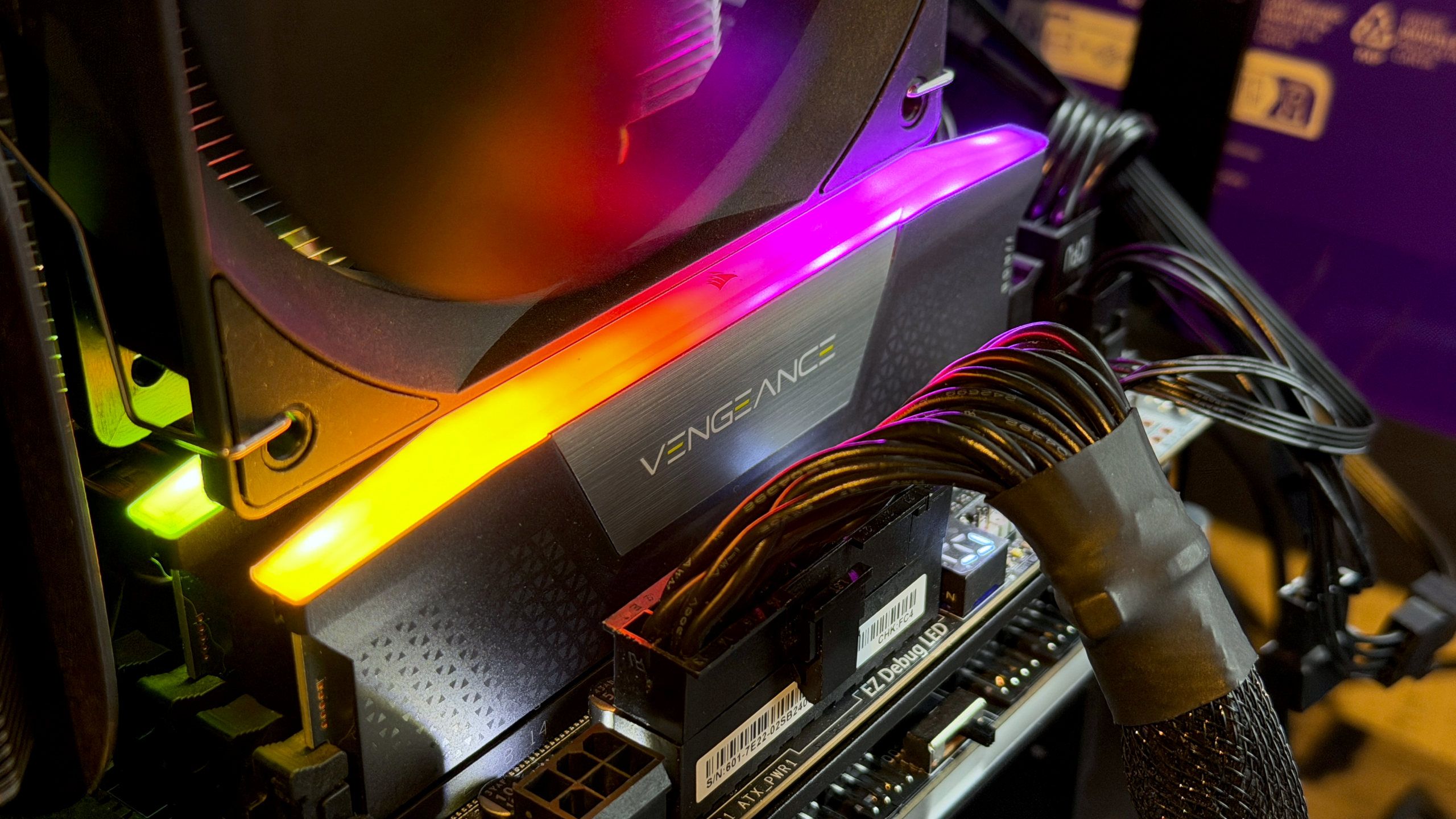
Intel's Core Ultra 200S Plus CPUs add default DDR5-7200 support (7,200 MT/s). Gaming tests with an RTX 4070 show DDR5-7200 vs DDR5-6000 yields under ~5% average FPS differences in 4/5 titles and up to +4% avg / +8% 1% low in Baldur's Gate 3 on the 270K Plus, i.e., within test noise for most gamers. Pricing examples: 32GB Corsair DDR5-6000 ~$510 vs G.Skill DDR5-7200 ~$550, with cheaper DDR5-6000 kits at ~$370; conclusion — faster DRAM rarely justifies the premium for typical gaming builds.
Intel’s continued memory-speed marketing is a classic feature competition that looks more like a marginal engineering win than a durable demand generator. Because most mainstream gaming workloads are bottlenecked elsewhere (GPU draw, cache hierarchy, or IPS), the practical TAM for premium DDR5 kits remains small and highly price elastic; that suggests vendors will either discount high-speed SKUs or promote them into niche segments (esports, pro-content, benchmarking), compressing ASPs within 3–9 months.
A meaningful second-order effect is pressure on memory module and premium motherboard margins: if OEMs and retail channels can’t sell DDR5-7200 at a sustained premium, they’ll push volume via promotions, dragging DRAM vendor realized prices and module-margin mix into Q2–Q4 inventory risk. Conversely, architectures that reduce cache (or increase die-to-die traffic) can flip sensitivity to system memory overnight — a single popular title or SDK that stresses bandwidth (or an RTX-50xx-driven low-res esports surge) could create a concentrated short-lived pop in premium DRAM demand.
For semiconductor competitive dynamics, AMD’s large on-die cache and resulting insensitivity to DRAM speed is a structural advantage in the largest gaming install base; expect AMD to defend/extend share in gaming-focused OEM SKUs. Short-term catalysts to watch: aggressive DDR5 kit promotions (weeks), OEM SKU refresh cadence and channel inventory reports (1–3 months), and a few high-impact game/engine patches that materially shift memory access patterns (3–12 months).
AI-powered research, real-time alerts, and portfolio analytics for institutional investors.
Overall Sentiment
neutral
Sentiment Score
0.00
Ticker Sentiment
