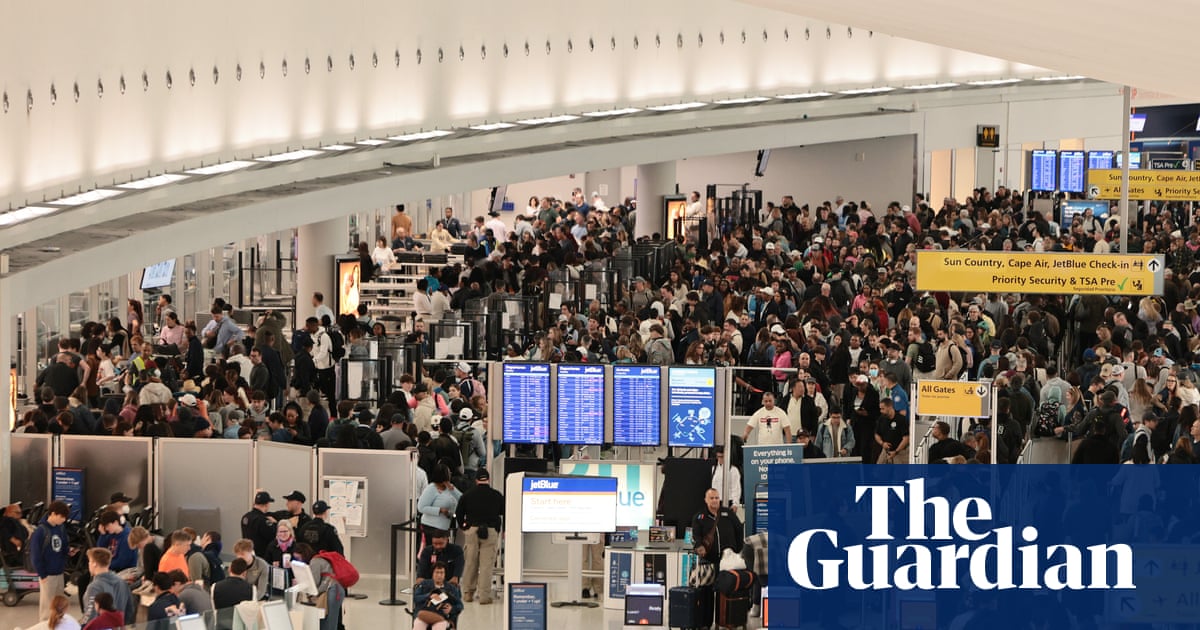
The DHS partial shutdown hit six weeks, affecting 193,867 employees (9.4% of the federal workforce); 3,560 TSA workers (over 12%) failed to report on peak days and the agency has lost roughly 480–500+ TSA officers since the shutdown began. Travel disruption risks are material for airlines and airports as long lines and unpredictable TSA coverage continue; Trump issued a memorandum ordering pay restoration for TSA staff but funding and legal authority remain unclear. Congressional gridlock persisted after the House rejected a Senate funding bill, increasing the probability of continued operational stress for DHS components and potential further disruptions to air travel.
This is primarily an operational shock concentrated at choke-points in the aviation network; the economically meaningful effect is not calendar days of disruption but concentrated schedule volatility that increases marginal operational costs (reaccommodation, passenger compensation, overtime) and reduces RASM in the busiest dayparts. Quantitatively, expect 2–4% RASM pressure for affected carriers in the next 30–60 days and a asymmetric hit to hub-centric airlines whose morning banks generate a disproportionate share of daily connections.
Aviation-driven ripple effects will elevate short‑lead airfreight costs on the most time‑sensitive lanes, forcing shippers to re-route to surface modes or premium cargo space. Spot airfreight rate moves of +10–25% on constrained lanes are plausible over 2–6 weeks; manufacturers running tight inventories (pharma batches, semiconductors, high-end apparel) will either absorb margin pressure or incur inventory delays that compress near‑term gross margins.
Policy and legal ambiguity is the dominant risk multiplier: an executive patch that’s later litigated creates stop‑start funding that prolongs uncertainty well beyond standard stopgap cycles. The market should price a nontrivial (20–40%) probability of a protracted multi‑month operational drag versus a 30–60 day fix, meaning hedges should be staged and sized to account for both quick resolutions and drawn‑out outcomes.
Consensus positioning skews toward uniform bearishness on travel names, which overweights headline operational risk and underweights resilient leisure demand and carriers with low unit costs. That opens opportunities to express a differentiated view via short-duration options and pair trades that isolate operational exposure from durable demand recovery over a 3–12 month horizon.
AI-powered research, real-time alerts, and portfolio analytics for institutional investors.
Request DemoOverall Sentiment
moderately negative
Sentiment Score
-0.50
