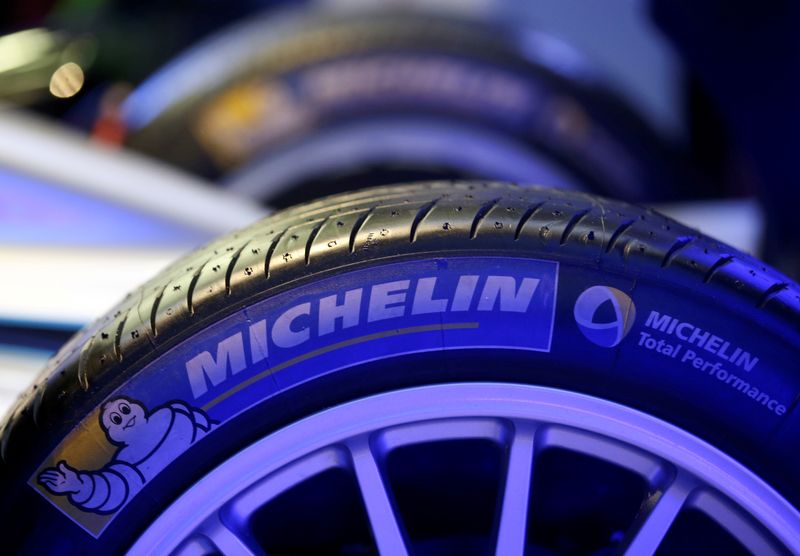
Sell-in volumes fell in the 'low-to-mid single digit' percentage range in Q1 2026 and pricing turned negative after contributing +3% in 2025, while FX headwinds remain comparable to Q4 2025 (–€346m, or –4.9% of net sales); a one-cent USD/EUR move affects operating income by ~€30m. Michelin maintained full-year volume guidance expecting slightly positive Q2 and modest full-year growth, flagged no current supply shortages related to the Middle East conflict, and will update input-cost scenarios on April 29. Barclays retains an 'underweight' rating with a €25 price target vs a €29.22 close; shares were up ~4.7% intraday.
The market is treating the current softness as a short-duration problem, but the real risk is correlation: pricing indexation, FX translation and volume cycles can move together and produce nonlinear margin compression. That means earnings volatility will be driven less by unit demand alone and more by the timing mismatch between raw-material price moves and contract re-pricing, which can amplify P&L swings over a single quarter.
Second-order winners and losers are outside the headline tyre OEMs. High fixed-cost, capital-intensive suppliers (carbon black, tyre curing machinery) face amplified cash-flow volatility and are likely to pull back on discretionary CapEx and inventory purchases, tightening the upstream market and raising cyclic re-order risk. Conversely, lower-cost producers and tyre-discount channels can take share during a pricing squeeze, so look for structural share shifts in replacement distribution if the softness persists beyond one quarter.
Near-term catalysts to watch: the upcoming sales/inputs update is the immediate volatility trigger, but the larger reversals will come from raw-material or energy shocks and FX moves — a persistent euro re-strengthening or a freight/energy spike would materially worsen reported results, while a rebound in commodity prices or a weaker euro would unwind much of the current pressure. Time horizons: expect price discovery around days-to-weeks around the release, and directional resolution across months (Q2–H2) as indexation and mix effects propagate through contracts.
AI-powered research, real-time alerts, and portfolio analytics for institutional investors.
Overall Sentiment
mildly negative
Sentiment Score
-0.25
Ticker Sentiment
