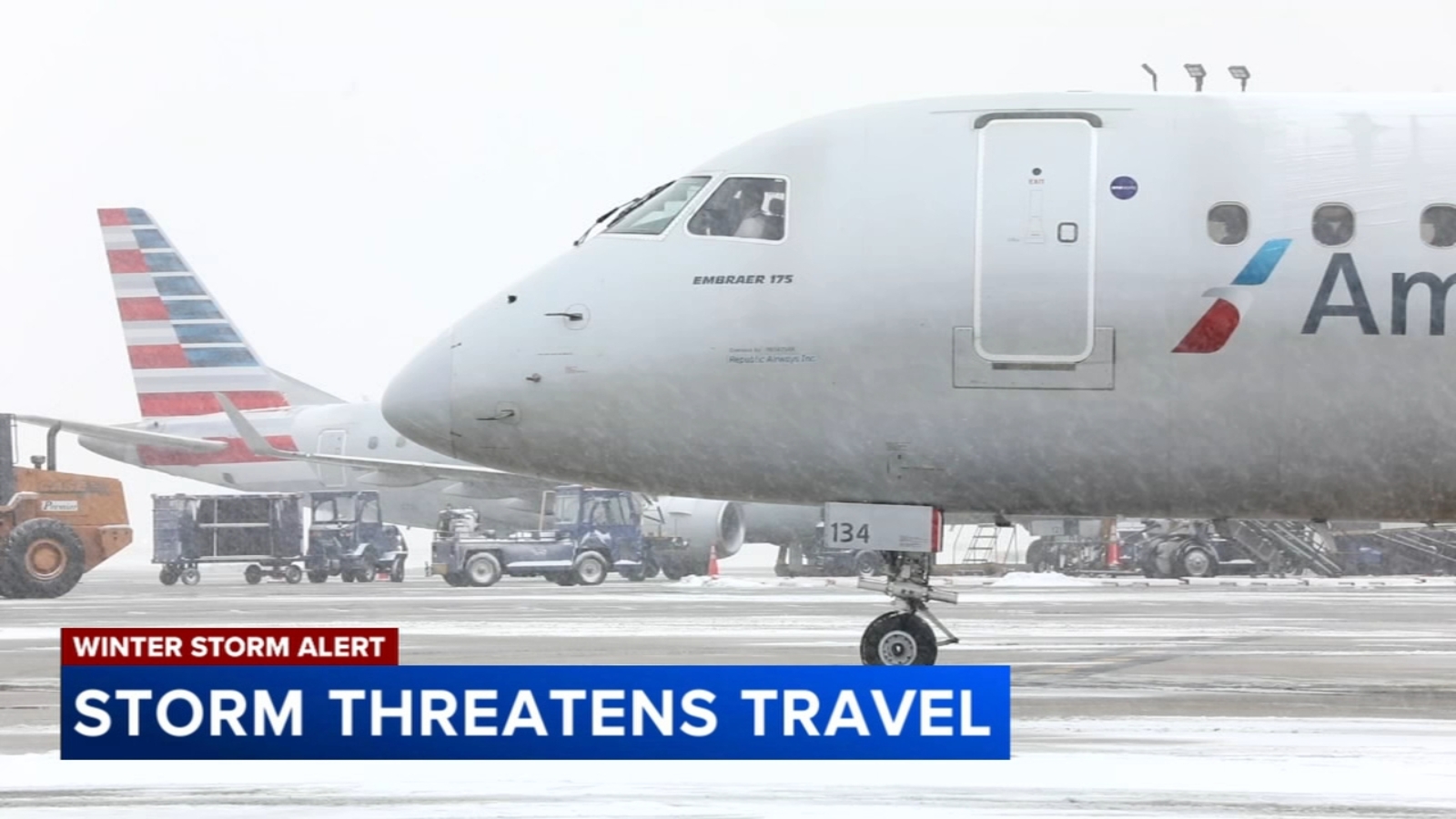
A major snow and ice storm expected to affect an estimated 225 million people is prompting widespread travel disruption this weekend, with airlines such as American (hubbed at PHL) offering waivers to rebook or cancel flights for travel through more than 30 airports Friday–Sunday without change fees and with refunds or credits valid for a year. The event raises operational and customer-service costs for carriers, while federal rules do not obligate airlines to compensate weather-related expenses; travelers are advised to check travel insurance and credit-card trip-disruption coverage. Security risks from scammers and public Wi‑Fi are also highlighted, increasing short-term consumer-protection and IT support needs for airlines and travel firms.
Market structure: Short, concentrated shocks from a major winter storm directly favor travel-insurers/credit-card protection suites (Visa, MA) and cybersecurity/VPN demand spikes (enterprise vendors) while pressuring network airlines (AAL) and regional/low-margin carriers through forced cancellations, rebooking costs and lost ancillary revenue. Expect short-dated flight capacity to tighten domestically for 48–96 hours then rebound; implied equity volatility for airline names should rise 30–80% intraday, pressuring option skews and hurting near-term liquidity in high-yield paper of carriers.
Risk assessment: Tail risks include prolonged airport closures or a regulatory shift within 30–90 days mandating compensation (materially increasing liabilities) or a cascading contagion to credit markets if multiple carriers report >5% quarterly revenue hits. Immediate (days): booking cancellations and elevated IV; short-term (weeks): revenue recognition shifts and chargeback noise; long-term (quarters): potential policy/regulatory costs and reputational effects on loyalty flows.
Trade implications: Tactical plays favor short-dated downside on AAL (put spreads) and relative shorts on weaker network carriers versus resilient peers (pair short AAL / long DAL) while rotating some leisure/OTA exposure into defensive cyber/insurance names (CRWD, HACK, V, MA) for 3–12 month horizons. Use 2–6 week expiries to capture event-driven IV and cap premium via vertical spreads; avoid outright long airlines unless >10% dislocation persists beyond 2 weeks.
Contrarian angles: The market may overprice a transient operational hit—historical storms produce 1–4 week mean reversion, so a >10% drop in AAL could present a tactical buy. Conversely, underpriced risk is regulatory change: if DOT/Lawmakers push compensation rules in 30–90 days, downside could be non-linear. Set explicit activation thresholds to avoid being whipsawed.
AI-powered research, real-time alerts, and portfolio analytics for institutional investors.
Request DemoOverall Sentiment
mildly negative
Sentiment Score
-0.25
Ticker Sentiment
