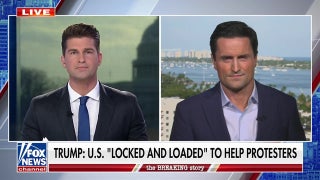
Widespread anti-government protests in Iran have entered a sixth day with the exiled National Council of Resistance of Iran claiming unrest across 44 cities in 19 provinces and at least eight fatalities, including a 15-year-old, though claims are unverified. Hardline Parliament Speaker Mohammad Bagher Qalibaf warned U.S. forces and bases in the region would become "legitimate targets" if Washington intervenes, while President Trump signaled the U.S. is "locked and loaded" to protect protesters; roughly 40,000 U.S. personnel are deployed across the Middle East. The developments increase regional geopolitical risk and pose potential upside volatility for energy and defense-related assets and a near-term risk-off impulse for emerging market and regional exposures.
Market structure: Geopolitical risk benefits defense contractors (Lockheed LMT, Raytheon RTX, General Dynamics GD) and safe-havens (GLD, TLT) while hurting regional EM assets (EEM), airlines (JETS, DAL, AAL) and shipping/logistics names. A limited regional flare-up would likely push Brent +$5–$15/bbl within days; a sustained disruption (Strait of Hormuz incidents) could add +$20–$40 and force incremental spare-capacity reallocation. USD and USTs should strengthen short-term, pressuring EM FX and HY credit spreads.
Risk assessment: Tail risks include a US-Iran direct exchange or attacks on US bases that spike oil >$110 and widen IG/HY spreads by 150–300bps; probability low (<15%) but high impact. Immediate (0–14 days) outcomes: volatility and flight-to-safety; short-term (1–6 months): tactical defense/energy upside; long-term (12–24 months): potential secular increase in defense budgets by ~5–10% if escalation persists. Hidden dependencies: shipping insurance, Chinese/Russian diplomatic stance, and sanctions re-tightening that amplify market moves. Key catalysts: confirmed US strikes, shipping incidents, or Iranian cross-border attacks.
Trade implications: Tactical hedges now; establish 1–3% positions and scale. Favor 3–12 month long exposure to LMT/RTX (fundamental + order-book optionality) and GLD as a 1–2% portfolio hedge. Short EEM or buy 1-month put spreads on EEM/JETS to capture EM/airline downside; use options to limit capital at risk. Enter hedges within 48–72 hours; add on material escalation (Brent >$95 or reported strikes).
Contrarian angles: Markets often overshoot in first 72 hours — defense stocks historically retrace 10–20% after initial spikes absent contract wins; oil shocks have been mean-reverting within 3–6 months when spare capacity and demand weakness exist. If no tangible supply disruption occurs, unwind 50% of tactical longs after a 15% move and re-evaluate fundamentals before committing long-term.
AI-powered research, real-time alerts, and portfolio analytics for institutional investors.
Request DemoOverall Sentiment
moderately negative
Sentiment Score
-0.60
