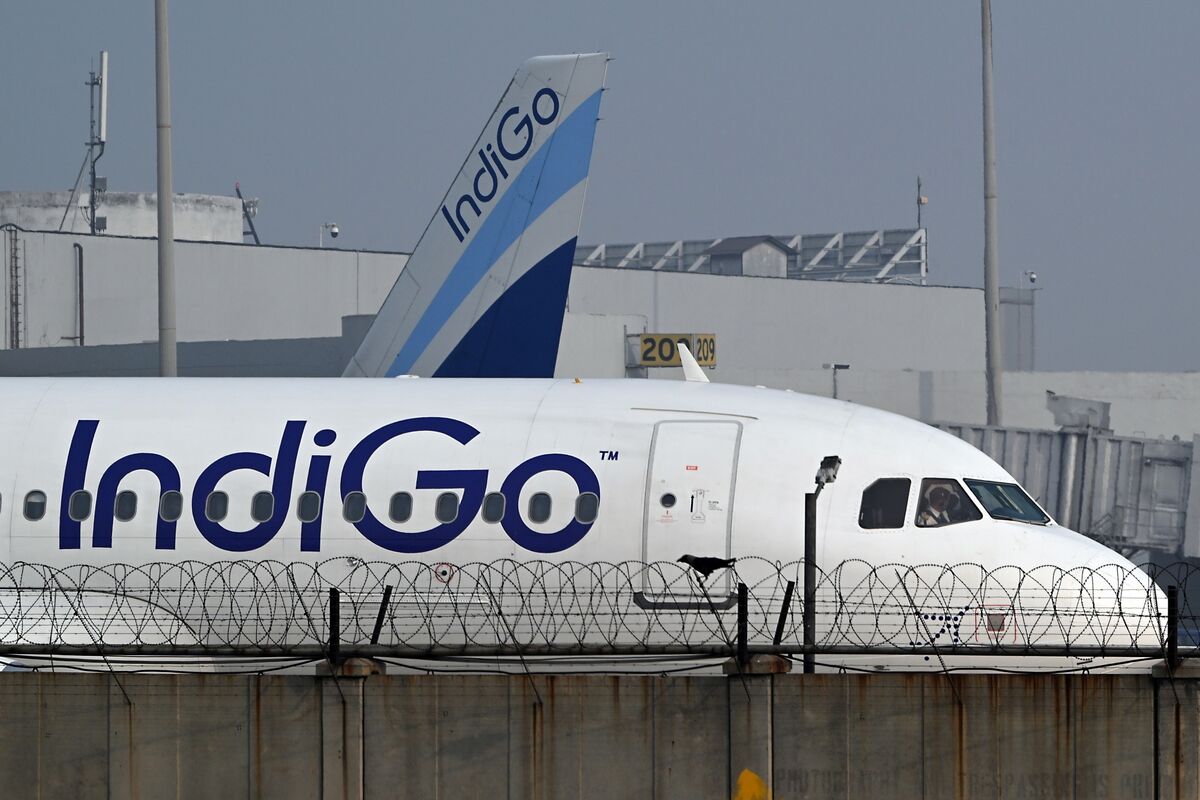
Shares of InterGlobe Aviation Ltd. (IndiGo) plunged as much as 6.9% to 5,001 rupees in early Mumbai trading after India’s civil aviation regulator demanded that the airline’s CEO explain one of the country’s worst flight disruptions. Smaller listed rival SpiceJet Ltd. jumped as much as 12% as it added flights to pick up displaced capacity. The regulatory inquiry elevates operational and governance risk for IndiGo, creates potential for near-term reputational or financial consequences, and has produced meaningful relative stock moves within the domestic airline sector.
Market structure: The immediate winners are direct short-haul capacity fillers — SpiceJet (NSE: SPICEJET) and independent charter/MRO providers — who can pick up cancelled passengers and charge premium fares; incumbents' (InterGlobe Aviation/INDIGO) short-term pricing power and reliability premium is impaired. Supply-demand: cancelled IndiGo flights create transient supply tightness on popular routes (expect 3–8% spike in spot fares on affected trunk routes over the next 7–21 days), benefitting rivals and ancillary revenue streams (rebooking fees, hotels). Cross-asset: expect a small INR weakening (20–50bps) on risk-off intra-day flows and a modest rise in airline sector CDS/credit spreads; sovereign bonds largely unaffected absent systemic contagion.
Risk assessment: Tail risks include regulator-imposed fines, operational restrictions or CEO removal that could knock INDIGO equity down >20% (low-probability, high-impact). Time horizons: days — elevated volatility and flight reassignments; weeks/months — regulator report (likely within 30–60 days) will be the key inflection; 6–12 months — brand share loss if failures repeat. Hidden dependencies: crew rostering, outsourced ground-handling and aircraft utilization rates (a 1–3ppt drop in utilization meaningfully compresses margins). Catalysts: DGCA directives, passenger compensation rulings, and upcoming peak travel seasons (Diwali/December) which amplify impact.
Trade implications: Tactical pair: short INDIGO long SPICEJET captures immediate market-share transfer; use 1–3 month horizon and tighten stops on catalyst publication. Options: buy 3-month INDIGO puts (10% OTM) to asymmetrically express regulatory risk while capping capital outlay; consider selling covered calls against new SPICEJET longs to finance premiums. Sector rotation: trim airline beta by 30–50% and reallocate into airport operators and travel ancillaries (MROs, ground-handling) for lower operational risk. Entry/exit: initiate within 48–72 hours while implied vol is elevated; unwind 24–48 hours after regulator clarity or at preset P/L thresholds.
Contrarian angles: The market likely overprices permanent share loss; if regulator response is limited to a reprimand or operational fixes within 30 days, INDIGO could mean-revert 15–25% from knee-jerk lows. Historical parallels (past airline operational meltdowns) show recovery once concrete remediation plans and management accountability are announced — this creates a short-squeeze risk for aggressively sized shorts. Unintended consequence: SpiceJet may lack scale/MRO capacity to sustain gains; long SPICEJET carries execution risk and should be sized smaller than the short of INDIGO.
AI-powered research, real-time alerts, and portfolio analytics for institutional investors.
Request DemoOverall Sentiment
strongly negative
Sentiment Score
-0.60
