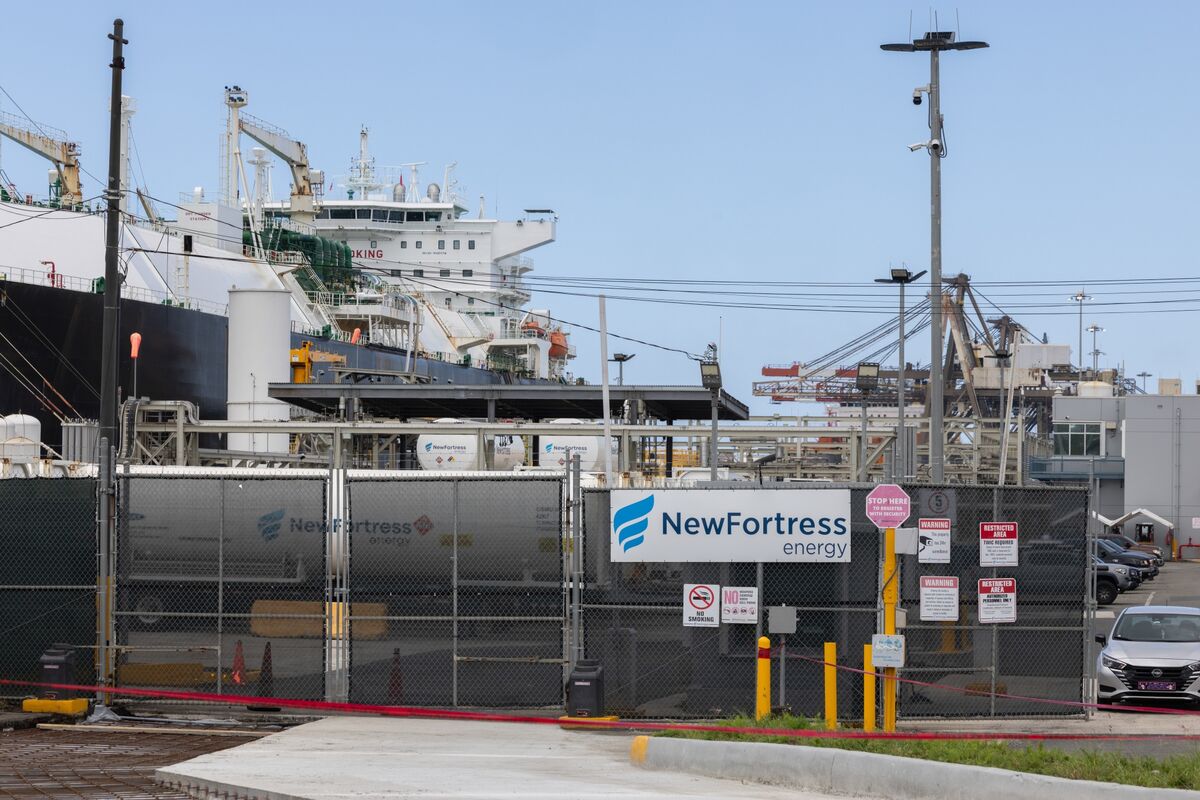
New Fortress Energy is seeking UK court approval for a restructuring of $6.5 billion of debt that would convert the vast majority of obligations into equity and transfer ownership to creditors. The plan would extinguish about 90% of total debt and already has support from 97% of interested creditors. The filing underscores severe balance-sheet stress, though the news is company-specific rather than broadly market-moving.
This is less a refinancing than a de facto transfer of enterprise value from equity to creditors, and the second-order read-through is that NFE’s operating franchise is no longer being priced on growth but on survivability. Once the liability stack is cut that aggressively, the market will likely re-rate the company as a highly levered project platform with much lower equity optionality and a higher cost of future capital, even if the restructuring succeeds. The near-term winner is the creditor group that can force control before further asset leakage; the losers are existing equity and any counterparty relying on NFE’s ability to fund long-dated LNG buildouts from internal cash flow. The more interesting trade is in the supply chain: contractors, equipment vendors, and counterparties with receivables from NFE may face delayed payments, renegotiations, or project deferrals over the next 1-3 quarters as the company preserves liquidity through court supervision. That creates a subtle negative spillover for smaller LNG services names and any adjacent infrastructure theme where NFE has been a marginal demand source. In credit markets, this sort of restructuring can widen spreads for comparable private-project and merchant-infrastructure credits as investors reassess documentation quality and cross-border enforceability. The catalyst path is binary and time-sensitive: court approval and creditor votes can stabilize the structure, but any delay, objection, or competing claims could turn a controlled process into a prolonged value-destruction event. The bull case for surviving equity is not recovery to prior highs, but a post-reset trading asset with cleaner balance sheet and improved optionality; that scenario only matters if asset-level EBITDA holds through the restructuring window. The market is probably still underestimating the risk that the new capital structure is solved on paper but still leaves the company chronically dependent on favorable financing conditions. Consensus may be too focused on the headline debt haircut and not enough on what it implies about asset quality and governance: if 90%+ debt reduction is necessary, the equity story was structurally broken well before this filing. That said, because the process is already heavily supported, the short is no longer about bankruptcy shock; it is about dilution and a likely valuation reset once the new cap table is finalized. In other words, the easy downside may be behind us, but the equity still looks like a low-probability residual claim rather than a turnaround.
AI-powered research, real-time alerts, and portfolio analytics for institutional investors.
Request DemoOverall Sentiment
strongly negative
Sentiment Score
-0.65
Ticker Sentiment
