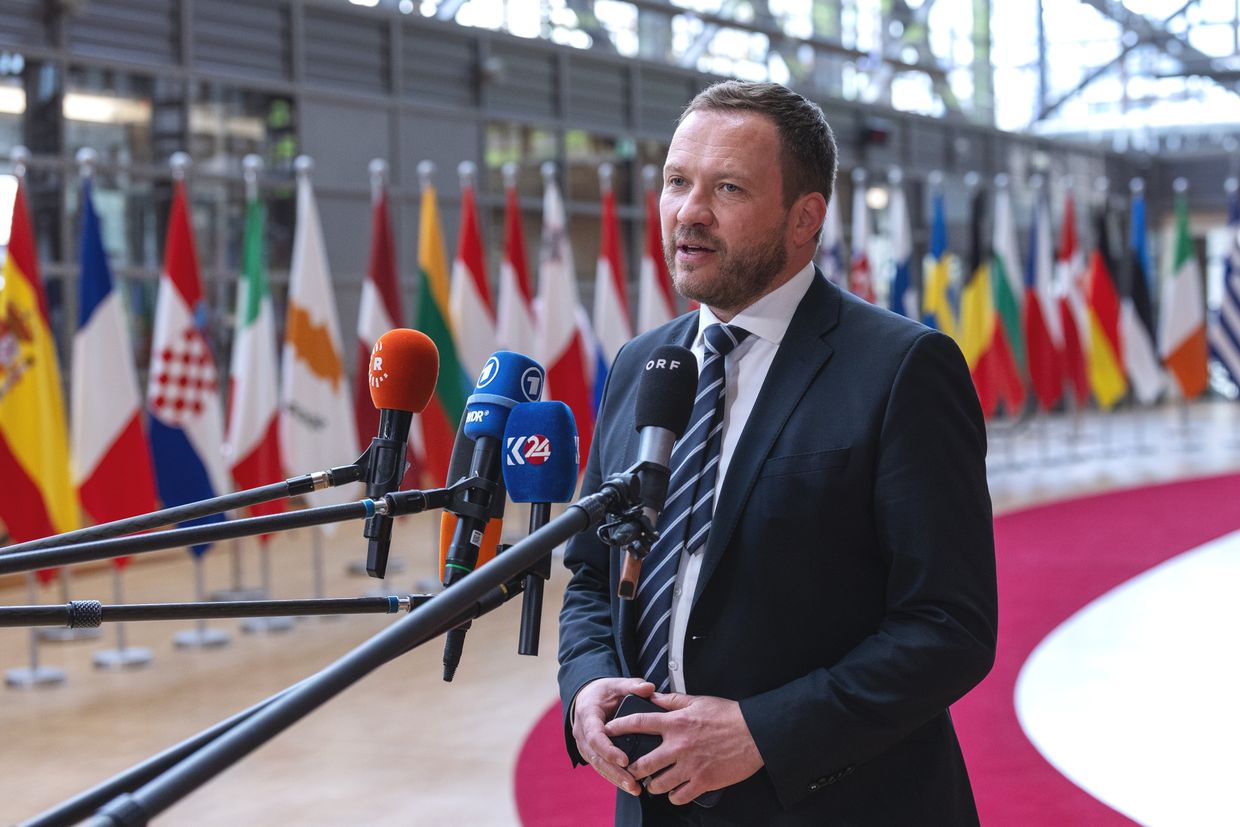
Estonian Foreign Minister Margus Tsahkna affirmed Europe's heightened commitment to supporting Ukraine, including increasing financial and military aid, implementing an 18th sanctions package, and aiming for €40 billion in European assistance this year, amid concerns about potential U.S. disengagement. Tsahkna stressed Europe's increased responsibility for both Ukraine's defense and its own security, advocating for the seizure of $240 billion in frozen Russian assets to finance Ukraine. He also asserted that NATO remains "stronger than ever" and that Russia can be "cracked" through sustained Western pressure and aid, dismissing notions of Putin's imminent victory.
The interview with Estonian Foreign Minister Margus Tsahkna signals a significant strategic shift in European policy, emphasizing increased self-reliance in defense and sustained support for Ukraine, irrespective of potential U.S. disengagement. This pivot is underpinned by concrete financial commitments, including a push for €40 billion in European aid to Ukraine this year and the ongoing negotiation of an 18th EU sanctions package. The potential seizure of $240 billion in frozen Russian assets is being actively promoted by Estonia as a critical funding mechanism for Ukraine's defense industry and military needs. Despite the minister's optimistic assertion that Russia can be "cracked" and that NATO is "stronger than ever," the analysis reveals underlying complexities. Consensus on the most stringent sanctions, such as lowering the oil price cap, faces internal EU opposition from countries like Slovakia and Hungary. Furthermore, while Europe is increasing its defense burden—a move aligned with long-standing U.S. demands—the continent's ability to fully compensate for a potential reduction in U.S. military and financial support remains a key variable. This evolving dynamic points to sustained investment in European defense, as exemplified by Germany's stated ambition to build the continent's strongest army, but also persistent geopolitical risk premiums, particularly in energy markets.
AI-powered research, real-time alerts, and portfolio analytics for institutional investors.
Overall Sentiment
moderately positive
Sentiment Score
0.50
Ticker Sentiment
