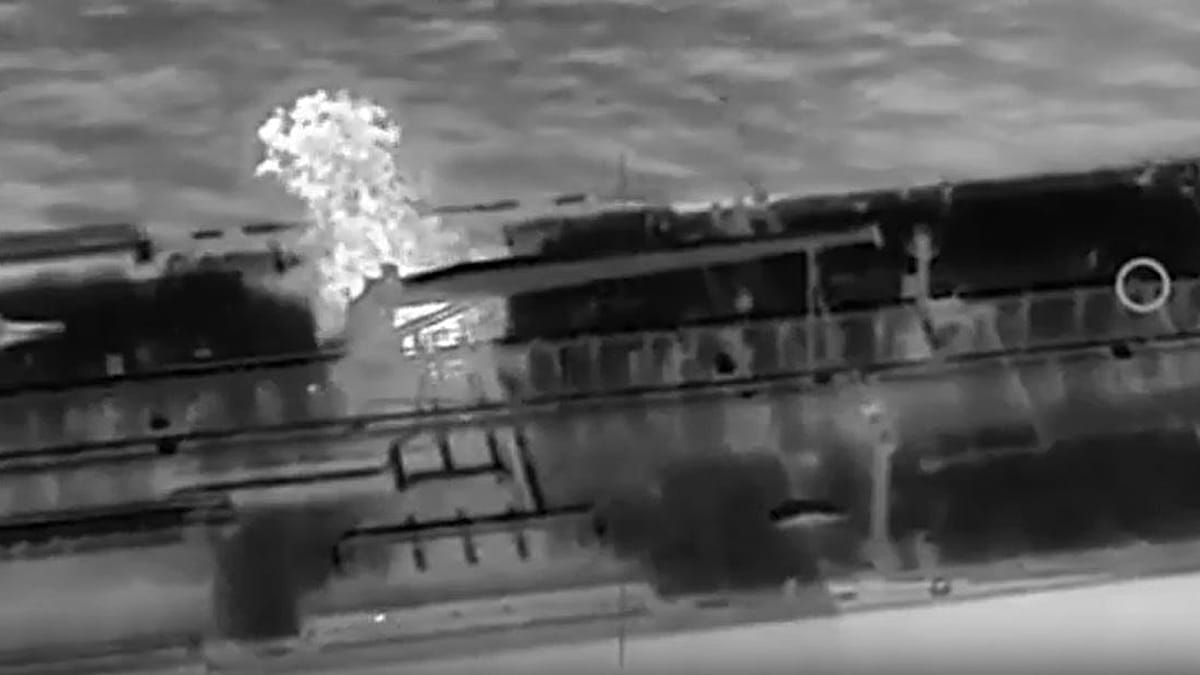
Ukraine struck the Oman‑flagged tanker Qendil with aerial drones in the eastern Mediterranean—more than 2,000 km from Ukrainian territory—rendering the vessel critically damaged and unusable, though it was reportedly empty and posed no environmental threat. The move, described by the SBU as the first strike on Russia's 'shadow fleet' outside the Black Sea, follows recent maritime and infrastructure strikes and targets tankers used to circumvent sanctions; the Qendil was identified by maritime analysts as high sanctions risk though not on the U.S. Treasury list. The operation widens Ukraine's campaign against Russian energy logistics and raises geopolitical and shipping‑risk considerations for energy markets and insurers, while President Putin vowed a response.
Market structure: strikes on shadow-fleet tankers shift near-term pricing power toward owners of compliant, insured crude tankers and to energy producers; expect a 3–7% positive shock to seaborne crude prices if 200–500 kbpd of Russian export capacity is intermittently sidelined over the next 1–3 months. Insurance/war-risk premia will rise (market anecdotes point to +20–50% GOC war-risk), lifting time-charter equivalents (TCEs) for Aframax/Suezmax owners and pressuring freight-sensitive refiners; equities in modern tanker fleets and big integrated oil (XOM, CVX) should outperform older shadow-fleet peers and Russian-linked intermediaries.
Risk assessment: key tail risks include rapid escalation (NATO/Turkey involvement) causing chokepoint closures and a >$10/bbl spike in Brent (low probability, high impact), or conversely rapid rerouting and insurance accommodations that normalize spreads within 2–4 months (moderate probability). Hidden dependencies: P&I club decisions and Lloyd’s/underwriter repricing at next renewals (30–90 days) will dominate realised cost to shipowners; OPEC+ supply moves and winter demand will amplify or mute price effects. Catalysts to watch: official NATO statements, Turkish positioning, shipping-insurance premium bulletins and OPEC+ meetings in the next 30–90 days.
Trade implications: tactically favor long energy beta and selected tanker equities while hedging escalation risk: implement 1–3% tactical longs in Brent exposure via call spreads for 3 months, 2–4% long in modern tanker owners (FRO, DHT) for 3–6 months, and 1–2% long defense/ISR (RTX or LMT) 6–18 months for sustained demand in maritime surveillance. Use options to cap downside: buy call spreads on Brent and buy puts or set 20% stop-losses on tanker names; take profits if Brent >10% or tanker stocks rally >30% in 6–8 weeks.
Contrarian angles: consensus may overstate permanent lost Russian flows — many cargos can be reflagged or rerouted, so price moves could be front-loaded and mean-revert in 2–4 months; don’t pay full carry for prolonged exposure. Historical parallels: 2019 tanker attacks pushed insurance premiums and freight briefly higher but normalized within quarters once routes/coverage adapted. Unintended consequence: aggressive Western/third-party insurance hikes could accelerate consolidation to well-capitalized owners (a structural winner for quality fleets), so favor balance-sheet-strong operators rather than indiscriminate tanker longs.
AI-powered research, real-time alerts, and portfolio analytics for institutional investors.
Request DemoOverall Sentiment
moderately negative
Sentiment Score
-0.40
