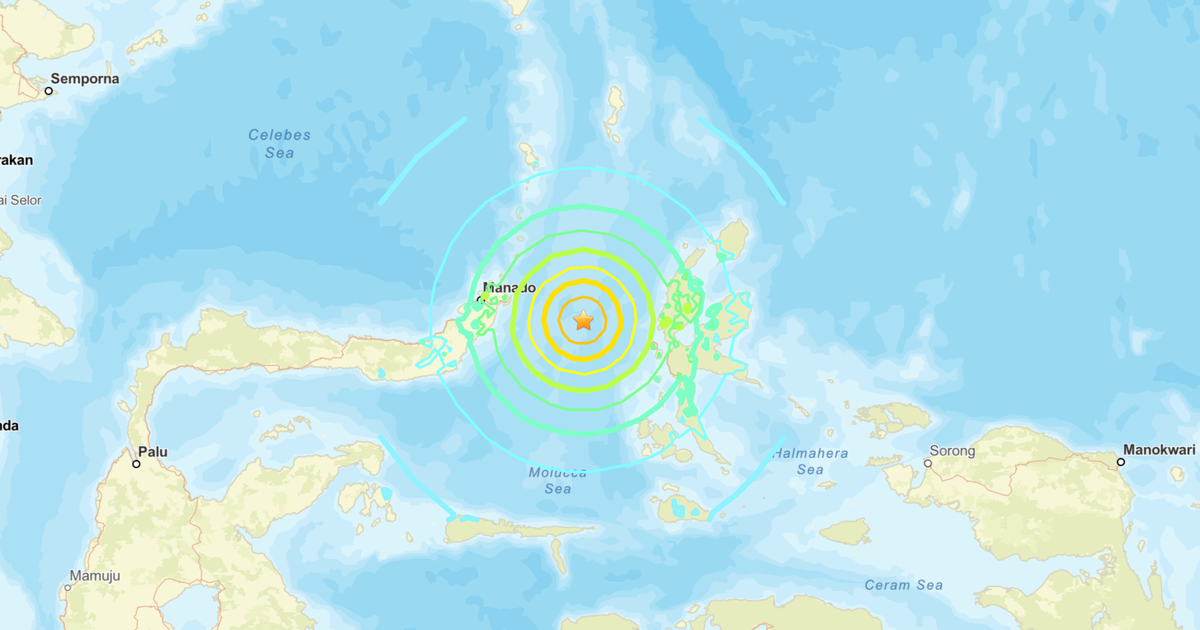
A magnitude 7.4 undersea earthquake in the Molucca Sea killed at least one person and generated a small tsunami with waves up to ~30 inches above normal tides; nearly 50 aftershocks were reported. Damage assessments show light to severe destruction in parts of Ternate and Manado (including a fatal building collapse) and several injuries; tsunami warnings were later lifted and the regional tsunami threat was downgraded. Near-term localized disruption to transport, ports and infrastructure is likely; broader market impact is limited but could create short-term risk-off sentiment for regional assets and increase claims exposure for insurers.
Immediate market impacts will be driven by logistics chokepoints and the composition of regional commodity flows rather than headline casualty counts. Short interruptions at island ports and damage to feeder roads create a high-probability, transitory supply shock for bulk commodity shipments (notably metals and fisheries) that can lift nearby spot prices for a few weeks while global buyers reroute. Expect a concentrated window of volatility in maritime freight rates and LME/Nickel/commodity spreads lasting 2–8 weeks as shipments that cannot be rerouted build transient backwardation.
Insurance and fiscal second-order effects push in opposite directions: low local insurance penetration means limited balance-sheet hits for global insurers but larger fiscal outlays for domestic authorities. That increases near-term sovereign funding needs and FX vulnerability (days–months), while creating a 6–24 month demand impulse for building materials, heavy equipment and international engineering contractors as reconstruction work is tendered. The net is short-term EM risk-off with selective medium-term domestic cyclical winners in construction and capital goods.
Corporate winners will be firms able to supply modular housing, cement/steel imports, and turnkey engineering services on short notice; losers are regional port operators, coastal fisheries exporters and smaller logistics firms with concentrated assets. A parallel effect: commodity processors that can flex inventory into other markets will capture pricing power briefly, so margin dispersion across processors and traders widens in the next 1–3 months. Monitor freight and LME price curves as lead indicators for contracting activity.
Tail risks center on persistent aftershocks or broader investor flight from local assets; these would deepen IDR weakness and push sovereign spreads wider over 1–3 months. Reversal catalysts include rapid international aid or central bank FX intervention and re-routing of cargo that restores flows within 2–6 weeks; if that happens, commodity and freight dislocations will snap back quickly, leaving reconstruction beneficiaries as the longer-duration winners.
AI-powered research, real-time alerts, and portfolio analytics for institutional investors.
Request DemoOverall Sentiment
strongly negative
Sentiment Score
-0.60
