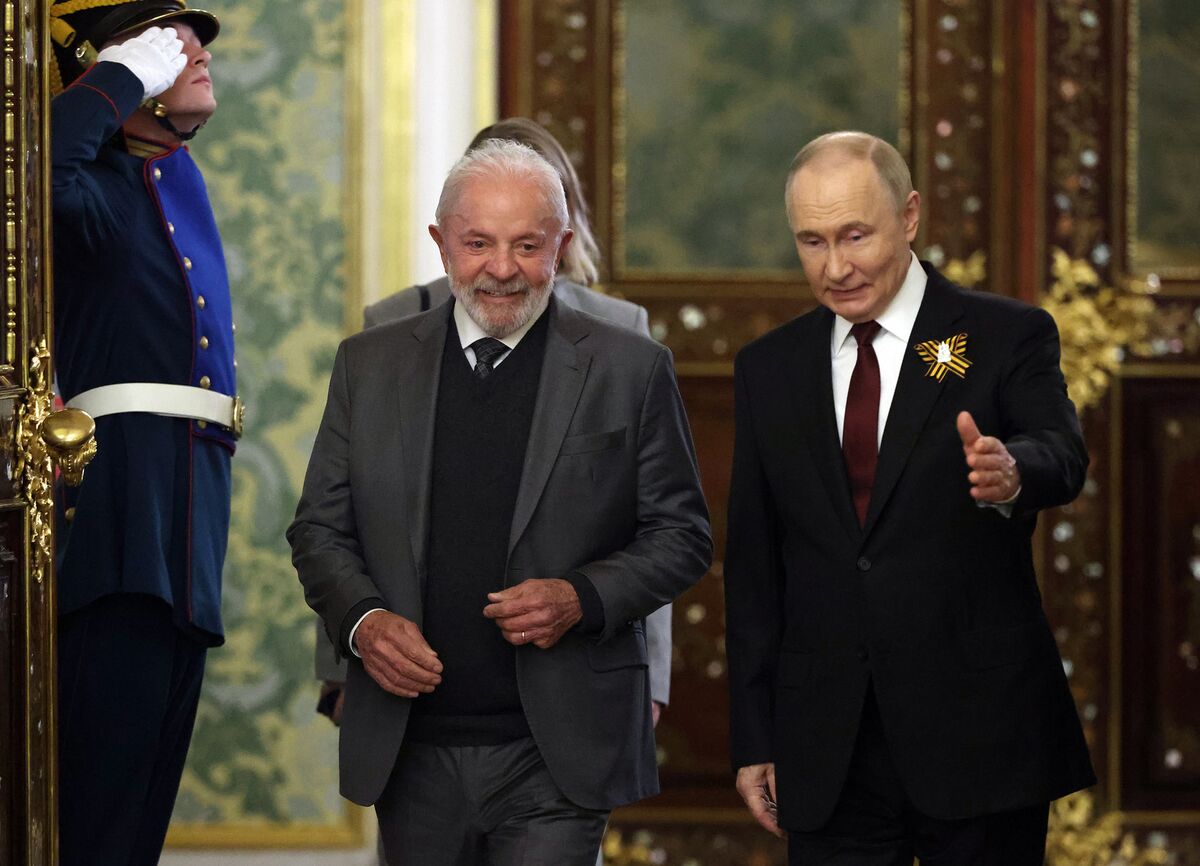
Russian President Vladimir Putin and Brazilian President Luiz Inácio Lula da Silva discussed strengthening bilateral ties and cooperation within the BRICS bloc, which has been energized by US tariff policies. The call, initiated by Putin, reaffirmed their commitment to a strategic partnership and coordination, also touching upon Putin's recent discussions with the US regarding Ukraine, signaling deepening alignment among key emerging economies.
The direct communication between Russian President Vladimir Putin and Brazilian President Luiz Inácio Lula da Silva, initiated by Putin, signals a deliberate effort to reinforce the strategic partnership between the two nations and within the broader BRICS framework. The discussion's context, explicitly linked to the BRICS alliance being energized by US tariff policy, underscores a growing alignment among major emerging economies as a counterpoint to Western-led economic policies. The reaffirmation of a strategic partnership and coordination, coupled with discussions on sensitive geopolitical topics such as Ukraine, points to a deepening of political and economic ties that transcend simple trade. While the event carries a low immediate market impact score of 0.25, it confirms a significant long-term geopolitical trend involving the consolidation of non-Western economic blocs, which has material implications for global trade routes, supply chains, and international relations.
AI-powered research, real-time alerts, and portfolio analytics for institutional investors.
Request DemoOverall Sentiment
neutral
Sentiment Score
0.00
