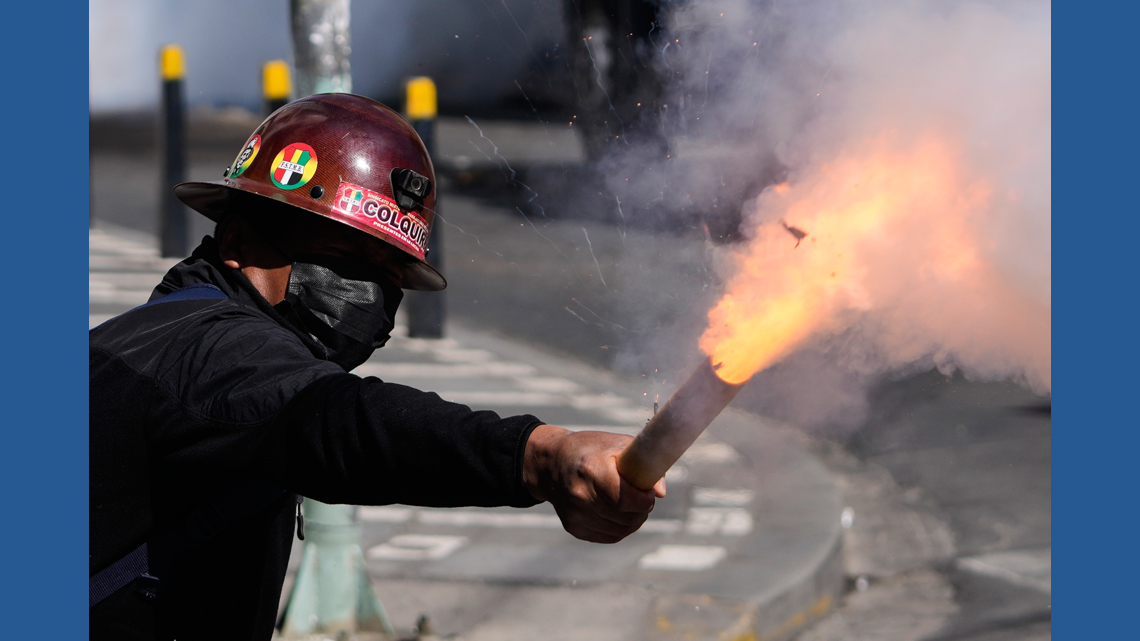
Bolivia is facing its worst economic crisis in decades, with 16 days of road blockades leaving about 5,000 trucks stranded, supermarkets short on goods, and hospitals lacking some medical supplies. The unrest has triggered food and fuel shortages, 90 arrests, and more than $50 million in estimated daily losses, while President Rodrigo Paz struggles to contain protests over austerity, fuel subsidies, and inflation. Regional governments and the U.S. are warning about instability as the situation raises political and economic risk for an emerging-market economy.
Bolivia is moving from a policy problem to a balance-of-payments and logistics problem. Once road closures start impairing trucks, hospitals, and fuel distribution, the hit is no longer just to GDP; it cascades into working-capital stress for importers, informal retailers, and local banks with exposure to short-dated inventory finance. The key second-order effect is that subsidy removal, while fiscally necessary, is now creating a visible inflation impulse faster than wages can reprice, which raises the odds of broader labor alignment against the government rather than a clean one-off protest cycle.
The market-relevant dynamic is that the state’s capacity to clear roads is probably less important than its ability to restore fuel quality and distribution reliability. If diesel/gasoline supply remains erratic for another few weeks, the economy can tip into self-reinforcing shortages: firms hoard inputs, transport prices reset higher, and food inflation spills into expectations. That creates a longer-duration risk than headline protests, because even a political détente would not quickly unwind the logistical bottlenecks or repair trust in the supply chain.
Consensus may be underestimating how much this becomes a regionalization story, not just a domestic one. Neighboring governments and external partners will prefer stability, but humanitarian support can also prolong a fragile status quo rather than solve the fiscal mismatch. The contrarian view is that if Paz survives the next 2-3 weeks, he may emerge with a stronger mandate to push more aggressive reform than markets expect; however, that outcome likely requires a sharp concession package that dilutes the current austerity path and keeps inflation elevated in the interim.
AI-powered research, real-time alerts, and portfolio analytics for institutional investors.
Request DemoOverall Sentiment
strongly negative
Sentiment Score
-0.72
