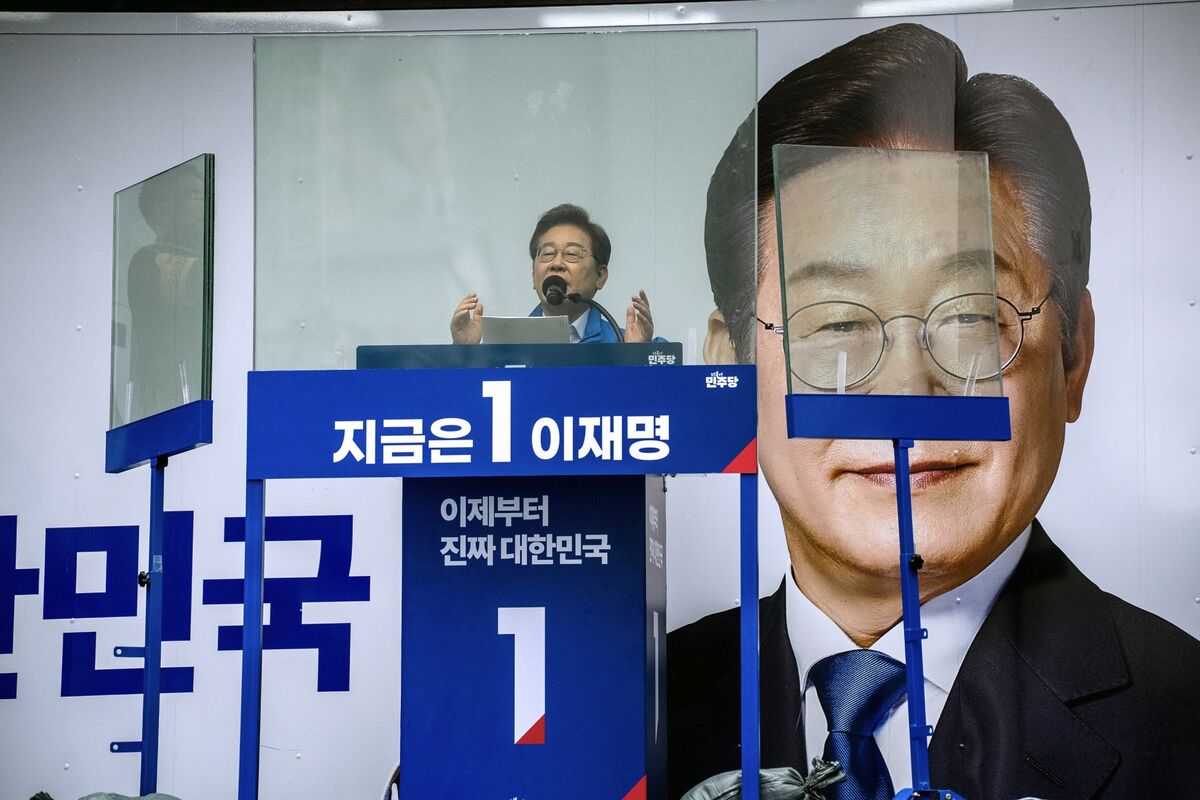
South Korea's presidential election on June 3rd could shift the nation's foreign policy, with left-of-center frontrunner Lee Jae-myung potentially adopting a more cautious approach to the US-China rivalry. Lee's recent shift towards the political center includes moderating criticism of the US and Japan, signaling a possible effort to balance relations between Washington and Beijing while also seeking dialogue with North Korea.
The upcoming South Korean presidential election on June 3rd presents a potential inflection point for the nation's foreign policy, with left-of-center frontrunner Lee Jae-myung of the Democratic Party signaling a more nuanced approach. A victory for Lee could lead to increased caution by Seoul in navigating the US-China rivalry, potentially seeking a more balanced position rather than firmly aligning with one power. This aligns with his recent pivot towards the political center, evidenced by a moderation of past criticisms directed at the US and Japan, and is coupled with an intention to re-engage North Korea in dialogue. This recalibration of foreign policy stances, alongside a toning down of economic policies, appears to be a strategic move by Lee to broaden his appeal in his third bid for the presidency, suggesting a pragmatic approach to governance if elected. The potential for renewed tension with Japan, however, remains a noteworthy aspect of his foreign policy outlook, which investors should monitor given the neutral sentiment and low current market impact score associated with this development.
AI-powered research, real-time alerts, and portfolio analytics for institutional investors.
Request DemoOverall Sentiment
Mixed
Sentiment Score
0.00
