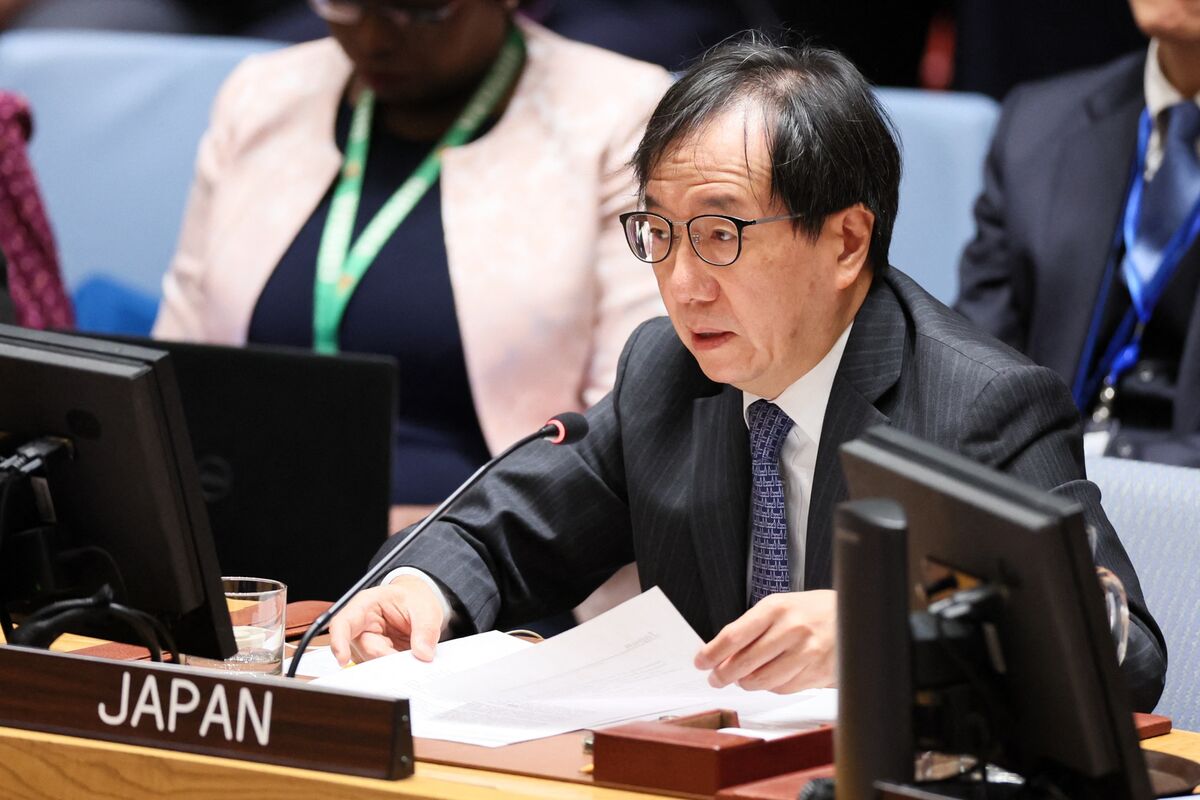
Japan’s UN ambassador Kazuyuki Yamazaki submitted a formal rebuttal to a Chinese letter accusing Tokyo of violating UN values and provoking China after Prime Minister Sanae Takaichi’s comments on Taiwan. The exchange underscores escalating diplomatic tensions between Tokyo and Beijing, raising regional political and security uncertainties that could feed into cautious investor sentiment, though immediate market impact is likely limited.
Market structure: The immediate winners are defense and security-capex beneficiaries — Japan-listed heavy/defense contractors (e.g., Mitsubishi Heavy 7011.T, IHI 7013.T) and global primes (RTX, LMT) — as political friction raises probability of incremental Japanese defense spending (+5–15% budget uplift possible within 12–24 months). Losers in a sustained spat are China-exposed consumer & travel sectors and cross-strait supply-chain nodes (semiconductor tooling & logistics), which could see re-routing costs of 1–3% of revenues for exposed suppliers over 6–12 months.
Risk assessment: Tail risks include escalation to trade measures or port restrictions (low probability <10% over 12 months but high impact — 10–30% earnings hit to exporters), or FX intervention if USD/JPY moves >5% intraday; monitor MOF/BOJ statements. Short-term (days–weeks) expect risk-off volatility: tighter credit spreads in JPY bonds and higher Gold/TLT flows; medium-term (3–12 months) expect re-rating of defense-capex and semiconductor supply-chain re-shoring; long-term (12–36 months) structural decoupling could reshape regional capex allocation.
Trade implications: Tactical positions favor 2–3% conviction longs in 7011.T/7013.T and 1–2% in RTX with 6–12 month targets of +15–25%, paired with hedges: buy 30–90 day puts on China consumer ETFs (EWH/FXI) sized 1–2%. For FX, use a 0.5–1% portfolio notional in USD/JPY put spreads to hedge JPY appreciation risk if headlines spike; buy 3–6 month GLD exposure (1–2%) as crisis insurance.
Contrarian angles: Consensus underestimates the persistent capex tailwind — defense orders are multi-year and sticky, so short-term headline-driven selloffs in 7011.T-style names may be overdone. Conversely, betting heavily against Chinese equities ignores Beijing’s incentive to de-escalate; cap positions should use tight 8–12% stops and staged entries to avoid policy-driven snapbacks.
AI-powered research, real-time alerts, and portfolio analytics for institutional investors.
Request DemoOverall Sentiment
mildly negative
Sentiment Score
-0.25
