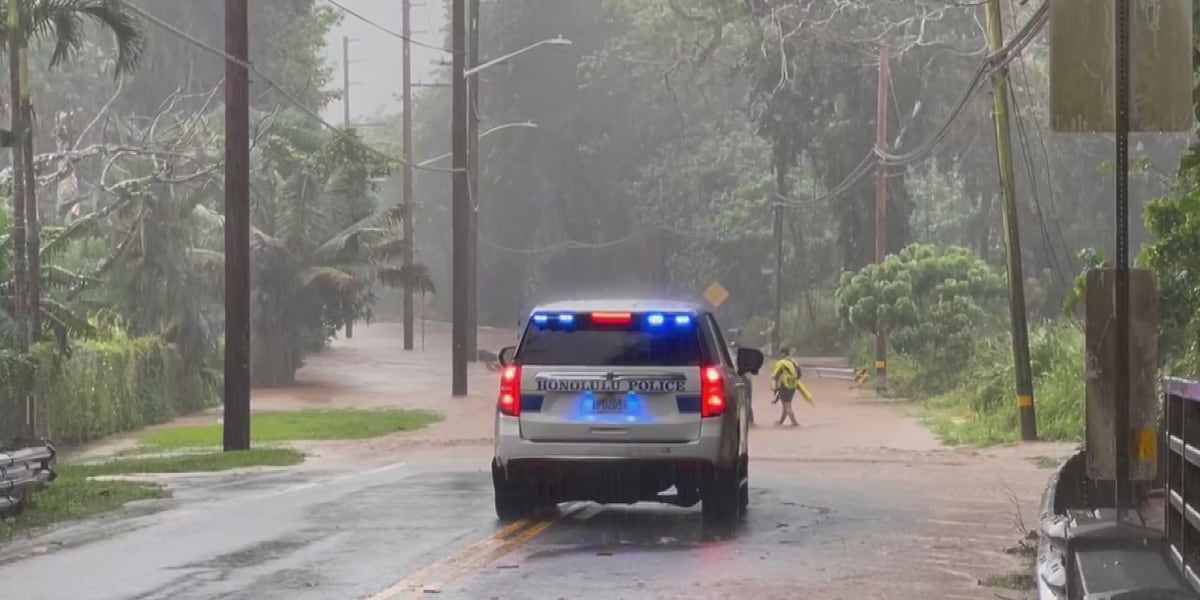
Rainfall rates of 2–4 inches per hour in Manoa prompted flash-flood warnings across parts of Oahu, leaving roads underwater and streams rising dangerously close to homes. Honolulu crews and partner agencies are responding to impacts from a Kona low; Mayor Rick Blangiardi and multiple city/state officials will brief at 5 p.m. on cleanup, available resident resources, infrastructure impacts and interagency coordination. No economic damage estimates were reported; primary risks are to local infrastructure, transportation and residential property.
Immediate, non-obvious beneficiaries are firms that supply rapid storm-response work (water/wastewater contractors, dredging, erosion control and structural remediation). These vendors can convert small-to-medium municipal allocations into multi-quarter revenue runs as municipalities prioritize chokepoint repairs; expect contract awards to trend from emergency PO flow in 0–3 months to competitive rebuild contracts over 6–18 months.
Insurers and muni credit are a second‑order watch: near-term P&C claims should be manageable for global carriers but frequent localized events raise pricing power for reinsurers and municipal bond spreads for smaller island credits. A key binary is federal/state reimbursement cadence — fast FEMA reimbursements compress fiscal tail risk within 60–120 days, while slow receipts push capital expenditures into next fiscal cycles and widen muni spreads.
Tourism & transport are the immediate losers for days–weeks: flight and lodging churn creates measurable revenue volatility for island carriers and local hotel owners, but national hospitality names are insulated. The contrarian read is that equity markets tend to underprice the latent, multi-year uplift to resilience-capex (stormwater, seawalls, upgraded drainage) — these are backend tailwinds for equipment/engineering names rather than one-off repair spend.
Watch catalysts: heavy follow-on rainfall (days), state emergency declarations and FEMA funding decisions (weeks), and municipal budget reallocation or new bond issuance (3–12 months). Reversals occur if damage is superficial and tourism rebounds quickly; conversely, repeated events will accelerate capex and reprice local credit over 12–36 months.
AI-powered research, real-time alerts, and portfolio analytics for institutional investors.
Request DemoOverall Sentiment
mildly negative
Sentiment Score
-0.25
