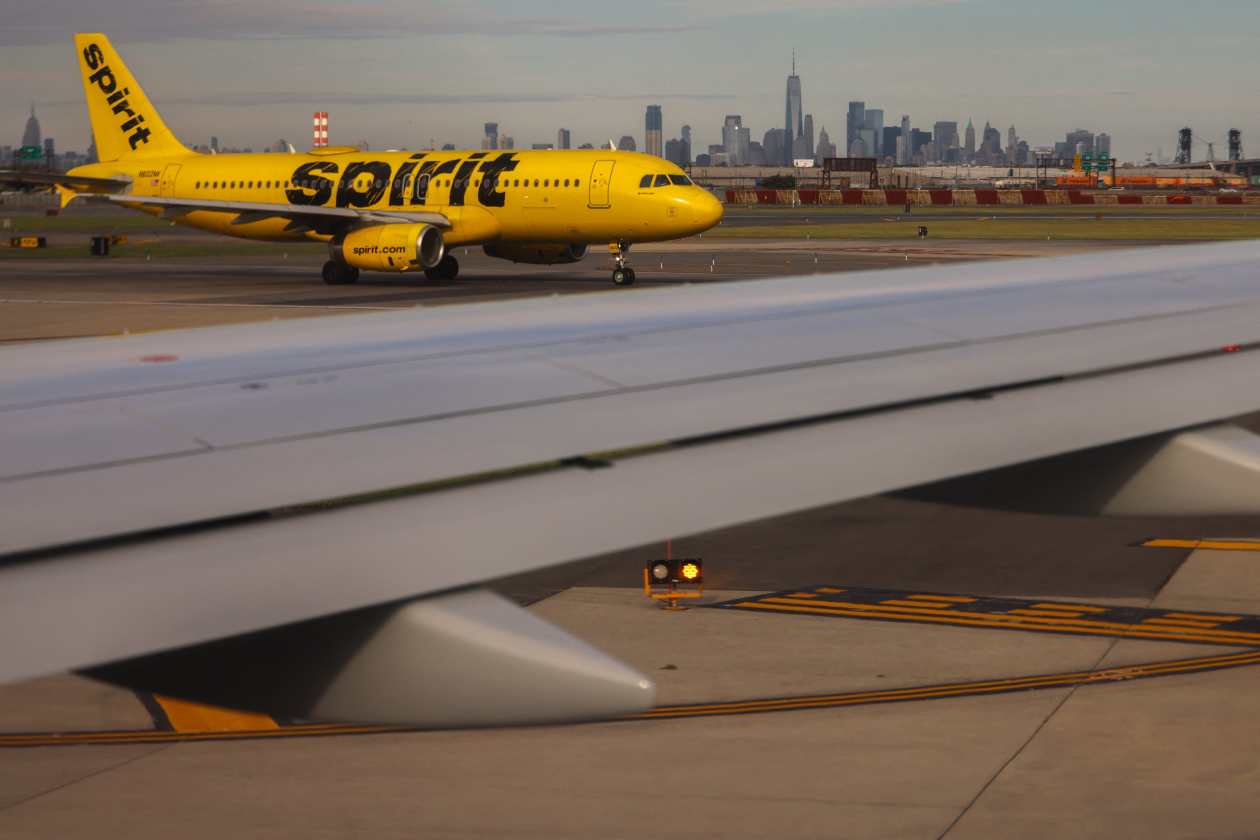
The airline sector is exhibiting a sharp divergence, with legacy carriers like United and Delta significantly outperforming budget airlines, driven by diversified revenue streams from cargo and loyalty programs, stronger pricing power, and resilience from premium and international travel. Conversely, low-cost carriers, notably Spirit Airlines facing financial distress, are struggling with reduced demand from core, lower-income customers and heightened competition from legacy carriers' basic economy offerings. While overall investor interest in the sector has risen, analysts favor full-service carriers. The industry anticipates a Q4 shift towards cost control and yield management that will disproportionately impact budget airlines amidst potential overcapacity.
The U.S. airline sector is experiencing a significant performance divergence, with legacy, full-service carriers materially outperforming their low-cost counterparts. Full-service airlines like United Airlines (UAL) and Delta Air Lines (DAL) are benefiting from diversified revenue streams, where non-passenger operations such as cargo and loyalty programs contributed to a combined operating profit of approximately $14 billion in 2024. These carriers also demonstrate superior pricing power, achieving an average passenger revenue yield of 20 cents per mile, compared to just 11.4 cents for low-cost carriers. This fundamental strength is reflected in stock performance, with UAL shares rising 36% in the past three months against the S&P 500's 10% gain. Conversely, budget airlines, particularly Spirit Airlines (FLYY) and Frontier (ULCC), are under severe pressure. Their core, lower-income customer base is reducing travel due to diminished disposable income, while competition has intensified from legacy carriers' own "basic economy" offerings. Spirit is reportedly navigating a cash squeeze that could lead to restructuring, underscored by an 80% plunge in its stock price over the last three months. Industry-wide concerns loom, including a potential for fourth-quarter overcapacity and a post-summer slowdown in leisure demand, which is expected to more acutely impact domestic-focused low-cost carriers.
AI-powered research, real-time alerts, and portfolio analytics for institutional investors.
Overall Sentiment
mixed
Sentiment Score
0.00
Ticker Sentiment
