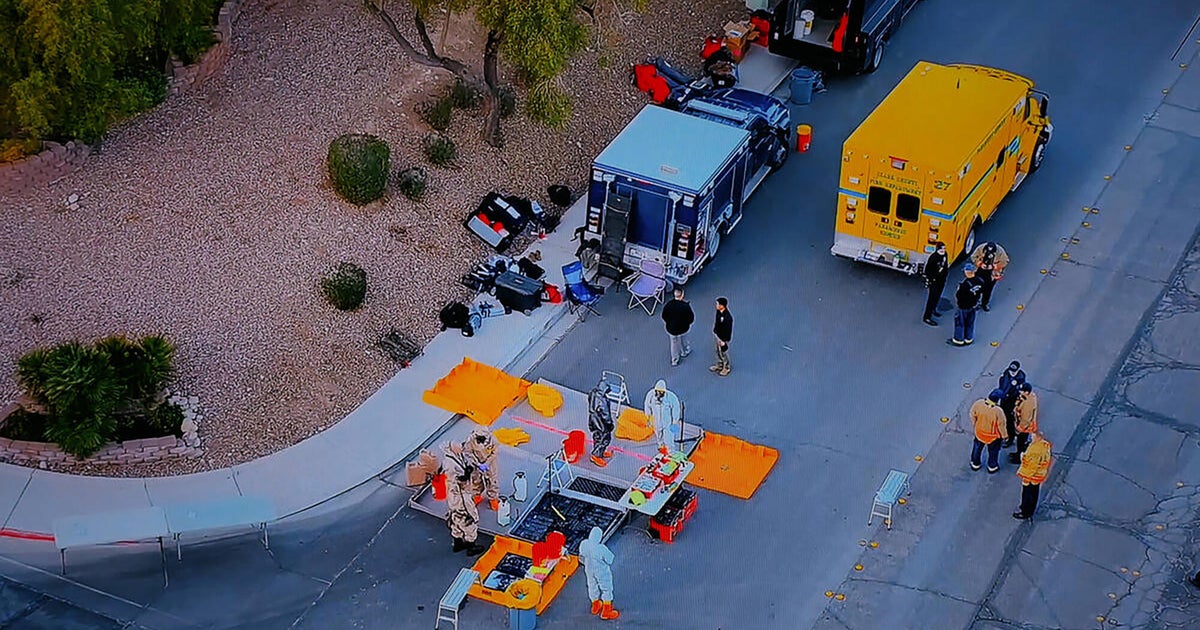
Authorities raided a Las Vegas home and found laboratory equipment (multiple refrigerators, a centrifuge, biosafety tools), refrigerated vials and gallon-sized containers of unknown liquids, and collected more than 1,000 samples that were sent to the National Bioforensic Analysis Center; investigators say the setup is consistent with a Reedley, California home lab discovered in late 2023. The Reedley site reportedly contained pathogen-labeled containers (dengue, HIV, malaria) and about 1,000 mice; Jia Bei Zhu, who owned both residences, was arrested in October 2023 on charges related to distributing adulterated and misbranded medical items and remains in federal custody. The discoveries have spurred additional arrests, searches and criticism of federal public-health responsiveness, creating legal and regulatory risk and potential heightened oversight in the sector, though the story is unlikely to be materially market-moving beyond localized and sector-specific impacts.
Market structure: Illegal home bio‑labs shift near‑term demand toward certified decontamination, hazardous‑waste disposal, and government bioforensics. Expect mid-single‑digit to low‑double‑digit incremental revenue uplift over 6–18 months for specialist players (hazmat disposal, certified sterilization, federal contractors) while DIY consumer‑genomics and small unregulated suppliers lose pricing power and face contract attrition.
Risk assessment: Tail risks include a pathogen escape or high‑profile litigation that could trigger sharp regulatory tightening (worst case: multi‑week local shutdowns, >$1bn in municipal remediation costs, and insurance losses). Timeline: immediate (days) = volatility and newsflow; short (weeks–months) = investigations, CDC/DOJ guidance and potential Congressional hearings; long (quarters–years) = sustained compliance costs (estimate +2–5% opex) and increased federal procurement.
Trade implications: Direct thesis favors equities providing hazmat/disposal (CLH), certified sterilization/autoclave services (STE), and government biodefense contractors (LDOS/BAH) over consumer genomics (ME) and small biotech tool resellers. Options can express convexity—buy 3–9 month calls on specialist names if headlines accelerate; de‑risk diversified lab suppliers (TMO, DHR) which are likely priced for resilience and offer less asymmetric upside.
Contrarian angles: The market may underprice durable contract flow to established contractors (Leidos/Booz Allen) and waste handlers (Clean Harbors) while overreacting to large-cap lab suppliers where end markets are broad and resilient. Historical parallel: post‑anthrax funding spike lasted 12–24 months; if federal appropriations >$100–200m are announced, incumbents could see 10–20% re‑rating. Focus on idiosyncratic execution and contract visibility.
AI-powered research, real-time alerts, and portfolio analytics for institutional investors.
Request DemoOverall Sentiment
mildly negative
Sentiment Score
-0.25
