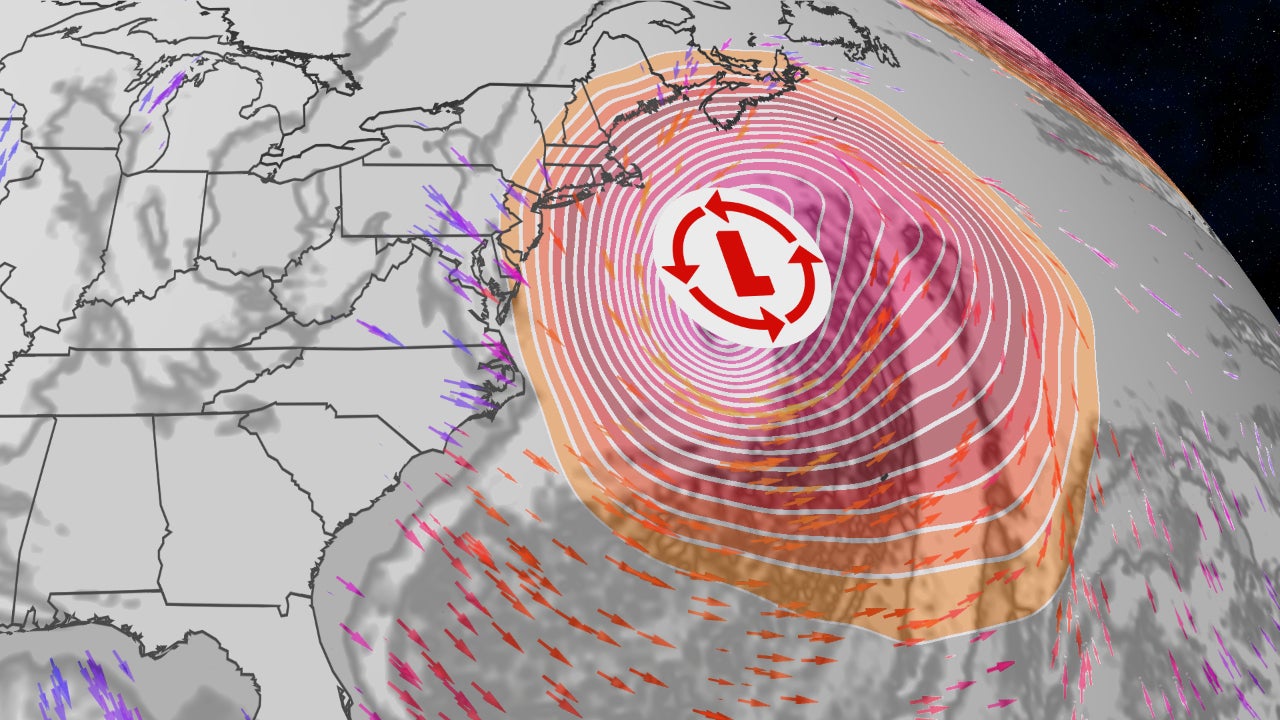
A rapidly intensifying East Coast storm is forecast to develop into a nor'easter and possible bomb cyclone from the Carolinas through New England this weekend, with timing generally Friday night through Monday. High-confidence threats include strong winds (capable of power outages and tree damage) and coastal flooding at high tide, while substantial snowfall remains uncertain and will hinge on the storm track; southern Virginia, the Carolinas and parts of Georgia could see significant snow if the low tracks close enough to shore. Expect localized disruptions to power, travel and coastal infrastructure, though broad market-moving impacts are unlikely barring escalation to major regional infrastructure damage.
Market structure: Near-term winners are weather-sensitive goods and services — portable generator manufacturers (GNRC), home-improvement retailers (HD, LOW) and spot natural gas (UNG, EQT) — as demand for heating, repairs and emergency power can spike 5–25% across a 1–3 week window. Losers are travel/transport (AAL, UAL, DAL, CCL) and coastal commercial/residential landlords (HST, WREITs) facing cancellations, short-term vacancy and potential physical damage; insurers (TRV, ALL) face claims flow but with dispersion versus a hurricane-scale event.
Risk assessment: Tail risks include an offshore track that minimizes insured losses (reducing upside for GNRC/HD) or a closer coastal landfall that produces >$1bn insured losses forcing short-term spikes in reinsurer spreads and rating agency scrutiny. Immediate timeframe (0–7 days) carries execution risk and elevated IV; short-term (weeks) is claim settlement and replacement demand; long-term (quarters) could see higher insured-rate repricing if losses aggregate.
Trade implications: Trade volatility — expect spike in short-dated nat gas and single-stock IV; favors directional short-dated call/put spreads rather than naked. Supply/demand: localized supply-chain pressure (truck/port delays) could lift regional diesel and freight rates for 1–3 weeks, mildly bullish for energy logistics names. Cross-asset: small bid for coastal muni credit spreads and cat-bond re-pricing if losses materialize.
Contrarian angles: Consensus will bid down insurers immediately; historically East Coast bomb cyclones rarely drive multi-billion insured losses, so insurer equities can mean-revert within 4–8 weeks — target mean-reversion as a tactical fade. Similarly, if UNG spikes >15% intraday, probability of rapid sell-off rises once temperatures normalize, so prefer defined-risk option structures rather than cash positions.
AI-powered research, real-time alerts, and portfolio analytics for institutional investors.
Request DemoOverall Sentiment
neutral
Sentiment Score
-0.15
