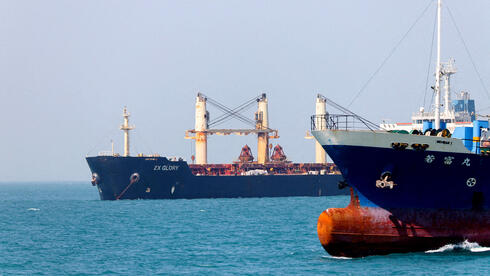
Global oil inventories fell by 129 million barrels in March and 117 million barrels in April, while onshore stocks dropped 170 million barrels in April as oil shifted onto tankers and into slower, less reliable channels. The article warns that if Hormuz remains constrained and OECD inventories keep declining, stocks could reach critically low levels by end-June and push oil prices toward at least $140 per barrel from about $112 today. Even without a formal closure, insurance and logistics disruptions are already blocking flows, threatening refined product supply, transport, aviation, and food prices.
The market is transitioning from a headline-driven geopolitical shock to a balance-sheet shock: when inventories are drawn down to operating minimums, price elasticity rises nonlinearly because the system loses buffering capacity. That means the next leg is less about whether crude spikes and more about which part of the value chain pays for scarcity first — refiners, shippers, airlines, and ultimately consumer-discretionary demand all absorb the stress before upstream oil producers fully monetize it.
The second-order winner set is not just oil itself but anything that benefits from a widening physical premium versus paper barrels. Tanker operators with exposed spot exposure, owners of compliant vessels, and producers with redundant export routes should outperform, while entities dependent on just-in-time feedstock — refiners, jet fuel users, diesel-intensive logistics, and chemical plants — face margin compression even if headline crude moves slower than expected. The biggest overlooked risk is insurance capacity: once underwriting pulls back, flows can halt without a formal closure, creating a faster move in freight, demurrage, and delivered-product pricing than in benchmark crude.
Catalyst timing matters: the next 2-6 weeks are the danger window because inventory depletion interacts with seasonal demand and refinery maintenance recovery. A diplomatic pause could cap the outright oil rally, but it would not fully normalize logistics unless insurers reprice risk back down; that lag makes any de-escalation potentially less effective than bulls assume. Conversely, if physical disruptions persist into month-end, forced buying by refiners and strategic stockholders can drive a sharp gap higher that is disproportionate to the incremental barrels lost.
Consensus likely underestimates how quickly stress migrates from energy into macro-sensitive sectors. The move in crude may be only the first derivative; the more tradable second derivative is spread widening in fuels and transport inputs, especially where contracts reprice monthly or quarterly. If the market starts treating the route as intermittently unusable rather than temporarily dangerous, the repricing of logistics reliability could persist even after the geopolitical headline fades.
AI-powered research, real-time alerts, and portfolio analytics for institutional investors.
Request DemoOverall Sentiment
strongly negative
Sentiment Score
-0.72
