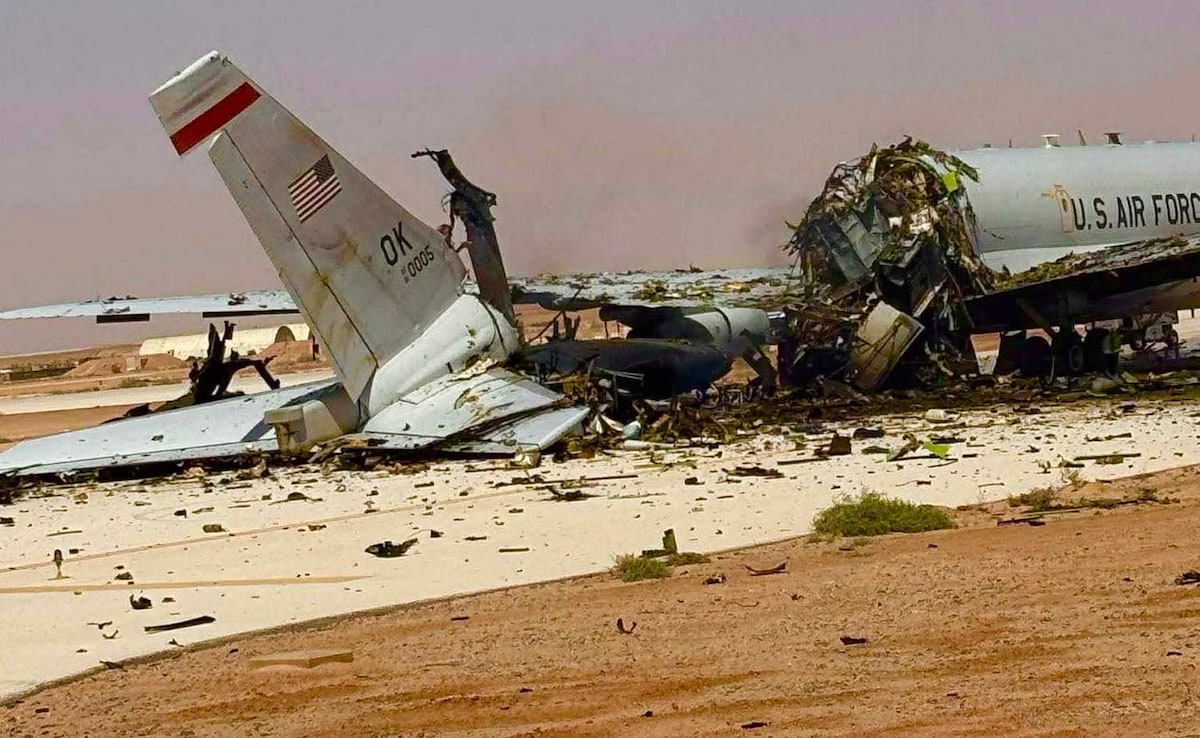
Iran claimed it struck Prince Sultan Air Base in Saudi Arabia with six ballistic missiles and 29 drones, reportedly obliterating a US E-3 AWACS and damaging multiple refuelling aircraft. At least 10 US personnel were reported wounded (two seriously) by AP, with other outlets citing up to 15 wounded; Iran also claimed it shot down a US MQ-9 and hit an F-16. This represents a major escalation with immediate risk-off implications for regional security, Gulf operations and energy/transport logistics, and could drive volatility across oil and defense-related markets.
The tactical loss of a high-end airborne C2/ISR node in the Gulf will materially reshape asset allocation in theater for weeks-to-months: expect a measurable uptick in tanker and manned ISR rotations, redeployment of space-based ISR assets, and accelerated procurement asks from regional partners for ground-based radars and point air defenses. Operationally this increases sortie rates for tankers and surveillance platforms by an estimated 15–30% in the near term, lifting demand for maintenance, parts, and flight hours while compressing spare capacity — a classic supply shock to military logistics services.
Energy and transport flows face a short, sharp risk premium. Even modest rerouting, higher airborne surveillance requirements, and elevated hull/war-risk insurance can add $2–6/bbl to regional Brent spreads for 2–8 weeks; if insurers reprice routes or carriers reroute, that premium can persist into the 3–6 month window as contracts roll. Airlines and cargo integrators with concentrated Gulf exposure will see margin pressure through higher fuel, longer block times, and insurance surcharges; conversely, mid-tier defense contractors and systems integrators supplying radar, EW, and tanker sustainment stand to capture outsized revenue acceleration.
Big-picture tail risks are asymmetric: rapid de-escalation via back-channel diplomacy could erase near-term energy premia within days, while a tit-for-tat expansion into shipping lanes or prolonged interdiction would institutionalize higher insurance and re-route costs for quarters-to-years, compelling structural shifts in global logistics networks. The market is likely to overshoot on headline-driven defense longs in the first 72 hours; disciplined entry via options or paired trades preserves upside while limiting downside if diplomacy blunts the shock.
AI-powered research, real-time alerts, and portfolio analytics for institutional investors.
Request DemoOverall Sentiment
extremely negative
Sentiment Score
-0.90
