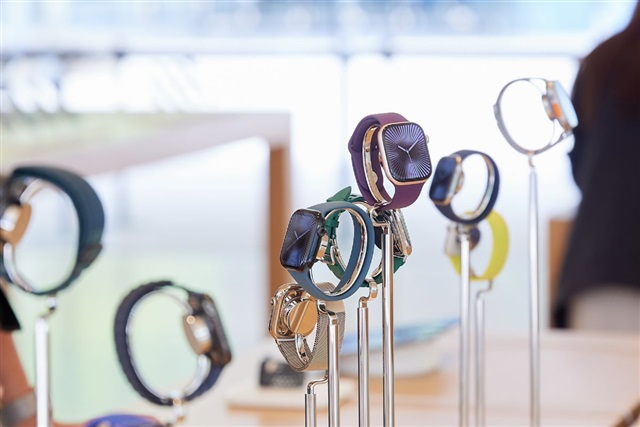
Apple added a new high blood pressure notification feature to Apple Watch, expanding the device's health-management functionality. The article also points to a major redesign of high-end Apple Watch models expected in the second half of 2026, which could support future demand. Overall, the update is a modestly positive product and innovation signal for Apple, with limited near-term market impact.
This is less about near-term unit upside than about Apple widening the moat around the Watch as a health platform. If the notification layer proves sticky, the real economic benefit accrues through lower churn and higher attach rates to premium tiers, because health monitoring is one of the few reasons consumers will trade up on a watch replacement cycle rather than wait it out. That matters more for gross margin mix than headline device demand: premiumization can lift ASPs without requiring an immediate step-up in total units.
The second-order winner is Apple's ecosystem, not any single feature. Health functionality tends to increase switching costs, which should incrementally favor Watch share versus lower-friction wearables that compete on price but lack integrated coaching, data continuity, and iPhone adjacency. The likely loser is the mid-tier wearables category, where feature parity is easier to copy than trusted longitudinal health data; over 12-24 months that can compress differentiation for names that rely on hardware specs alone.
The market may be underestimating the timing mismatch between feature release and hardware redesign. Software-driven health features can lift sentiment quickly, but the bigger monetization inflection likely comes only when a redesigned premium Watch gives consumers a fresh upgrade trigger in 2H26. That creates a two-stage setup: sentiment support now, then a potentially stronger replacement cycle later; the risk is that adoption is incremental rather than transformative, leaving the redesign as the true catalyst while current enthusiasm fades.
Contrarian view: the consensus may be too focused on the feature as a demand driver and not enough on regulatory and liability overhang. Health-related claims raise the bar for validation, and any false-positive/false-negative concerns could slow rollout or constrain positioning. In that scenario, the upside is still real, but the equity reaction could mean-revert if investors price in a broad wearable refresh too early.
AI-powered research, real-time alerts, and portfolio analytics for institutional investors.
Request DemoOverall Sentiment
moderately positive
Sentiment Score
0.35
Ticker Sentiment
