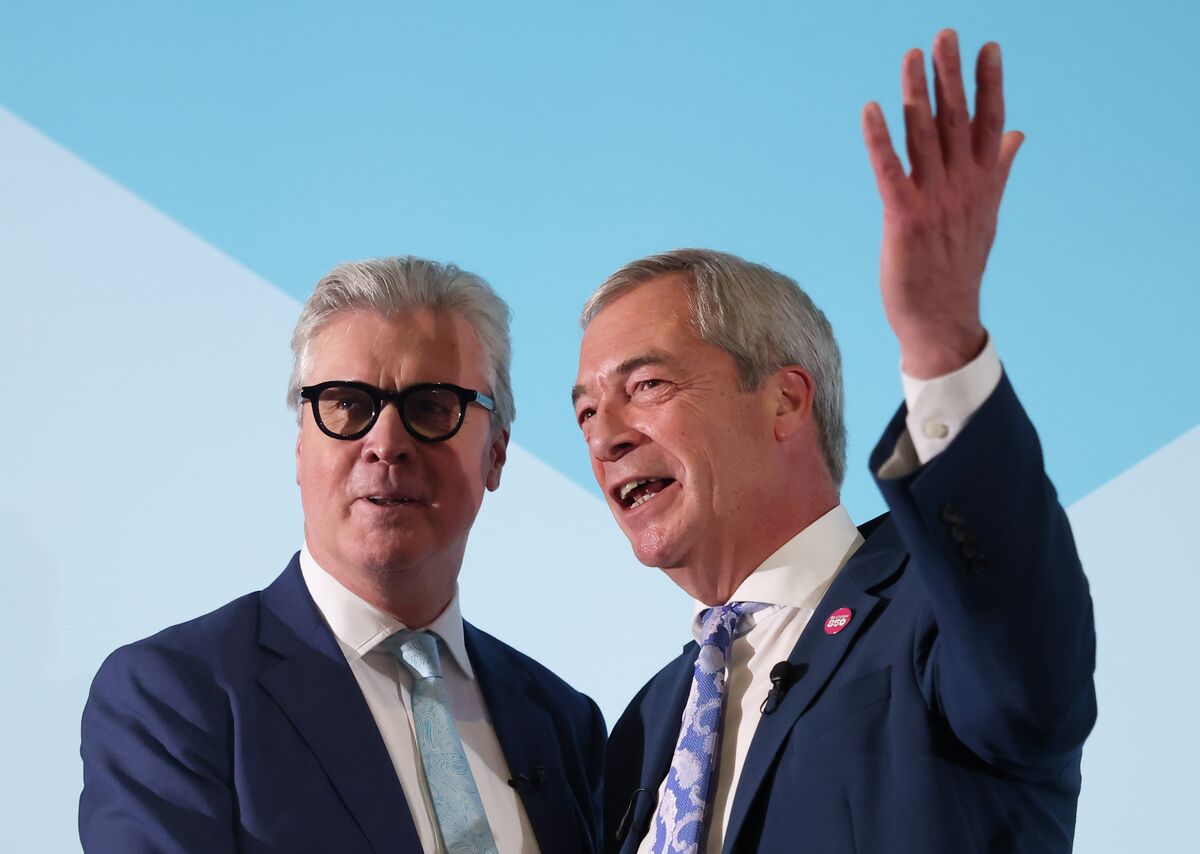
Lord Offord of Garvel, a life peer appointed in 2021 and a former Minister of State for Scotland and for Exports, defected from the Conservative Party to join Reform UK at a rally in Falkirk, becoming Reform UK’s first-ever member of the House of Lords. The move gives the anti-immigration party a symbolic foothold in the upper chamber and could marginally shift political dynamics or legislative pressure ahead of future contests, but is unlikely to produce immediate, material market or policy changes.
Market structure: A peer defecting to Reform UK increases the party's legitimacy and raises the probability (market-implied) of tougher immigration rhetoric/policy. Direct winners: UK exporters and defense/Aero names if GBP weakens (expected -1% to -3% near-term) and domestic-labor intensive sectors (construction, hospitality, agriculture, social care) are losers as tighter immigration signals higher labor cost and downward demand for housing (housebuilders -10–20% risk over 6–12 months). Bond and FX mechanics: political fragmentation tends to push 10y UK gilt yields +10–30bp and GBP down 1–3% until clarity.
Risk assessment: Tail risks include a snap election or cascade of further Tory defections causing >3% GBP decline and >40bp gilt sell-off (low prob, high impact). Timeline: immediate (days) = noise around headlines; short-term (0–3 months) = polling shifts, by-elections, BoE reaction to wages/inflation; long-term (6–24 months) = structural migration changes affecting labor supply and corporate margins. Hidden dependencies: BoE tightening if wage-driven inflation rises, and regional banks with UK domestic exposure (LLOY.L, BARC.L) vulnerable to housing corrections.
Trade implications: Tactical plays include short domestic cyclicals and long exporters/defense, hedged for FX and rate moves. Use options to control downside: buy GBPUSD put spreads (1–3 month) to monetize probable GBP weakness and buy near-term calls on FTSE exporters if volatility spikes. Size conservatively: initial positions 1–3% NAV, re-assess on two poll prints or next BoE minutes (within 30–90 days).
Contrarian angles: Markets may overprice long-term policy change—historical parallels (UKIP) show limited immediate legislative impact absent broader defections; a >3% GBP drop would be a mean-reversion buying opportunity for domestic cyclicals. Unintended consequence risk: aggressive short on housebuilders could be wrong if BoE pivots or migration rhetoric cools; therefore prefer hedged pair trades (exporter long / housebuilder short) with defined stop-losses and time-boxed holds (3–6 months).
AI-powered research, real-time alerts, and portfolio analytics for institutional investors.
Request DemoOverall Sentiment
neutral
Sentiment Score
0.00
