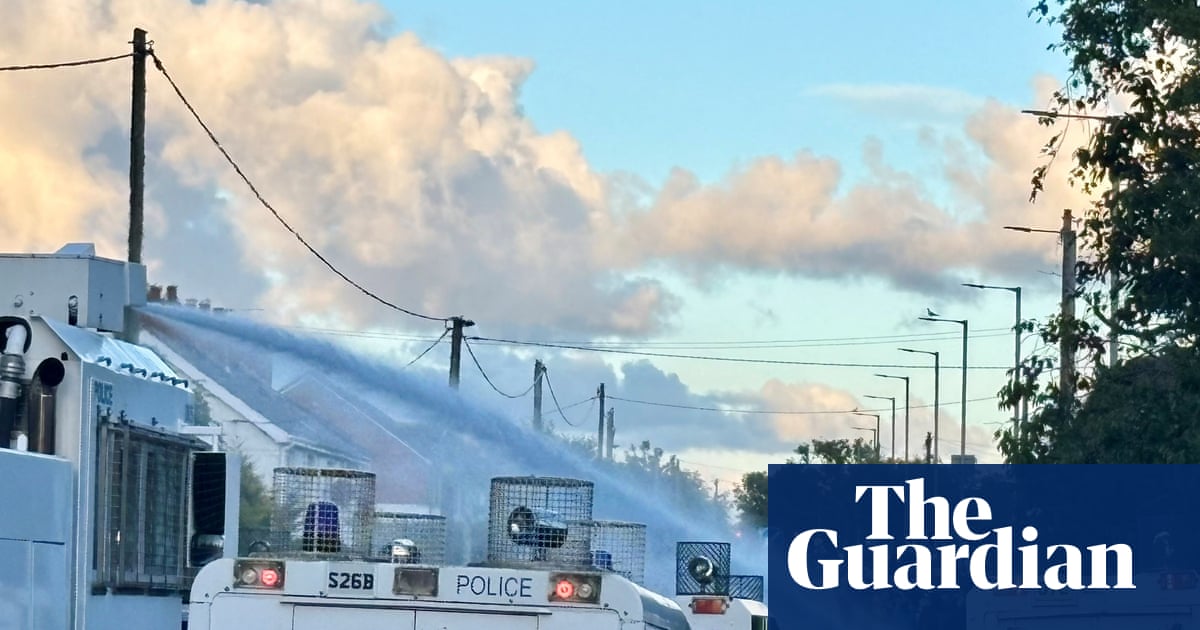
Police used water cannon to disperse about 300 rioters during a second night of anti-immigration protests in Northern Ireland, after violence spread to multiple locations including Newtownabbey, Derry, and Coleraine. The unrest involved arson, petrol bombs, injuries to a civilian and a police officer, and reported targeting of migrant housing, while the victim's family and Stormont ministers condemned the disorder. A suspect, Hadi Alodid, 30, was charged with attempted murder and possession of a knife.
The immediate market read is not about direct asset exposure but about institutional credibility and the probability of policy overhang in Northern Ireland. A second night of disorder, even if smaller, raises the odds of a heavier policing footprint, tighter local security measures, and a slower restart of normal activity around affected retail, logistics, and hospitality nodes over the next 1-4 weeks. The more important second-order effect is reputational: any perception that authorities have lost control can keep weekend crowds elevated and extend the news cycle, which is what usually turns isolated unrest into a sustained domestic risk premium. The most vulnerable cash-flow streams are local discretionary sectors with high footfall sensitivity: pubs, convenience retail, taxis, small hotels, and short-dated event traffic. Supply-chain damage is likely modest in absolute terms, but repeated road disruption around key Belfast/North Antrim routes can create outsized service interruptions for same-day delivery, construction crews, and inbound tourism operators. If misinformation continues to amplify mobilization, the tail risk is not broader sectarian violence per se, but a ratchet effect where each incident lowers the threshold for the next, extending the disruption window from days into several weeks. Contrarian view: the larger move may be political rather than economic. The family’s public rejection of the violence and the absence of turnout at some advertised protests suggest the mobilization base may already be fragmenting, which argues against extrapolating this into a persistent macro shock. For markets, that means the default trade should be to fade any overreaction in UK domestically exposed names unless there is a confirmed escalation trigger: sustained multi-site unrest, injuries to police, or evidence of spread into Belfast’s commercial core over the next 72 hours.
AI-powered research, real-time alerts, and portfolio analytics for institutional investors.
Request DemoOverall Sentiment
moderately negative
Sentiment Score
-0.45
