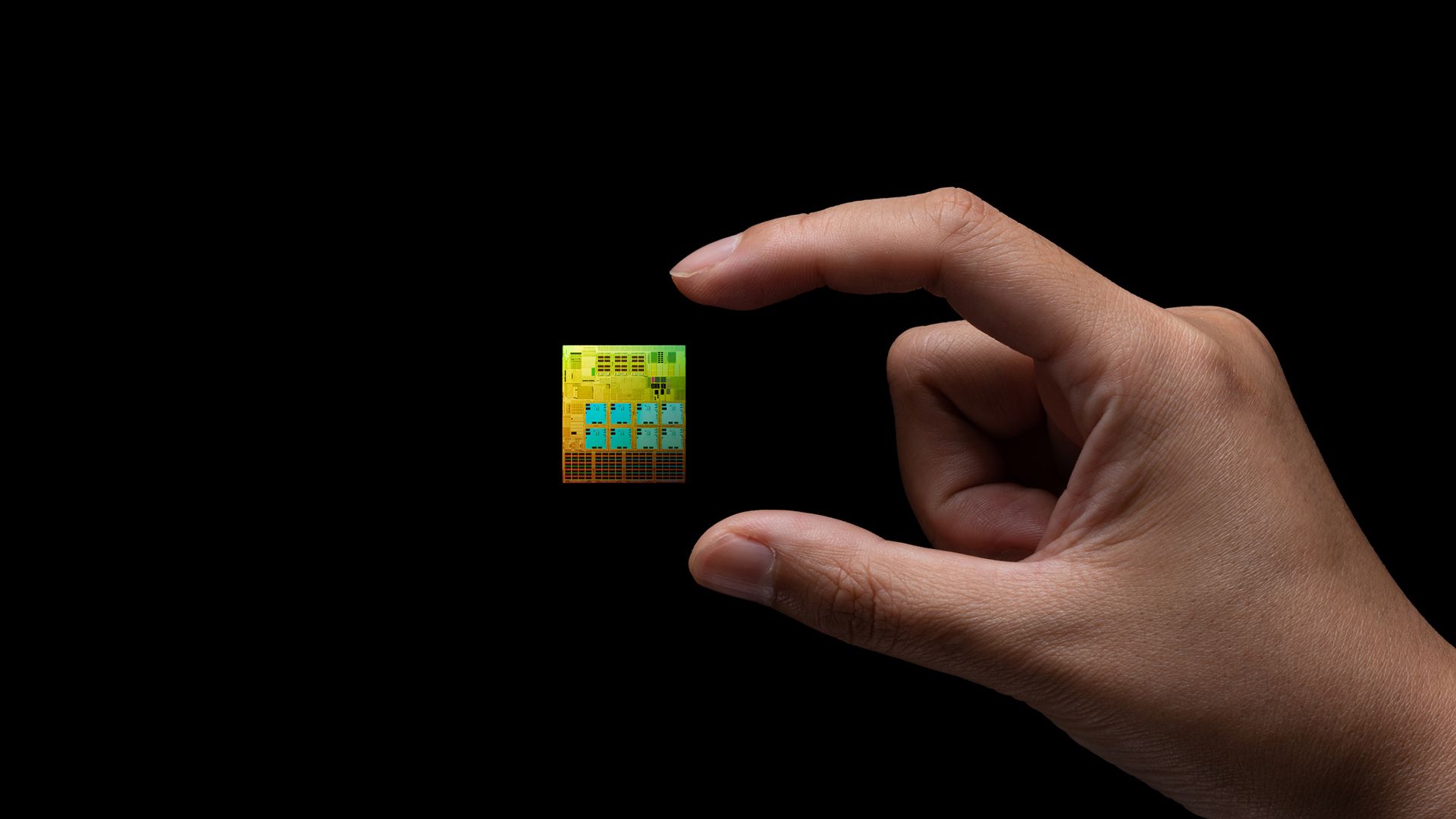
Global semiconductor production remains heavily concentrated in Taiwan (TSMC holds ~70.2% of the foundry market and Taiwan’s market is estimated at $35.55bn), prompting US and EU policy responses but only modest near-term reshoring. The US has committed $280bn via the CHIPS Act and TSMC has already invested $65bn in Arizona with a further $100bn planned for US fabs, while Europe has granted IPF/OEF status to select projects and aims (but is unlikely) to hit a 20% global share by 2030 (current share ~7–8%). Western onshore production will remain more costly (est. >20% premium in the US), capacity gains will be gradual, and competing investments in South Korea ($470bn) and Japan (¥1tn) mean Asia will still dominate advanced-node supply for the foreseeable future.
Market structure: Winners are advanced-node equipment and foundry leaders (TSM, ASML) and hyperscalers (NVDA, AMD) that will pay a 10–25% premium for onshore assurance; losers are consumer-SoC suppliers (AAPL, QCOM) facing margin pressure if they refuse higher fabrication cost. Competitive dynamics will preserve TSMC’s pricing power—US fabs will add only a few percentage points of global capacity by 2027—so bleeding-edge scarcity persists and keeps ASPs elevated for high-performance AI chips.
Risk assessment: Tail risks include a Taiwan-stressor shock (geopolitical or natural) that could spike chip volatility and cause >30% upside re-rating in TSM/ASML or catastrophic supply disruption; cost overruns and regulatory delays could raise Western fab unit costs >20% versus Asia. Near-term (days–months) expect announcement-driven volatility; medium-term (6–24 months) execution risk dominates; long-term (3–10 years) market-share shifts of ±2–5% across regions are plausible. Hidden dependency: packaging and talent pools (advanced packaging, test) are bottlenecks and could bottleneck onshore fabs.
Trade implications: Tactical: size 1–3% long positions in TSM and ASML (equipment demand lever) and 1–2% long NVDA/AMD (AI demand); trim 1–2% AAPL/QCOM exposure due to higher fab cost resistance. Options: buy 9–15 month call spreads on ASML/TSM to capture structural capex upside while funding with OTM writes; pair trade long NVDA vs short QCOM or AAPL to express premium-for-onshore demand. Entry over next 30–90 days; scale on pullbacks of 10–20% or on positive milestones (EUV shipment, TSMC US 3nm start).
Contrarian angles: Consensus underestimates upside for equipment, packaging, and SiC players (STM, NXPI) while overrating the safety of TSM concentration; markets may underprice chronic Western cost premiums that benefit pure-play suppliers and packaging specialists. Historical parallel: semiconductor geographic shifts take a decade—expect uneven returns and multiple regime changes; unintended consequence: subsidies could create overcapacity in mature nodes, pressuring margins for legacy-node producers (watch 180nm–300mm dynamics).
AI-powered research, real-time alerts, and portfolio analytics for institutional investors.
Request DemoOverall Sentiment
neutral
Sentiment Score
0.00
Ticker Sentiment
