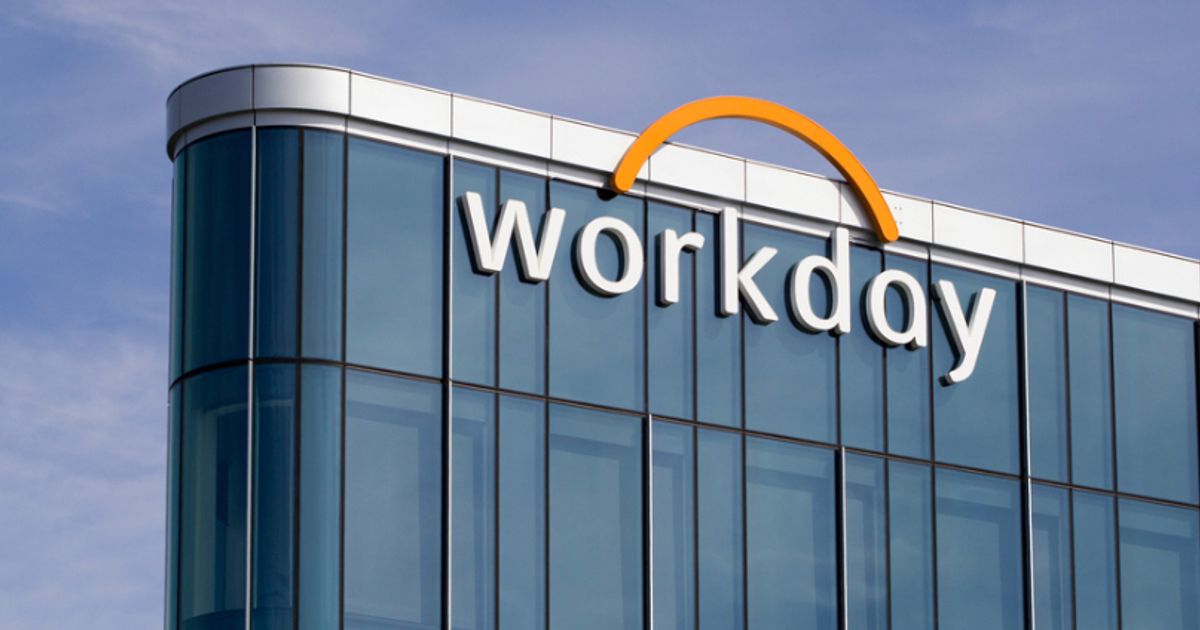
Workday said co‑founder Aneel Bhusri will return as CEO, replacing Carl Eschenbach who will leave the board and serve as a strategic adviser, sending WDAY shares down more than 6%. Jefferies flagged the timing — noting the change came six days after fiscal Q4 ended — and expressed concern about potential short‑term management instability, the company’s ability to meet medium‑term targets, slowed growth and margin pressure even as AI remains a strategic focus; investors and analysts will seek clarity at Workday’s Feb. 24 earnings release.
Market structure: The abrupt CEO reversal at WDAY materially raises execution risk for a large SaaS vendor that trades on predictable subscription revenue; expect heightened customer procurement scrutiny and potentially longer sales cycles over the next 1–3 quarters. Direct winners include incumbent enterprise vendors (ORCL, SAP) and payroll/HCM specialists (ADP) as buyers seek vendor stability; losers include momentum long-only holders of WDAY and short-dated option sellers who face rising IV. Cross-asset moves should be confined to tech beta: WDAY-specific credit risk is low so IG/ HY spreads and FX/commodities impact will be immaterial, but single-name CDS and options IV will widen sharply near Feb 24 earnings.
Risk assessment: Tail risks include a materially negative earnings guide (20%+ EPS/ARR miss), large customer churn (>5% ARR loss within 12 months), or a governance fight/activist entry that forces restructuring—each could drive >30% downside. Immediate risk (days) is a further 5–12% gap down on sentiment; short-term (weeks) volatility around Feb 24; long-term (quarters) depends on whether Bhusri can reverse sell-side trust and sustain margin targets. Hidden dependencies: salesforce morale/retention and partner relationships, and any change in capital allocation (buybacks vs R&D) will affect margin trajectory.
Trade implications: Near-term, expect elevated IV into Feb 24; preferred tactical plays are defined-risk puts or put spreads rather than naked shorts. For relative value, favor ORCL/SAP vs WDAY on a 6–12 month horizon to capture flight-to-quality. Sector rotation: modestly shift 1–3% from high-valuation pure SaaS names into large-cap cloud/platforms with stronger governance.
Contrarian angle: The market may over-penalize WDAY for governance noise even if product roadmap/Ai leadership remains intact—if Q4 metrics are intact and management presents credible KPIs on Feb 24, a rapid 15–25% mean-reversion rally is plausible. Historical parallels (co-founder returns at tech firms) show mixed outcomes—outperformance if product execution is clear, underperformance if governance uncertainty persists; therefore size positions small and use options to cap losses.
AI-powered research, real-time alerts, and portfolio analytics for institutional investors.
Request DemoOverall Sentiment
moderately negative
Sentiment Score
-0.50
Ticker Sentiment
