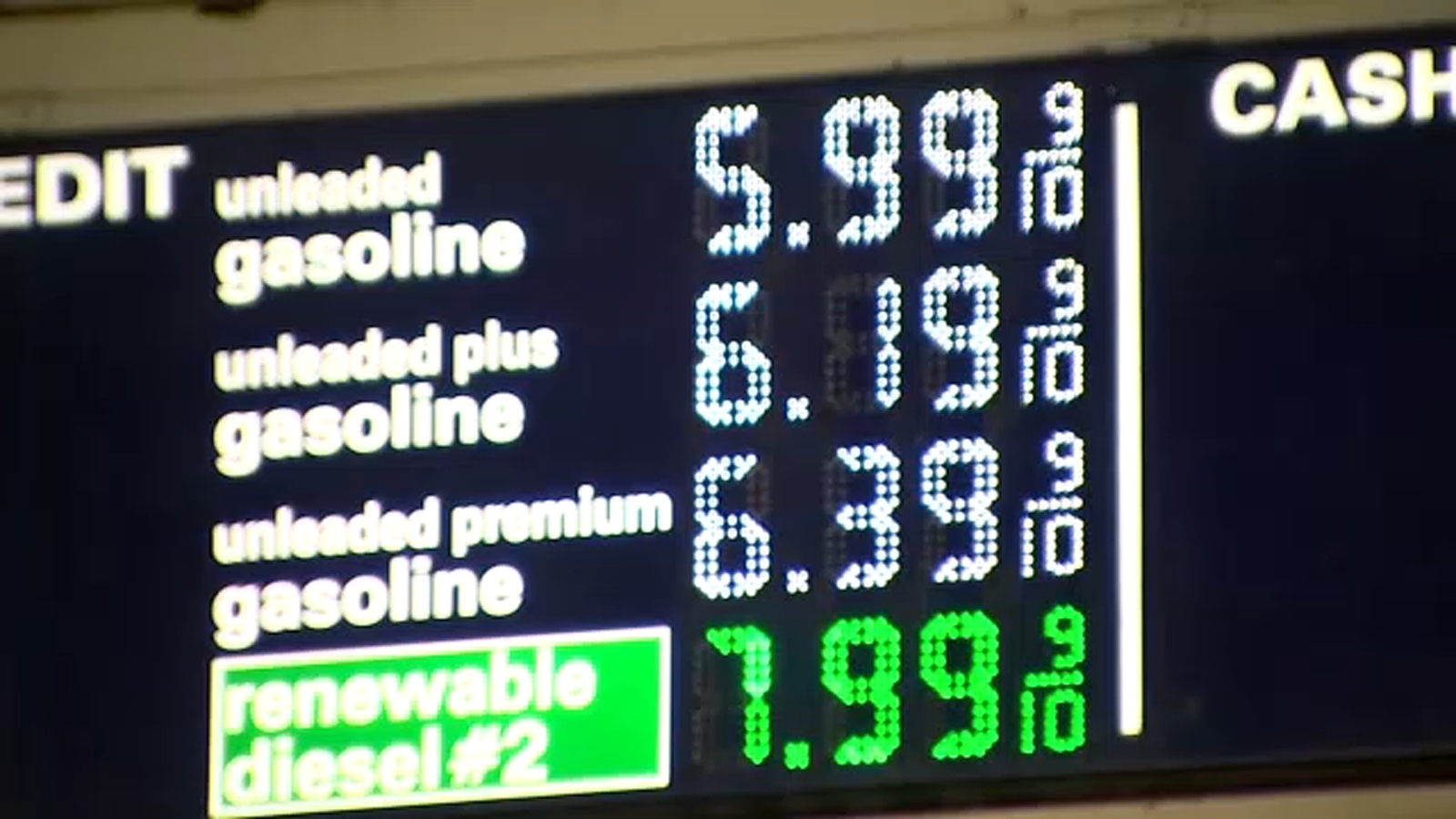
Gasoline prices in Los Angeles are approaching $6.00/gal (California average $5.87/gal; national average nearly $4.00/gal) as the Iran war disrupts supply — Iran is restricting tankers through the Strait of Hormuz, which carries ~20% of global oil. Rising tensions (and comments about potential US troop moves to secure an Iranian oil terminal) are driving the largest monthly fuel increase of the year and straining consumer budgets, with some drivers predicting averages of $8–$9/gal in LA.
Elevated retail fuel costs are creating a non-linear squeeze across transportation-intensive margins: refiners with inland crude sourcing and logistics for blending have near-term pricing power (crack spreads widen for complexes that can shift feedstock), while asset-light transport operators (ride-hail, local delivery) face lagged fuel surcharge pass-through and immediate driver supply elasticity that tightens capacity. Expect a 4–8 week transmission from crude moves to retail pump via refinery throughput and distribution constraints; that lag creates tactical windows to trade refined products versus crude.
Macro second-order effects: persistently high pump prices act like a negative income shock that is front-loaded into discretionary consumption — our scenario analysis shows a sustained +$0.50/gal-equivalent shock could shave ~0.1–0.2ppt off quarterly real consumer spending growth over the next two quarters and increase upside risk to headline CPI for one to three reporting periods. Monetary policy reaction is the wildcard: if CPI momentum re-accelerates, the market will reprice terminal fed funds higher, compressing risk assets and steepening credit costs for smaller transport firms.
Catalyst map and reversals: upside catalysts are supply shocks from Gulf disruptions (days–weeks) or export-route constraints; de-escalation, coordinated SPR releases, or resolution of refinery bottlenecks can unwind price pressure in 30–90 days. Regionally concentrated frictions (state taxes, blend season) amplify local pump volatility and are likely to normalize sooner than global crude moves — trade strategies should therefore separate coastally-exposed refineries from globally-integrated producers and use 1–3 month option structures to capture asymmetric outcomes.
AI-powered research, real-time alerts, and portfolio analytics for institutional investors.
Request DemoOverall Sentiment
mildly negative
Sentiment Score
-0.35
