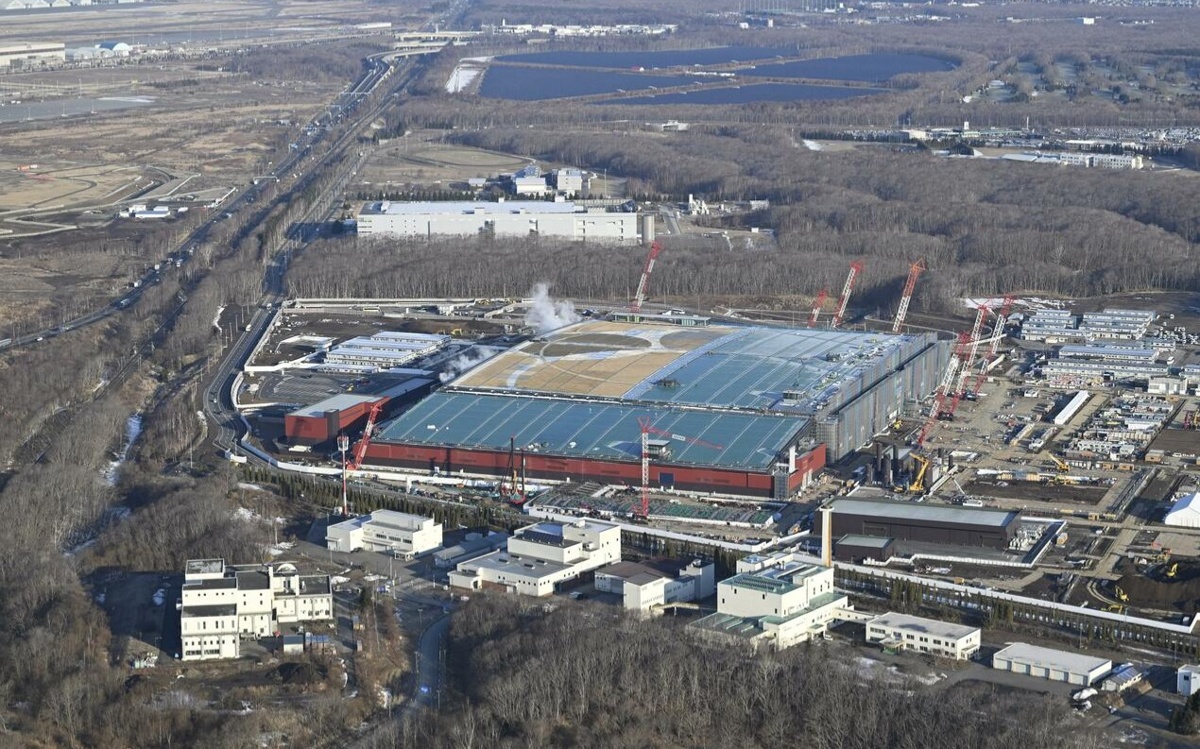
The Japanese government will provide just over ¥1 trillion of investment and subsidies to chip venture Rapidus between fiscal 2026–27, including ¥100bn in the current fiscal year, about ¥150bn in FY2026 in direct investment, and roughly ¥630bn and ¥300bn in subsidies in FY2026 and FY2027 respectively, on top of prior ¥1.7tn of pledged subsidies and ~¥100bn of private capital. Rapidus plans to invest a total of ¥7tn to commercialize next‑generation semiconductors—aiming to mass‑produce 2nm chips in H2 FY2027 and 1.4nm/1nm chips thereafter—and expects to pursue an IPO around FY2031, part of Japan’s strategy to shore up domestic semiconductor supply chains amid rising AI-driven chip demand.
Market structure will favor semiconductor capital‑equipment and high‑purity materials suppliers (ASML, Tokyo Electron, Shin‑Etsu, SUMCO) as Japan injects ~¥1tn near‑term into Rapidus and signals multi‑year demand for EUV/chemical supply; pricing power for advanced-node foundry capacity should remain elevated through FY2027 as incremental 2nm capacity is scarce versus AI compute demand. Domestic Japanese chipmakers gain strategic insulation, but incumbent foundries (TSMC) face limited competitive threat near term — market share shifts will be modest before FY2027 due to tool lead times and scale effects.
Key risks: execution failure to hit H2 FY2027 2nm, US export‑license denial for EUV equipment, or >30% cost overruns that force rethink of commercial timelines; geopolitics (China/US) could trigger rapid re‑routing of supply chains within 6–18 months. Hidden dependency: Rapidus’ timeline is binary on timely ASML deliveries and skilled wafer fab workforce—delays of 6–12 months would meaningfully compress expected ROI and push IPO out beyond FY2031.
Trade implications: favor 12–24 month exposure to equipment and materials (ASML, 8035.T, 4063.T) and 9–18 month long exposure to AI leaders (NVDA) via defined‑risk options rather than outright equity to weather execution noise; underweight legacy IDMs and Chinese foundries (SMIC) that are exposed to export controls. Staging matters: scale in over next 3–6 months, re‑evaluate on ASML delivery confirmations and FY2026 budget execution updates.
Contrarian view: market consensus underestimates conditionality — large public subsidies do not guarantee node leadership; historical Japanese industrial subsidies showed capital intensity alone doesn’t secure ecosystem (1980s consumer electronics). A delayed/failed ramp would create a multi‑quarter derating for Japanese capex beneficiaries; downside mispricing exists in near‑term high premia for small suppliers that presuppose flawless execution.
AI-powered research, real-time alerts, and portfolio analytics for institutional investors.
Request DemoOverall Sentiment
moderately positive
Sentiment Score
0.45
Ticker Sentiment
