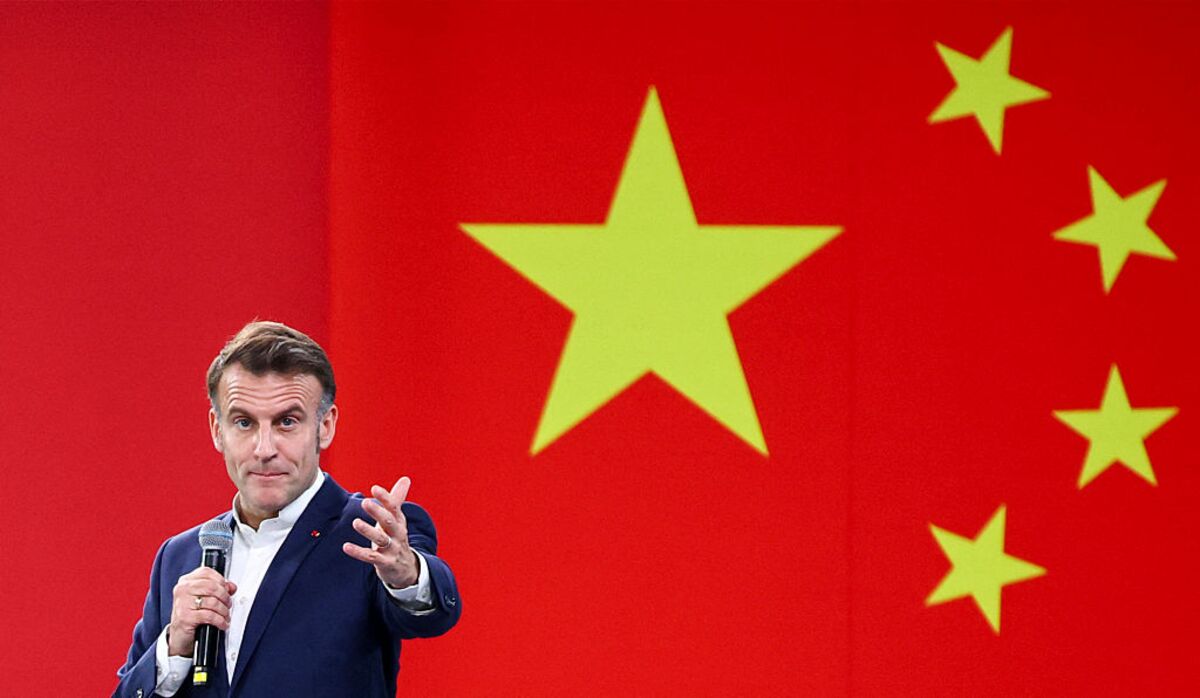
French President Emmanuel Macron warned the EU may impose "strong measures," including tariffs, on China if Beijing does not address its growing trade surplus with the bloc, arguing China is importing very little from Europe. The remarks raise the prospect of escalated trade policy action and higher political risk for EU–China trade flows, potentially prompting sector-specific tariff risks, retaliation and repricing in exporters, supply-chain exposed names and broader investor positioning on Europe–China economic ties.
Market structure: Macron’s tariff threat shifts relative advantage toward EU domestic manufacturers in targeted sectors (steel, solar panels, textiles, EV batteries) and contract manufacturers outside China (Vietnam, India) over 12–36 months; Chinese exporters lose pricing power and volumes, particularly in low-margin consumer goods where a 10–30% tariff would meaningfully compress export margins. Supply-demand: tariffs would reroute demand away from China to alternative suppliers, reducing Chinese industrial commodity demand (copper/iron ore) by a material amount over quarters and pressuring miners’ EBITDA by mid-single digits if sustained. Cross-asset: expect EUR downside vs USD/CNH on growth hit, higher EUR bond yields if domestic inflation rises from import tariffs, and a volatility spike in equity and commodity options (IV +20–40% near announcements).
Risk assessment: tail risks include a broad EU–China tit-for-tat escalation (10–25% probability) that could hit EU exporters (wine, machinery) and trigger global growth slowdown; another tail is rapid Chinese policy easing to offset tariffs, which would mute effects. Time horizons: immediate (days) = volatility and FX moves; short-term (weeks–months) = EU Commission investigations and provisional measures; long-term (1–3 years) = supply-chain reshoring and capex reallocation. Hidden dependencies: many EU firms depend on Chinese intermediates—tariffs could raise input costs and squeeze margins even for domestic winners. Catalysts: Commission anti-dumping rulings, WTO complaints, synchronized US/EU statements, or Chinese import liberalization.
Trade implications: prefer long exposure to European battery/value-add supply chain and nearshore EMS, and short commodity-exposed miners and import-reliant retail. Tactical instruments: use liquid ETFs and large-cap names to execute quickly while monitoring Commission cadence (expected 30–90 days). Options are efficient to express event risk around Commission announcements and Chinese policy responses.
Contrarian angles: consensus views focus on punishing Chinese exporters; underappreciated is the short-term inflation pass-through to EU consumers and potential Chinese retaliation on agri/auto exports that would disproportionately hurt German automakers. Historical parallels: 2018 US–China tariffs show initial protectionist winners often lose in 12–24 months as supply chains reconfigure and demand shifts. Unintended consequence: tariffs may accelerate Chinese pivot to domestic tech self-sufficiency, reducing EU export opportunities long term—so avoid long-duration structural exposure to sectors relying on Chinese demand.
AI-powered research, real-time alerts, and portfolio analytics for institutional investors.
Request DemoOverall Sentiment
moderately negative
Sentiment Score
-0.35
