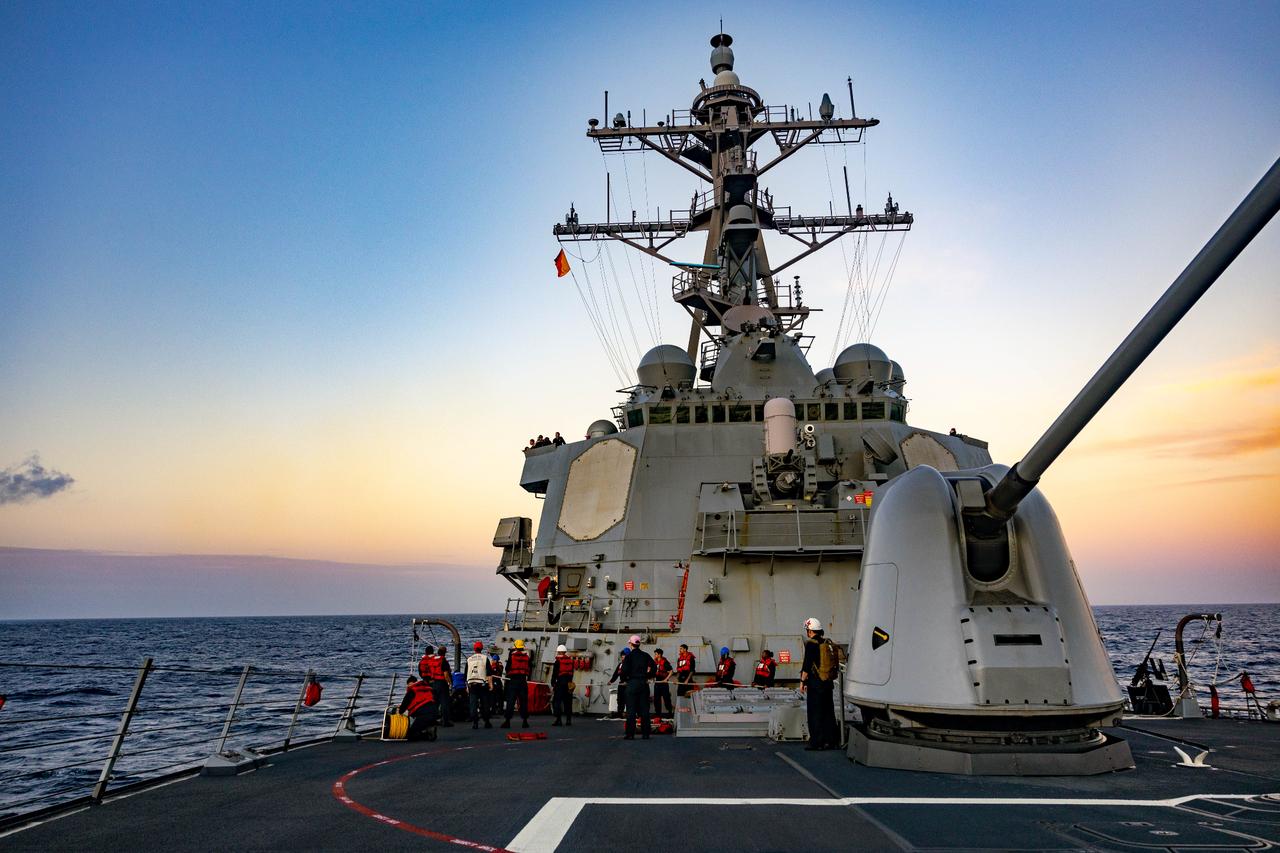
A fire aboard the USS Higgins disabled the destroyer’s electricity and propulsion systems, with no injuries reported but the extent of damage and repair timeline still unclear. The incident adds to recent Navy shipboard fires and raises concerns about U.S. naval readiness in the Indo-Pacific, where the Higgins serves as part of the 7th Fleet’s forward-deployed surface force.
The immediate market read is not about one destroyer; it is about the fragility of forward-deployed force posture when maintenance cadence, crew readiness, and platform age all collide. A temporary loss of propulsion on an Aegis destroyer is a small physical event with outsized operational consequence because it reduces the Navy's ability to thicken presence in the Western Pacific without pulling from an already tight rotation pool. That matters most if the incident forces a broader inspection wave across sister ships, which would create a short-term readiness tax across the surface fleet rather than a single-asset repair bill. The second-order beneficiary is not a pure defense prime trade so much as the ecosystem around naval sustainment: ship repair yards, marine systems suppliers, testing/electrical contractors, and select industrials exposed to depot-level maintenance. If the Navy responds by accelerating inspections and overhauls, incremental revenue shifts toward maintenance-heavy names can arrive faster than new-build budget changes, which usually take years to flow through. The negative read-through is for operators with exposure to near-term deployment intensity, because more maintenance downtime can tighten available hull counts and increase stress on carrier strike group schedules. The key catalyst window is days to weeks for headlines, but months for budget and procurement effects. If there is evidence of a class-wide issue or multiple unrelated shipboard fires, the political response could tilt toward accelerated maintenance spend and readiness funding rather than platform growth, which would favor services over pure-build exposure. Conversely, if the incident is quickly contained and no systemic issue emerges, the trade will fade, leaving only a modest temporary premium on Navy sustainment names. Consensus is likely over-focusing on geopolitical optics and underestimating the procurement implication: readiness shortfalls usually convert into deferred maintenance and spares demand before they convert into new ship orders. In other words, the near-term winner is not necessarily the biggest defense contractor, but the companies that get paid when the fleet has to stop sailing and start fixing. The risk/reward is better in a relative-value expression than a directional defense long, because the underlying event is negative for force availability but positive for the maintenance budget that follows.
AI-powered research, real-time alerts, and portfolio analytics for institutional investors.
Request DemoOverall Sentiment
moderately negative
Sentiment Score
-0.45
