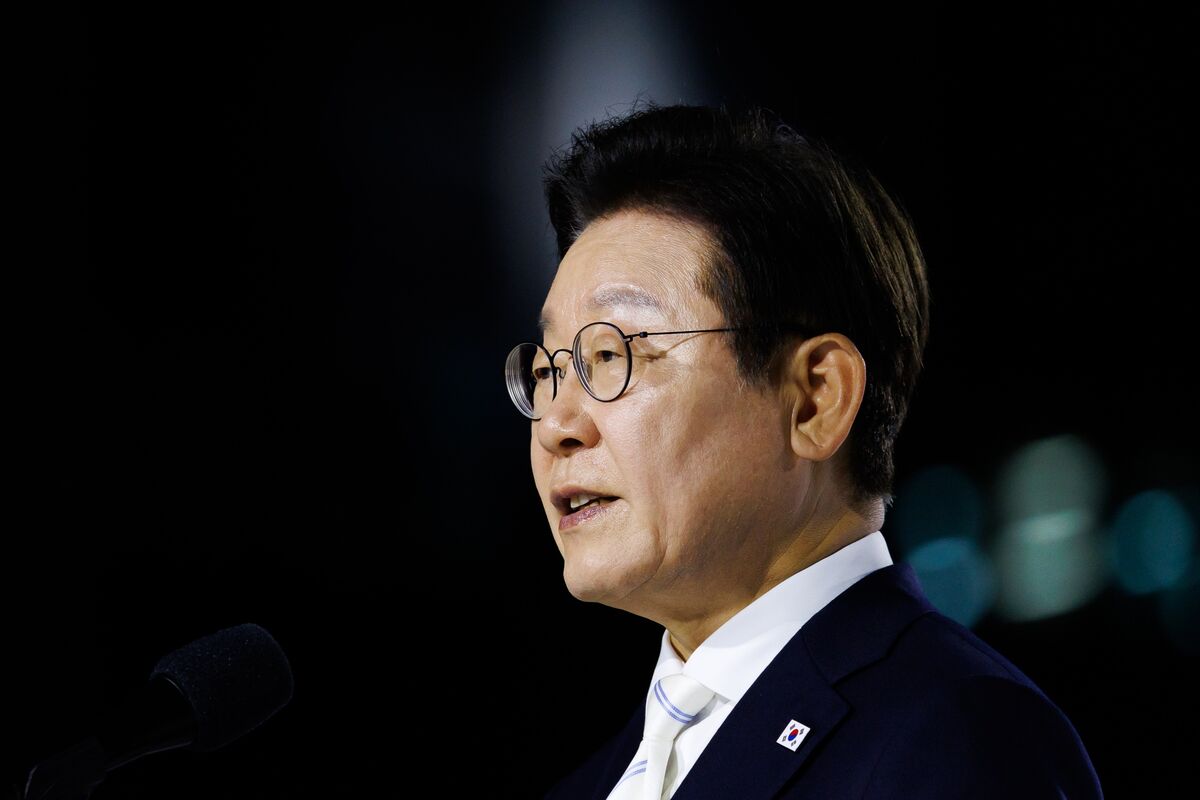
South Korean President Lee Jae Myung stated a currency swap agreement is essential to avert a potential economic crisis for the nation, specifically citing the risk of a 1997-like financial downturn if South Korea proceeds with its pledged $350 billion investment in the U.S. without such a mechanism. Lee warned that withdrawing such a large sum in cash for U.S. investment without a swap could destabilize the South Korean economy.
South Korean President Lee Jae Myung has introduced a significant conditionality to the nation's pledged $350 billion investment in the U.S., framing it as a potential source of severe economic instability. By explicitly warning that a cash-based execution of this investment without a supporting currency swap agreement could trigger a crisis reminiscent of the 1997 financial crisis, he has elevated the issue from a simple trade commitment to a critical matter of national financial stability. This statement, marked by a strongly negative sentiment score (-0.65), signals a major potential risk to South Korea's liquidity and currency (KRW) stability. The call for a currency swap is a direct policy demand aimed at mitigating the risk of a massive capital outflow destabilizing the domestic economy, highlighting potential friction in U.S.-South Korea economic relations and creating uncertainty around the execution of the investment pledge.
AI-powered research, real-time alerts, and portfolio analytics for institutional investors.
Request DemoOverall Sentiment
strongly negative
Sentiment Score
-0.65
