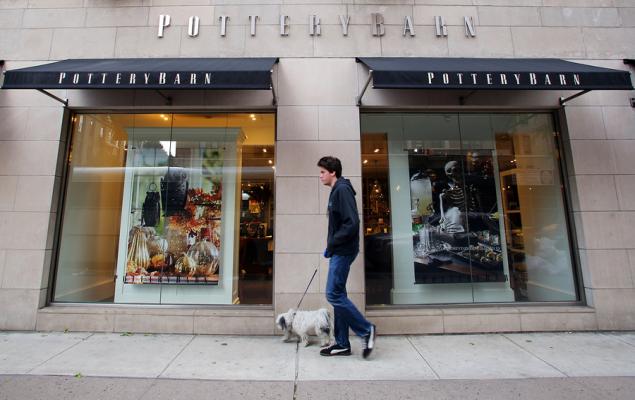
Williams‑Sonoma topped estimates in Q3 FY2025 with EPS of $1.96 versus a $1.87 consensus and revenues of $1.88 billion (+4.4% YoY, beat $1.86bn), driven by a 4% comp increase (notably Williams‑Sonoma +7.3%) and a strong e‑commerce performance. Margins expanded—gross margin rose to 46.1% (+70bps YoY) and operating margin to 17% (+10bps)—and the company maintains substantial capital returns (repurchases $555.7m; dividends $236.6m) despite cash falling to $884.7m from $1.21bn. Management reiterated FY25 revenue and comp guidance (+0.5% to +3.5% revenue; +2% to +5% comps) but raised the operating margin target to 17.8%–18.1% while flagging elevated Section 232 tariffs and other commodity tariffs as headwinds; shares slid ~4.8% pre‑market as investors weighed housing weakness and tariff‑driven cost risk.
Williams‑Sonoma delivered a solid Q3 FY2025: EPS of $1.96 beat the Zacks consensus of $1.87 by 4.8%, and net revenues of $1.88 billion exceeded the $1.86 billion consensus by 1.1% and rose 4.4% year over year. Comparable brand revenue increased 4.0% overall with the namesake Williams‑Sonoma comp up 7.3%, West Elm +3.3%, Pottery Barn Kids & Teens +4.4%, and Pottery Barn +1.3%; shares fell ~4.8% in pre‑market trading on investor concerns about housing and tariffs.
Margins showed operating leverage: gross margin expanded 70 bps to 46.1% and operating margin was 17.0% (up 10 bps), while SG&A was 29.1% of sales (up 60 bps) due to higher advertising and incentive compensation. Management cited merchandise margin gains and supply‑chain efficiencies as drivers, partially offset by higher occupancy costs.
Management maintained FY25 revenue guidance of +0.5% to +3.5% and comps +2% to +5% but raised operating margin guidance to 17.8%–18.1%; it flagged material headwinds from Section 232 and other tariffs (China 20%, India 50%, Vietnam 20%, average RoW 18%, heavy metal tariffs up to 50%). Cash declined to $884.7 million from $1.21 billion year‑end while operating cash flow for nine months was $718 million; the company repurchased $555.7 million of stock and paid $236.6 million in dividends, highlighting an active capital‑return program amid balance‑sheet drawdown.
The stock reaction reflects a tradeoff between demonstrated pricing/margin resilience and tangible policy‑driven cost risk plus housing sensitivity; near‑term performance will hinge on tariff developments, margin sustainability and cash‑flow trends.
AI-powered research, real-time alerts, and portfolio analytics for institutional investors.
Request DemoOverall Sentiment
mildly positive
Sentiment Score
0.25
Ticker Sentiment
